
Gutscheinbedingungen

**Gültig von 22.06.2026 ab 19 Uhr bis 23.06.2026 24 Uhr auf Spielzeug, Schreibwaren, Filme, Geschenke & Trends, Musik, tolino eReader & Zubehör, Hörbücher und Hörbuch-Downloads (außer Abo), nicht preisgebundene Bücher und Kalender online auf thalia.at und in der Thalia App. Einzelne Artikel können ausgeschlossen sein. Aufgrund der Buchpreisbindung sind deutschsprachige Bücher und eBooks ausgenommen. Zusätzlich ausgenommen sind preisgebundene Artikel, Abos & Flatrates, eBooks, Games, Geschenkkarten/-boxen, Shelfies, Software, Zeitschriften sowie einzelne Artikel von tonies®. Pro Einkauf einmal einlösbar. Click & Collect nur bei Onlinevorabzahlung möglich. Keine Barauszahlung. Nicht kombinierbar mit anderen Aktionen und Gutscheinen. Gutschein wird auf max. 500€ Bestellwert angerechnet. Nicht gültig für Versandkosten und Services.

  • Produktbild: Sustainable Action
  • Produktbild: Sustainable Action

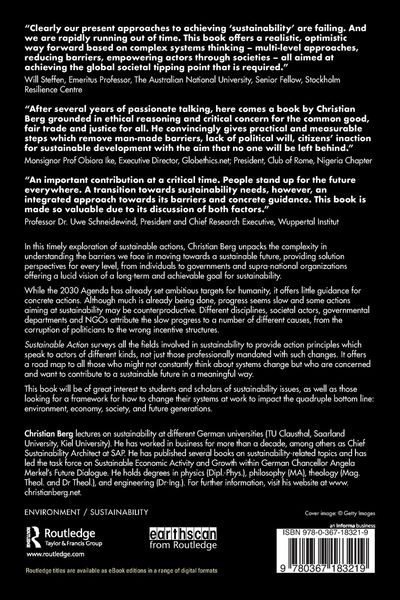
Sustainable Action Overcoming the Barriers

79,99 €

inkl. gesetzl. MwSt., Versandkostenfrei


Beschreibung

Produktdetails

Einband

Taschenbuch

Erscheinungsdatum

29.11.2019

Abbildungen

schwarz-weiss Illustrationen, Zeichnungen, schwarz-weiss

Verlag

Taylor & Francis

Seitenzahl

294

Maße (L/B/H)

23,4/15,6/1,7 cm

Gewicht

486 g

Sprache

Englisch

ISBN

978-0-367-18321-9

Beschreibung

Produktdetails

Einband

Taschenbuch

Erscheinungsdatum

29.11.2019

Abbildungen

schwarz-weiss Illustrationen, Zeichnungen, schwarz-weiss

Verlag

Taylor & Francis

Seitenzahl

294

Maße (L/B/H)

23,4/15,6/1,7 cm

Gewicht

486 g

Sprache

Englisch

ISBN

978-0-367-18321-9

Herstelleradresse

Libri GmbH
Europaallee 1
36244 Bad Hersfeld
DE

Email: gpsr@libri.de

Kundinnen und Kunden meinen

0 Bewertungen

Informationen zu Bewertungen

Zur Abgabe einer Bewertung ist eine Anmeldung im Konto notwendig. Die Authentizität der Bewertungen wird von uns nicht überprüft. Wir behalten uns vor, Bewertungstexte, die unseren Richtlinien widersprechen, entsprechend zu kürzen oder zu löschen.

Die Bewertungen sind nach Format, Anzahl Sterne und Datum sortiert.

Verfassen Sie die erste Bewertung zu diesem Artikel

Helfen Sie anderen Kund*innen durch Ihre Meinung

Kundinnen und Kunden meinen

0 Bewertungen filtern

Die Leseprobe wird geladen.
  • Produktbild: Sustainable Action
  • Produktbild: Sustainable Action
  • Acknowledgements

    Preface

    Abbreviations

    Illustrations

    1 Introduction: Sustainability – A Utopian Ideal?

    1.1 Sustainability – an 'exhausted' concept?

    1.2 Phase transition towards sustainability

    1.3 Understanding the barriers towards sustainability

    1.4 Developing Action principles for Sustainability

    1.5 Concept of sustainability

    1.6 Structure of the book

    1.7 Methodological approach

    1.8 Summary

    Part 1: Barriers

    Intrinsic Barriers

    2 Barriers related to physical reality

    2.1 The Problem of ERoEI, Resources, and Pollution

    2.2 Complexity

    3 Barriers related to human condition

    3.1 Cognitive Limitations: Linear and unconnected thinking

    3.2 Moral Limitations – Greed, Selfishness and Ignorance

    3.3 Value-action gap

    3.4 Trade-offs

    4 Barriers related to social reality

    4.1 System inertness and path dependencies

    4.2 "Meeting the needs of the present…"

    4.2.1 Demand for sustainability starts with the present needs

    4.2.2 Poverty as multidimensional phenomenon

    4.2.3 The poor suffer most – environmental injustice

    4.2.4 High Ecological Footprint or High Development – is there no alternative?

    4.3 Populism and Fundamentalism

    4.4 Inequalities

    4.5 Conflicting Interests

    4.5.1 No framework for resolving conflicting interests on international level

    4.5.2 Conflicting interests are not always visible

    4.5.3 Inequalities imply uneven negotiation powers and impede settlements

    4.5.4 Leadership and Power Structures

    Extrinsic Barriers 1 – Institutional Deficiencies

    5 Economy: Faulty Market System

    5.1 Market Failure

    5.1.1 Public goods and the tragedy of the commons

    5.1.2 Free-Riding

    5.1.3 Externalization societies: Shift costs to the weak, to nature, and to the future

    5.2 Pervasiveness of economic thinking

    6 Politics: Lack of effective governance for global issues

    6.1 Challenges of IGOs and multilateral international treaties

    6.2 Geopolitics and the struggle of establishing a world order

    7 Law: Legal difficulties related to sustainability

    7.1 Sustainability concerns not institutionalized

    7.2 Limiting of individual liberties for the sake of the common good?

    7.2.1 Betterment of individual rights compared to public goods

    7.2.2 Challenges to the concept of the common good

    8 Technology: Mismatch Between Impact and Governance

    9 Structural silos: Fragmentation of knowledge, Administration, and Responsibility

    9.1 Fragmentation of Knowledge

    9.2 Fragmentation of Administration

    9.3 Fragmentation of Responsibility

    Extrinsic Barriers 2 – Zeitgeist-dependent Barriers

    10 Short-Term orientation and acceleration

    11 Consumerism

    Part 2 – Action Principles

    12 Why Action Principles?

    12.1 A change in perspective – Take the actor’s view

    12.2 Why principles for sustainable action?

    12.3 Types of principles

    13 Nature-related principles

    13.1 Decarbonize

    13.2 Reduce Environmental Impact by Efficiency, Sufficiency, and Compatibility

    13.3 Be "net-positive" – build up environmental and societal capital!

    13.4 Prefer Local, Seasonal, Plant-based, and Labour-intensive

    13.5 Polluter pays principle

    13.6 Precautionary principle

    13.7 Appreciate and Celebrate the Beauty of Nature

    14 Personal principles

    14.1 Why personal principles matter

    14.2 Practice Praxis and Contemplation

    14.3 Be not too certain – and apply policies cautiously

    14.4 Celebrate Frugality

    15 Society-related principles

    15.1 Grant the least privileged the greatest support

    15.2 Seek mutual understanding, trust and multiple-wins

    15.3 Be Tolerant

    15.4 Strengthen social cohesion and collaboration

    15.5 Engage the Stakeholders

    15.6 Foster education – share knowledge and collaborate

    16 System-related principles

    16.1 Apply systems thinking

    16.1.1 Think holistically

    16.1.2 Think long-term and decelerate

    16.1.3 Think global – promote local

    16.2 Foster Diversity

    16.3 Increase Transparency of the Publicly Relevant

    16.4 Maintain or Increase Option Diversity

    17 Conclusion: Sustainable action principles trigger phase transition

    17.1 Summary: Overcoming the Barriers

    17.2 The Goal: Future of terra and humanity – Futeranity

    17.2.1 Three challenges to the SDG process

    17.2.2 The Utopian Ideal of Sustainability is Futeranity

    17.2.3 Sustainable action principles facilitate Futeranity

    17.2.4 The critical role of the actors for a transition towards sustainability

    17.3 Outlook: Change is coming