Gutscheinbedingungen

**Gültig bis 17.08.2026 auf Schreibwaren & Office-Artikel online auf thalia.at, in der Thalia App und in teilnehmenden Thalia Buchhandlungen in Österreich mit Schulsortiment. In den Buchhandlungen nur gültig auf lagernde Ware. Einzelne Artikel können ausgeschlossen sein. Ausgenommen sind preisgebundene Artikel. Pro Einkauf einmal einlösbar. Nur gültig gegen Vorlage oder im Onlineshop hinterlegter Bonuscard. Infos zur Einlösung in der Buchhandlung sind auf der Bonuscard-Vorteilspreisseite zu finden. Click & Collect nur bei Onlinevorabzahlung möglich. Keine Einlösung bei Scan & Go-Bezahlung. Keine Barauszahlung. Nicht kombinierbar mit anderen Aktionen und Gutscheinen. Gutschein wird auf max. 500€ Bestellwert angerechnet. Nicht gültig für Geschenkkarten, Versandkosten und Services.

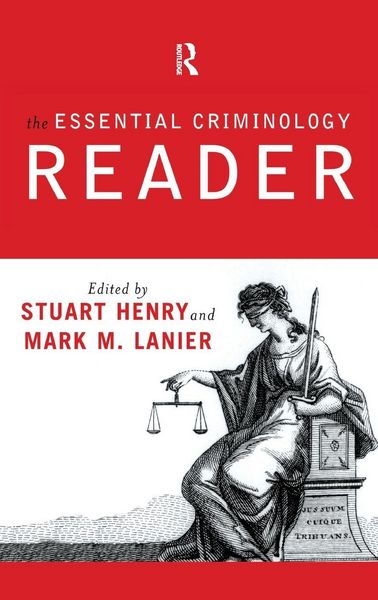
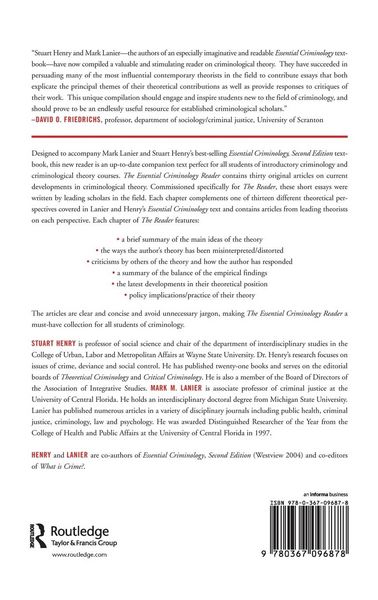
  • Produktbild: The Essential Criminology Reader
  • Produktbild: The Essential Criminology Reader

The Essential Criminology Reader

237,99 €

inkl. gesetzl. MwSt., Versandkostenfrei


Beschreibung

Produktdetails

Einband

Gebundene Ausgabe

Erscheinungsdatum

13.06.2019

Verlag

Taylor & Francis

Seitenzahl

400

Maße (L/B/H)

24/16,1/2,6 cm

Gewicht

453 g

Sprache

Englisch

ISBN

978-0-367-09687-8

Beschreibung

Produktdetails

Einband

Gebundene Ausgabe

Erscheinungsdatum

13.06.2019

Verlag

Taylor & Francis

Seitenzahl

400

Maße (L/B/H)

24/16,1/2,6 cm

Gewicht

453 g

Sprache

Englisch

ISBN

978-0-367-09687-8

Herstelleradresse

Libri GmbH
Europaallee 1
36244 Bad Hersfeld
DE

Email: gpsr@libri.de

Noch keine Bewertungen vorhanden

Verfassen Sie die erste Bewertung zu diesem Artikel

Helfen Sie anderen Kundinnen und Kunden durch Ihre Meinung.

Kundinnen und Kunden meinen

Bewertungen (0)

Die Leseprobe wird geladen.
  • Produktbild: The Essential Criminology Reader
  • Produktbild: The Essential Criminology Reader
  • 1. Classical and Rational Choice Theories * 1.1 Free Will and Determinism? Reading Beccarias Of Crimes and Punishments (1764) as a Text of Enlightenment, by Piers Beirne * 1.2 Rational and Situational Choice Theory, by Derek B Cornish and Ronald V. Clarke 2. Biological and Biosocial Theories * 2.1 Cesare Lombroso and the Origins of Criminology: Rethinking Criminological Tradition, by Nicole Rafter * 2.2 Integrating Findings from Neurobiology into Criminological Thought: Issues, Solutions, and Implications, by Diana Fishbein 3. Psychological Theories * 3.1 Forty Years of the Yochelson/Samenow Work: A Perspective, by Stanton E. Samenow * 3.2 Contributions of Community Psychology to Criminal Justice: Prevention Research and Intervention, by Sarah Livsey and William S. Davidson II 4. Social Learning and Neutralization Theories * 4.1 Social Learning Theory: Correcting Misconceptions, by Christine S. Sellers and Ronald L. Akers * 4.2 Techniques of Neutralization, by W. William Minor 5. Social Control Theories * 5.1 Social Control and Self-Control Theory, by Travis Hirschi and Michael Gottfredson * 5.2 Social Control Theory and Direct Parental Controls, by Joseph H. Rankin and L. Edward Wells 6. Social Ecology and Subcultural Theories * 6.1 Social Ecology and Collective Efficacy Theory, by Robert J. Sampson * 6.2 Gangs as Social Actors, by John M. Hagedorn 7. Anomie and Strain Theories * 7.1 General Strain Theory, by Robert Agnew * 7.2 The Origins, Nature, and Prospects of Institutional-Anomie Theory, by Richard Rosenfeld and Steven F. Messner * 7.3 Global Anomie Theory, by Nikos Passas 8. Conflict and Radical Theories * 8.1 Criminology and Conflict Theory, by Austin T. Turk * 8.2 The New Radical Criminology and the Same Old Criticisms, by Michael J. Lynch and Paul B. Stretesky 9. Feminist and Gender Theories * 9.1 Feminist Thinking About Crime, by Kathleen Daly * 9.2 Masculinities and Theoretical Criminology, by James W. Messerschmidt 10. Postmodernist and Critical Cultur