KI-Beratung Beta

Gutscheinbedingungen

**Gültig bis 18.11.2026 auf englischsprachige Klassiker (klassiker-32728) online auf thalia.at und in der Thalia App. Einzelne Artikel können ausgeschlossen sein. Ausgenommen sind preisgebundene Artikel & eBooks. Pro Einkauf einmal einlösbar. Click & Collect nur bei Onlinevorabzahlung möglich. Keine Barauszahlung. Nicht kombinierbar mit anderen Aktionen und Gutscheinen. Gutschein wird auf max. 500€ Bestellwert angerechnet. Nicht gültig für Geschenkkarten, Versandkosten und Services.

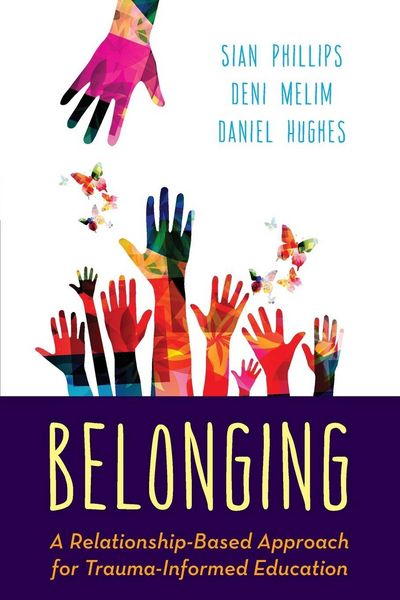
  • Produktbild: Belonging
  • Produktbild: Belonging

Belonging A Relationship-Based Approach for Trauma-Informed Education

48,99 €

inkl. gesetzl. MwSt., Versandkostenfrei


Produktdetails

Einband

Taschenbuch

Erscheinungsdatum

15.08.2020

Abbildungen

17 BW Illustrations, 2 BW Photos, 7 Tables

Verlag Rowman & Littlefield

Produktdetails

Einband

Taschenbuch

Erscheinungsdatum

15.08.2020

Abbildungen

17 BW Illustrations, 2 BW Photos, 7 Tables

Verlag Rowman & Littlefield
Seitenzahl

350

Maße (L/B/H)

22,9/15,2/2,1 cm

Gewicht

569 g

Sprache

Englisch

ISBN

978-1-5381-3599-0

Herstelleradresse

Libri GmbH
Europaallee 1
36244 Bad Hersfeld
DE

Email: gpsr@libri.de

Noch keine Bewertungen vorhanden

Verfassen Sie die erste Bewertung zu diesem Artikel

Helfen Sie anderen Kundinnen und Kunden durch Ihre Meinung.

Kundinnen und Kunden meinen

Bewertungen (0)

Die Leseprobe wird geladen.
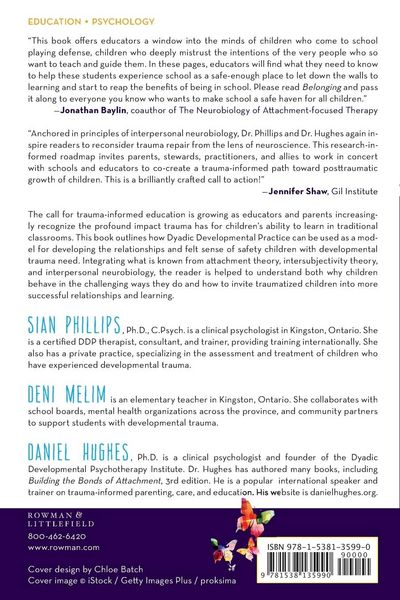
  • Produktbild: Belonging
  • Produktbild: Belonging
  • Acknowledgments
    Preface
    Part I
    1 Lessons from Poly Vagal Theory: If a Child Could Do Better, He or She Would 3
    2 Lessons from Interpersonal Neurobiology
    3 Lessons from Attachment Theory
    4 Lessons from Intersubjectivity
    5 Dyadic Developmental Practice and Its application to Education
    6 Co-regulation of Affect: The Affective/Reflective (A/R) Dialogue
    7 Using A/R Dialogue to Explore and Discover the Meanings of the Child's Behavior
    Part II
    8 Belong: A Classroom for Children with Attachment and Trauma Difficulties
    9 Our Day: Structured Flexibility
    10 Meeting Challenging Behavior with PACE
    11 Lesson Planning
    12 Working with Parents and Community Supports Parents
    13 Case Study
    14 What Have We Learned in Six Years?
    15 Bloopers: Where We Got It Wrong
    Part III
    16 The J ourney of Three DDP-Informed Elementary Schools and One Alternative High School
    17 PACE and A/R Dialogues in a Regular Classroom Setting
    18 Two R's: Relationship and Resources
    19 What Have We Learned?
    20 Alarmed, Written by Sian Phillips
    Appendix A
    Appendix B
    Appendix C
    References