• Produktbild: The Right to Strike in International Law
  • Produktbild: The Right to Strike in International Law

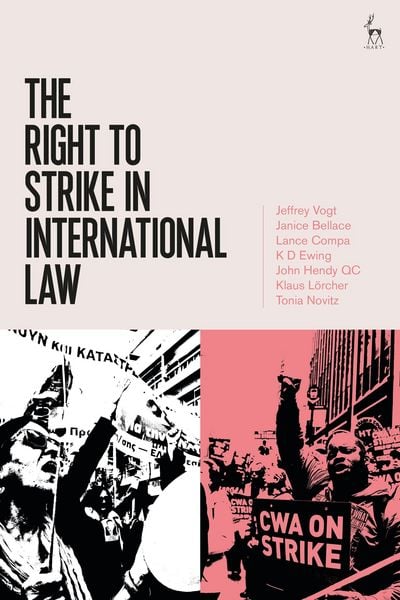
The Right to Strike in International Law

135,99 €

inkl. gesetzl. MwSt., Versandkostenfrei


Beschreibung

Produktdetails

Einband

Gebundene Ausgabe

Erscheinungsdatum

19.03.2020

Verlag

Bloomsbury Publishing

Seitenzahl

266

Maße (L/B/H)

24,2/16,7/2 cm

Gewicht

538 g

Sprache

Englisch

ISBN

978-1-5099-3355-6

Beschreibung

Produktdetails

Einband

Gebundene Ausgabe

Erscheinungsdatum

19.03.2020

Verlag

Bloomsbury Publishing

Seitenzahl

266

Maße (L/B/H)

24,2/16,7/2 cm

Gewicht

538 g

Sprache

Englisch

ISBN

978-1-5099-3355-6

Herstelleradresse

Libri GmbH
Europaallee 1
36244 Bad Hersfeld
DE

Email: gpsr@libri.de

Noch keine Bewertungen vorhanden

Verfassen Sie die erste Bewertung zu diesem Artikel

Helfen Sie anderen Kundinnen und Kunden durch Ihre Meinung.

Kundinnen und Kunden meinen

Bewertungen (0)

  • Produktbild: The Right to Strike in International Law
  • Produktbild: The Right to Strike in International Law
  • PART I
    AN INTRODUCTION
    1. Understanding the International Labour Organization (ILO)
    I. An ILO Primer
    2. The Ill-Founded Challenge to the Right to Strike in 2012
    I. The Showdown at the 2012 International Labour Conference
    II. Why Then?
    III. And Now?

    PART II
    A REBUTTAL: ON THE QUESTION OF MANDATES
    3. The ILO Committee of Experts has a Mandate to 'Interpret' ILO Conventions, not the Constituents
    I. A Brief History
    II. The Mandates of ILO Supervisory Bodies Establish No Hierarchy Among Them
    III. The Committee of Experts and the Interpretation of Conventions
    IV. Conclusion

    PART III
    A REBUTTAL: THE INDISPUTABLE CASE FOR THE RIGHT TO STRIKE
    4. The Rules of Interpretation: The Vienna Convention on the Law of Treaties (VCLT)
    I. Applicability of the VCLT
    II. VCLT Rules of Interpretation as Customary International Law
    III. ILO Practice
    5. The Ordinary Meaning of Convention 87 Supports the Existence of a Right to Strike
    6. The Object and Purpose of Convention 87 Supports the Existence of a Right to Strike
    7. The Subsequent Agreement and Practice between the Parties Concerning Convention 87 Supports the Existence of a Right to Strike: ILO Jurisprudence
    I. Some History
    II. The Right to Strike is Enshrined in Convention 87
    III. The ILO Constitution
    IV. The Right to Strike in Subsequent ILO Instruments
    V. 2015 Tripartite Meeting on the Right to Strike
    8. The Subsequent Agreement and Practice between the Parties Concerning Convention 87 Supports the Existence of a Right to Strike: Beyond the ILO
    I. United Nations
    II. Council of Europe Instruments
    III. The Right to Strike and the European Union
    IV. The Inter-American System
    V. African Charter on Human and Peoples' Rights
    VI. The Right to Strike and Trade Arrangements
    VII. High Court Cases Since 2012 Affirm the Right to Strike
    9. Other Methods under Article 31 of the Vienna Convention on the Law of Treaties (VCLT) Support the Existence of the Right to Strike
    I. 'Any Relevant Rules of International Law Applicable in the Relations between the Parties' (Article 31(3)(c) VCLT)
    II. 'A Special Meaning Shall be Given to a Term if it is Established that the Parties So Intended' (Article 31(4) VCLT)
    III. Further Interpretation Principles
    IV. Inadmissible 'Creative Interpretation'?
    10. Though Unwarranted, Article 32 of the Vienna Convention on the Law of Treaties (VCLT) also Supports the Existence of the Right to Strike
    I. Resort to the Preparatory Work of Convention 87 is Unwarranted
    II. Application of Article 32 VCLT would Not Affect the Outcome were it Applied
    11. The Right to Strike is Recognised as Customary International Law
    I. The United Nations
    II. The ILO
    III. National Constitutions
    IV. Legislation
    V. Judicial Opinion
    VI. Conclusion

    PART IV
    WHERE TO FROM HERE?
    12. Settling the Dispute: The International Court of Justice?
    13. The Aftermath
    I. Impact on ILO Supervisory System
    II. The Impact Outside the ILO
    14. Conclusion
    I. The Return of the Strike