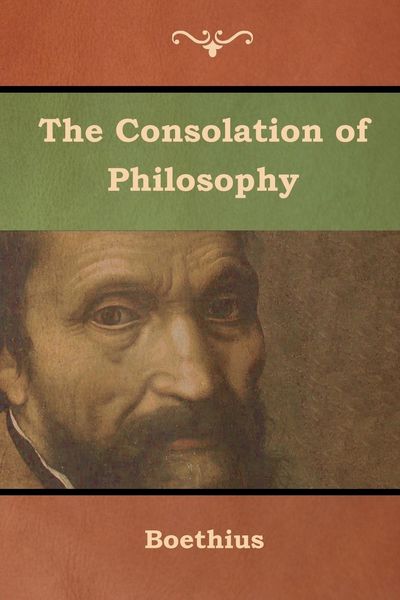
The Consolation of Philosophy
-
- Hardcover
- Taschenbuch ausgewählt
- eBook
- Hörbuch
-
Sprache:Englisch
-
Verlag:Indoeuropeanpublishing.Com
- University Presses 19,99 €
- Yen Press 12,99 €
- Outlook 19,90 €
- Kalamos Literary Services LLP 21,99 €
- Tredition 13,30 €
- Oxford University Press 12,99 €
- Sanage Publishing House Llp 24,99 €
- Classy Publishing 22,99 €
- Martino Fine Books 14,99 €
- Digireads.com 13,99 €
- Creative Media Partners, LLC 21,99 €
- Independently Published 11,99 €
- Cosimo Classics 19,99 €
- Amazon Digital Services LLC - Kdp 14,99 €
- Dover Publications 8,99 €
- Ingram Publishers Services 11,99 €
- Pharos Books Private Limited 19,99 €
- Chump Change 9,99 €
- Indoeuropeanpublishing.Com 19,99 € ausgewählt
19,99 €
inkl. gesetzl. MwSt.,
- Kostenlose Lieferung ab 30 € Einkaufswert
- Versandkostenfrei für Bonuscard-Kund*innen
Beschreibung
Produktdetails
Einband
Taschenbuch
Erscheinungsdatum
21.06.2019
Verlag
Indoeuropeanpublishing.ComSeitenzahl
150
Maße (L/B/H)
22,9/15,2/0,8 cm
Gewicht
228 g
Sprache
Englisch
ISBN
978-1-64439-205-8
Saint Anicius Manlius Severinus Boëthius, commonly called Boethius (477–524 AD), was a Roman senator, consul, magister officiorum, and philosopher of the early 6th century. He was born about a year after Odoacer deposed the last Roman Emperor and declared himself King of Italy. Boethius entered public service under Ostrogothic King Theodoric the Great, who later imprisoned and executed him in 524 on charges of conspiracy to overthrow him.[4] While jailed, Boethius composed his Consolation of Philosophy, a philosophical treatise on fortune, death, and other issues, which became one of the most popular and influential works of the Middle Ages. As the author of numerous handbooks and translator of Aristotle, he became the main intermediary between Classical antiquity and following centuries. The Consolation of Philosophy was written in AD 523 during a one-year imprisonment Boethius served while awaiting trial – and eventual execution – for the alleged crime of treason under the Ostrogothic King Theodoric the Great. Boethius was at the very heights of power in Rome, holding the prestigious office of magister officiorum, and was brought down by treachery. This experience inspired the text, which reflects on how evil can exist in a world governed by God (the problem of theodicy), and how happiness is still attainable amidst fickle fortune, while also considering the nature of happiness and God. It has been described as "by far the most interesting example of prison literature the world has ever seen."[4] A link to Christianity is often assumed, yet there is no reference made to Jesus Christ or Christianity or any other specific religion other than a few oblique references to Pauline scripture, such as the symmetry between the opening lines of Book 4 Chapter 3 and 1 Corinthians 9:24. God is however represented not only as an eternal and all-knowing being, but as the source of all Good. Boethius writes the book as a conversation between himself and Lady Philosophy. Lady Philosophy consoles Boethius by discussing the transitory nature of fame and wealth ("no man can ever truly be secure until he has been forsaken by Fortune"), and the ultimate superiority of things of the mind, which she calls the "one true good". She contends that happiness comes from within, and that virtue is all that one truly has, because it is not imperilled by the vicissitudes of fortune. (wikipedia.org)
Noch keine Bewertungen vorhanden
Verfassen Sie die erste Bewertung zu diesem Artikel
Helfen Sie anderen Kundinnen und Kunden durch Ihre Meinung.
Kurze Frage zu unserer Seite
Vielen Dank für Ihr Feedback
Wir nutzen Ihr Feedback, um unsere Produktseiten zu verbessern. Bitte haben Sie Verständnis, dass wir Ihnen keine Rückmeldung geben können. Falls Sie Kontakt mit uns aufnehmen möchten, können Sie sich aber gerne an unseren Kund*innenservice wenden.
zum Kundenservice