KI-Beratung Beta

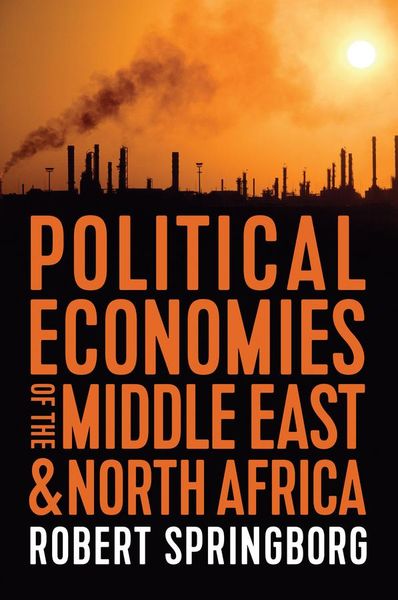
Produktbild: Political Economies of the Middle East and North Africa

Political Economies of the Middle East and North Africa

79,99 €

inkl. gesetzl. MwSt., Versandkostenfrei


Beschreibung

Despite its oil wealth, the Middle East and North Africa is economically stagnating. Growth rates are comparatively unfavorable and insufficient to substantially improve citizens' lives. Whether this economic inertia can be overcome or will continue into the indefinite future is a vital question that...

Beschreibung

Despite its oil wealth, the Middle East and North Africa is economically stagnating. Growth rates are comparatively unfavorable and insufficient to substantially improve citizens' lives. Whether this economic inertia can be overcome or will continue into the indefinite future is a vital question that confronts both the region and the world. In this book leading Middle East scholar Robert Springborg discusses the economic future of this region by examining the national and regional political causes of its contemporary underperformance. Overgrown, weak MENA states, he explains, have been unable to escape their unfavorable historical legacies. "Limited access orders" and the deep states based in the means of coercion that underpin them undermine state capacities and constrain beneficial, autonomous political and economic activity. Increasingly challenged by their populations, MENA states face the daunting and so far unmet challenge of diversifying non-sustainable, rentier political economies away from direct or indirect dependence on oil and gas revenues. Stagnation of those revenues and failure to generate alternative income sources, combined with rapid population growth, presents the region with an economic challenge that can only be overcome by profound political change.

Rezension

?The state-of-the-art big picture analysis of where MENA is and how it got there.?
Glenn E. Robinson, Naval Postgraduate School
 
?Overcoming the rigid dichotomy between area studies and disciplinary social science, Robert Springborg has accomplished a rare feat: a theoretically grounded investigation of Middle East political economies that is nonetheless rooted in a deep understanding of national histories and social contexts. His investigation of deep states and ?limited access orders? in the region will benefit both students and researchers for many years to come.?
Steffen Hertog, London School of Economics and Political Science
 
?A work of magisterial scope that simultaneously drills down into the bedrock of constraints and challenges that subvert prosperity in the Middle East today. Attuned to the political determinants of economic performance, Springborg?s book brings the reader completely up-to-date on region?s contemporary economic quandaries.?
Eva Bellin, Brandeis University

Produktdetails

Einband

Gebundene Ausgabe

Erscheinungsdatum

06.04.2020

Verlag John Wiley & Sons
Seitenzahl

247

Produktdetails

Einband

Gebundene Ausgabe

Erscheinungsdatum

06.04.2020

Verlag John Wiley & Sons
Seitenzahl

247

Maße (L/B/H)

23,1/15,2/2,5 cm

Gewicht

544 g

Auflage

1. Auflage

Sprache

Englisch

ISBN

978-1-5095-3559-0

Herstelleradresse

Libri GmbH
Europaallee 1
36244 Bad Hersfeld
DE

Email: gpsr@libri.de

Noch keine Bewertungen vorhanden

Verfassen Sie die erste Bewertung zu diesem Artikel

Helfen Sie anderen Kundinnen und Kunden durch Ihre Meinung.

Kundinnen und Kunden meinen

Bewertungen (0)

Die Leseprobe wird geladen.
  • Produktbild: Political Economies of the Middle East and North Africa
  • Preface and Acknowledgements
    Introduction
    Chapter One: Accounting for Development in the MENA
    Chapter Two: The Origins of State Effectiveness
    Chapter Three: Colonialism, Post-Colonialism, Globalization and the State
    Chapter Four: Limited Access Orders and the Rise of Deep States
    Chapter Five: Deep States: Types, Resources and Impacts
    Chapter Six: Inclusion, Human Resources and State Power
    Chapter Seven: State Capacities for Economic Management
    Chapter Eight: The MENA -Regionalized but not Integrated
    Chapter Nine : Survival Strategies in Weaker MENA States
    Chapter Ten: Survival Strategies in Stronger MENA States
    Conclusion
    Selected Readings
    Notes