Gutscheinbedingungen

**Gültig bis 17.08.2026 auf Schreibwaren & Office-Artikel online auf thalia.at, in der Thalia App und in teilnehmenden Thalia Buchhandlungen in Österreich mit Schulsortiment. In den Buchhandlungen nur gültig auf lagernde Ware. Einzelne Artikel können ausgeschlossen sein. Ausgenommen sind preisgebundene Artikel. Pro Einkauf einmal einlösbar. Nur gültig gegen Vorlage oder im Onlineshop hinterlegter Bonuscard. Infos zur Einlösung in der Buchhandlung sind auf der Bonuscard-Vorteilspreisseite zu finden. Click & Collect nur bei Onlinevorabzahlung möglich. Keine Einlösung bei Scan & Go-Bezahlung. Keine Barauszahlung. Nicht kombinierbar mit anderen Aktionen und Gutscheinen. Gutschein wird auf max. 500€ Bestellwert angerechnet. Nicht gültig für Geschenkkarten, Versandkosten und Services.

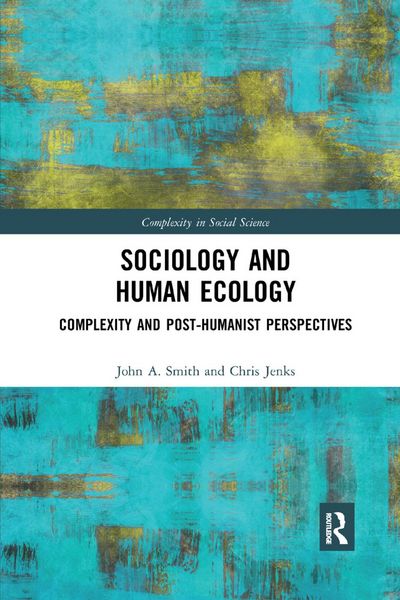
Produktbild: Sociology and Human Ecology

Sociology and Human Ecology Complexity and Post-Humanist Perspectives

71,99 €

inkl. gesetzl. MwSt., Versandkostenfrei


Beschreibung

Produktdetails

Einband

Taschenbuch

Erscheinungsdatum

12.07.2019

Verlag

Taylor & Francis

Seitenzahl

188

Maße (L/B/H)

23,4/15,3/1,3 cm

Gewicht

236 g

Sprache

Englisch

ISBN

978-0-367-37161-6

Beschreibung

Produktdetails

Einband

Taschenbuch

Erscheinungsdatum

12.07.2019

Verlag

Taylor & Francis

Seitenzahl

188

Maße (L/B/H)

23,4/15,3/1,3 cm

Gewicht

236 g

Sprache

Englisch

ISBN

978-0-367-37161-6

Herstelleradresse

Libri GmbH
Europaallee 1
36244 Bad Hersfeld
DE

Email: GPSR Kontakt

Noch keine Bewertungen vorhanden

Verfassen Sie die erste Bewertung zu diesem Artikel

Helfen Sie anderen Kundinnen und Kunden durch Ihre Meinung.

Kundinnen und Kunden meinen

Bewertungen (0)

  • Produktbild: Sociology and Human Ecology
  • Introduction

    Chapter 1. Ontology from the perspective of complexity theory: auto-eco-organisation

    Attention and ignorance

    The dual character of ignorance: the standpoint of irony

    The dual character of ignorance: pragmatism

    The plurality of ignorance and 'complexity'

    Prigogine and systems far-from equilibrium

    Morin: restricted and general complexity

    Kauffmann and 'the next adjacent possible'

    Per Bak: Self-Organised Criticality

    Conclusions and implications.

    Post-script and transition: an informational turn

    Chapter 2 The strengths and limitations of the concept of social construction

    Marxism(s) and the Economy

    Durkheim, organic solidarity and sui generic social phenomena.

    The Normal & the Pathological

    Weber, authority and power.

    Weber and the Protestant Ethic

    Foucault and post-structuralism

    Reconciling Critical Realism and Social Construction

    The Saussurean legacy

    Conclusions and implications

    Chapter 3. The ontological status of the living: a renewed foundation for epistemology and representation

    Hoffmeyer and semiotic causality

    Deely and biosemiotics

    UexKull and the concept of the Umwelt

    Autopoiesis and/or Dissipative Systems

    Embodied cognition: a basic introduction

    The Embodied Conceptualisation Hypothesis

    The Replacement Hypothesis

    The Constitution Hypothesis

    J. and E. Gibson: a radical ecology of perceptual learning and development

    Summary and extensions

    Dennett: sufficiency, economy, distribution.

    Conclusion, postscript and transition.

    Chapter 4 Human cognition and development

    The Standard Social Science Model (SSSM)

    Evolutionary psychology

    The Gibsons revisited: the ecology of perception and human development

    Affordances reconsidered in the context of human development

    Konnor et al: structures of human childhood

    Infancy and altriciality

    Puberty and adolescence

    Affect theory: emotion and the realisation of the social

    Kegan: 'evolutionary balances' and 'orders of consciousness'.

    Concluding comments: Stacey on Elias vs Freud

    Chapter 5 The social, structure and the emotions

    The sociological heritage

    Forms of solidarity: Durkheim, Chance, TenHouten

    Forms of solidarity: Douglas and Thompson

    Anthropology and social theory (our emphasis) or

    What do we mean by post-humanism?

    A brief note on Sewell

    Concluding remarks

    Chapter 6 The challenge of ecological economics

    A question of cycles and worldviews: Thompson, markets and hierarchies

    'Our' propositions

    Proposed counter-actions

    Alternative voices

    Ecological economics: an evaluation and consequences for critical theory

    Chapter 7 Philosophy and Method for an Ecological-Political Economy

    Imperative 1: A General Ontology as/and energy-driven auto-eco-organisation

    Imperative 2. A general epistemology and/as auto-exo-reference

    Imperative 3. Revisit the specific question of scale and grain

    Imperative 3. Revisit the specific question of scale and grain

    Imperative 3. Revisit the specific question of scale and grain

    Imperative 4. The identification of actants and boundaries: qualitative aspects of scale and organisation

    Imperative 5. Reconsider actants, scale and constraints/as interacting subject matter(s)

    Imperative 6: Reconsider the ethics and politics of complexity. Who acts? Persistence and Darwinism. Ethics for whom?

    Imperative 7: What are the demands of complexity and human ecology on openness, democracy, exemplars of reflexive inquiry?

    Bibliography