KI-Beratung Beta

Produktbild: Guinea-Bissau

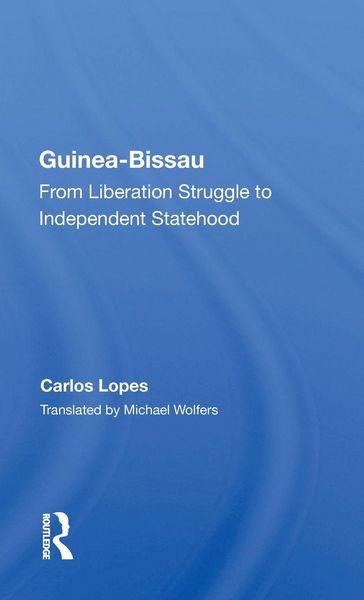
Guinea-Bissau From Liberation Struggle to Independent Statehood

279,99 €

inkl. gesetzl. MwSt., Versandkostenfrei


Beschreibung

This book addresses whether Guinea-Bissau is a nation or a nation in formation; what the political and ideological foundations of the national liberation movement are; and how one should characterize the historical transition from a national liberation movement to a state.

Beschreibung

This book addresses whether Guinea-Bissau is a nation or a nation in formation; what the political and ideological foundations of the national liberation movement are; and how one should characterize the historical transition from a national liberation movement to a state.

Produktdetails

Einband

Gebundene Ausgabe

Erscheinungsdatum

17.06.2019

Verlag Taylor and Francis
Seitenzahl

202

Produktdetails

Einband

Gebundene Ausgabe

Erscheinungsdatum

17.06.2019

Verlag Taylor and Francis
Seitenzahl

202

Maße (L/B/H)

21,8/13,8/1,6 cm

Gewicht

318 g

Sprache

Englisch

ISBN

978-0-367-00551-1

Herstelleradresse

Libri GmbH
Europaallee 1
36244 Bad Hersfeld
DE

Email: gpsr@libri.de

Noch keine Bewertungen vorhanden

Verfassen Sie die erste Bewertung zu diesem Artikel

Helfen Sie anderen Kundinnen und Kunden durch Ihre Meinung.

Kundinnen und Kunden meinen

Bewertungen (0)

Die Leseprobe wird geladen.
  • Produktbild: Guinea-Bissau
  • Part 1: Nation or Nation in Formation 1. Social Structures in Guinea-Bissau 2. National Liberation Struggle 3. The National Question Part 2: The Mobilizing Power of Amilcar Cabral 4. Culture and the Struggle for Independence 5. The Petty Bourgeoisie and its Historic Role 6. The Independence of Guinea-Bissau Part 3: State Formation 7. The Legacy of Colonialism 8. The Historical Transition 9. New Social and Economic Structures 10. New Power Relations 11. The Coup of November 1980 12. Ethnicity and State Formation 13. The Present Contradictions of Power Part 4: The Regional Context: Africa in Struggle 14. Imperialism, Colonialism and Neocolonialism 15. The Political Turning