KI-Beratung Beta

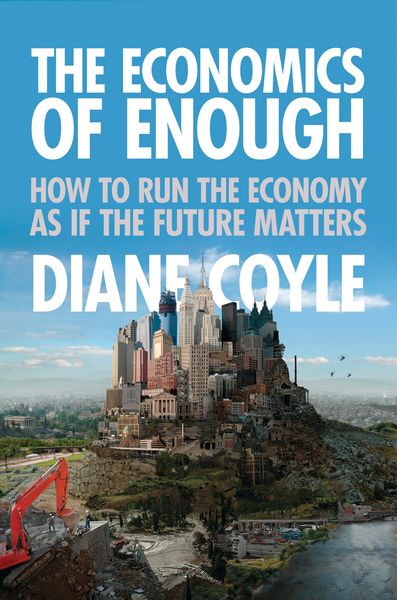
Produktbild: The Economics of Enough

The Economics of Enough How to Run the Economy as If the Future Matters

32,99 € 46,20 € *

inkl. gesetzl. MwSt.

Beschreibung

Why our economy is cheating the future-and what we can do about it The world's leading economies are facing not just one but many crises. The financial meltdown may not be over, climate change threatens major global disruption, economic inequality has reached extremes not seen for a century, and government...

Beschreibung

Why our economy is cheating the future-and what we can do about it
The world's leading economies are facing not just one but many crises. The financial meltdown may not be over, climate change threatens major global disruption, economic inequality has reached extremes not seen for a century, and government and business are widely distrusted. At the same time, many people regret the consumerism and social corrosion of modern life. What these crises have in common, Diane Coyle argues, is a reckless disregard for the future-especially in the way the economy is run. How can we achieve the financial growth we need today without sacrificing a decent future for our children, our societies, and our planet? How can we realize what Coyle calls "the Economics of Enough"?
Running the economy for tomorrow as well as today will require a wide range of policy changes. The top priority must be ensuring that we get a true picture of long-term economic prospects, with the development of official statistics on national wealth in its broadest sense, including natural and human resources. Saving and investment will need to be encouraged over current consumption. Above all, governments will need to engage citizens in a process of debate about the difficult choices that lie ahead and rebuild a shared commitment to the future of our societies.
Creating a sustainable economy-having enough to be happy without cheating the future-won't be easy. But The Economics of Enough starts a profoundly important conversation about how we can begin-and the first steps we need to take.

Produktdetails

Format

ePUB

Kopierschutz

Nein

Family Sharing

Nein

Text-to-Speech

Ja

Produktdetails

Format

ePUB

Format

eBooks im ePUB-Format erlauben eine dynamische Anpassung des Inhalts an die jeweilige Display-Größe des Lesegeräts. Das Format eignet sich daher besonders für das Lesen auf mobilen Geräten, wie z.B. Ihrem tolino, Tablets oder Smartphones.

Kopierschutz

Nein

Kopierschutz

Dieses eBook können Sie uneingeschränkt auf allen Geräten der tolino Familie, allen sonstigen eReadern und am PC lesen. Das eBook ist nicht kopiergeschützt und kann ein personalisiertes Wasserzeichen enthalten. Weitere Hinweise zum Lesen von eBooks mit einem personalisierten Wasserzeichen finden Sie unter Hilfe/Downloads.

Family Sharing

Nein

Family Sharing

Mit Family Sharing können Sie eBooks innerhalb Ihrer Familie (max. sechs Mitglieder im gleichen Haushalt) teilen. Sie entscheiden selbst, welches Buch Sie mit welchem Familienmitglied teilen möchten. Auch das parallele Lesen durch verschiedene Familienmitglieder ist durch Family Sharing möglich. Um eBooks zu teilen oder geteilt zu bekommen, muss jedes Familienmitglied ein Konto bei Thalia oder einem anderen tolino-Buchhändler haben. Weitere Informationen finden Sie unter Hilfe/Family-Sharing.

Text-to-Speech

Ja

Text-to-Speech

Bedeutet Ihnen Stimme mehr als Text? Mit der Funktion Text-to-Speech können Sie sich im tolino webReader und in der aktuellen Thalia – Lesen & Hören App das eBook vorlesen lassen. Weitere Informationen finden Sie unter Hilfe/Text-to-Speech.

Erscheinungsdatum

14.02.2011

Verlag University of Wales Press
Seitenzahl

336 (Printausgabe)

Sprache

Englisch

EAN

9781400838110

Barrierefreiheit
  • nicht oder eingeschränkt barrierefrei

Noch keine Bewertungen vorhanden

Verfassen Sie die erste Bewertung zu diesem Artikel

Helfen Sie anderen Kundinnen und Kunden durch Ihre Meinung.

Kundinnen und Kunden meinen

Bewertungen (0)

Weitere Artikel finden Sie in

Die Leseprobe wird geladen.
  • Produktbild: The Economics of Enough