KI-Beratung Beta

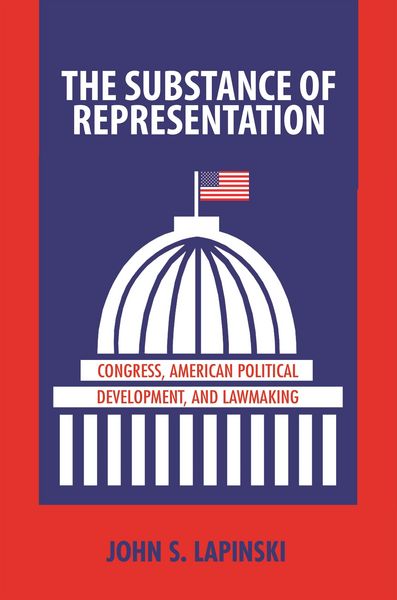
Produktbild: The Substance of Representation
Band 133

The Substance of Representation Congress, American Political Development, and Lawmaking

36,30 €

inkl. gesetzl. MwSt.

Beschreibung

Lawmaking is crucial to American democracy because it completely defines and regulates the public life of the nation. Yet despite its importance, political scientists spend very little time studying the direct impact that the politics surrounding a particular issue has on lawmaking. The Substance of...

Beschreibung

Lawmaking is crucial to American democracy because it completely defines and regulates the public life of the nation. Yet despite its importance, political scientists spend very little time studying the direct impact that the politics surrounding a particular issue has on lawmaking. The Substance of Representation draws on a vast range of historical and empirical data to better understand how lawmaking works across different policy areas. Specifically, John Lapinski introduces a theoretically grounded method for parsing policy issues into categories, and he shows how policymaking varies in predictable ways based on the specific issue area being addressed.
Lapinski examines the ways in which key factors that influence policymaking matter for certain types of policy issues, and he includes an exhaustive look at how elite political polarization shifts across these areas. He considers how Congress behaves according to the policy issue at hand, and how particular areas--such as war, sovereignty issues, and immigration reform--change legislative performance. Relying on records of all Congressional votes since Reconstruction and analyzing voting patterns across policy areas from the late nineteenth to late twentieth centuries, Lapinski provides a comprehensive historical perspective on lawmaking in order to shed light on current practices.
Giving a clear picture of Congressional behavior in the policymaking process over time, The Substance of Representation provides insights into the critical role of American lawmaking.

Produktdetails

Format

ePUB

Kopierschutz

Nein

Family Sharing

Nein

Text-to-Speech

Ja

Produktdetails

Format

ePUB

Format

eBooks im ePUB-Format erlauben eine dynamische Anpassung des Inhalts an die jeweilige Display-Größe des Lesegeräts. Das Format eignet sich daher besonders für das Lesen auf mobilen Geräten, wie z.B. Ihrem tolino, Tablets oder Smartphones.

Kopierschutz

Nein

Kopierschutz

Dieses eBook können Sie uneingeschränkt auf allen Geräten der tolino Familie, allen sonstigen eReadern und am PC lesen. Das eBook ist nicht kopiergeschützt und kann ein personalisiertes Wasserzeichen enthalten. Weitere Hinweise zum Lesen von eBooks mit einem personalisierten Wasserzeichen finden Sie unter Hilfe/Downloads.

Family Sharing

Nein

Family Sharing

Mit Family Sharing können Sie eBooks innerhalb Ihrer Familie (max. sechs Mitglieder im gleichen Haushalt) teilen. Sie entscheiden selbst, welches Buch Sie mit welchem Familienmitglied teilen möchten. Auch das parallele Lesen durch verschiedene Familienmitglieder ist durch Family Sharing möglich. Um eBooks zu teilen oder geteilt zu bekommen, muss jedes Familienmitglied ein Konto bei Thalia oder einem anderen tolino-Buchhändler haben. Weitere Informationen finden Sie unter Hilfe/Family-Sharing.

Text-to-Speech

Ja

Text-to-Speech

Bedeutet Ihnen Stimme mehr als Text? Mit der Funktion Text-to-Speech können Sie sich im tolino webReader und in der aktuellen Thalia – Lesen & Hören App das eBook vorlesen lassen. Weitere Informationen finden Sie unter Hilfe/Text-to-Speech.

Erscheinungsdatum

08.09.2013

Verlag Princeton University Press
Seitenzahl

192 (Printausgabe)

Dateigröße

3427 KB

Sprache

Englisch

EAN

9781400848638

Barrierefreiheit
  • nicht oder eingeschränkt barrierefrei

Noch keine Bewertungen vorhanden

Verfassen Sie die erste Bewertung zu diesem Artikel

Helfen Sie anderen Kundinnen und Kunden durch Ihre Meinung.

Kundinnen und Kunden meinen

Bewertungen (0)

Weitere Artikel finden Sie in

Die Leseprobe wird geladen.
  • Produktbild: The Substance of Representation