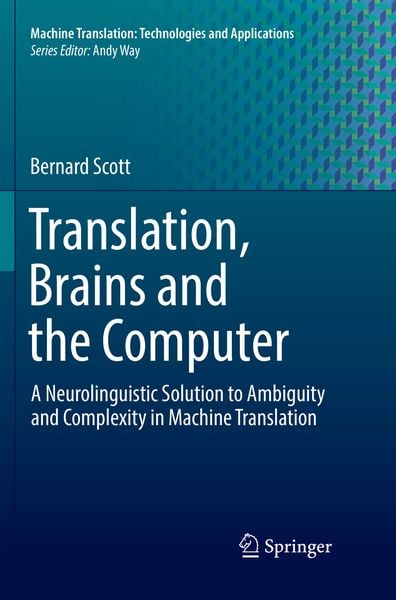

Translation, Brains and the Computer A Neurolinguistic Solution to Ambiguity and Complexity in Machine Translation
-
- Hardcover
- Taschenbuch ausgewählt
- eBook
-
Sprache:Englisch
138,99 €
inkl. gesetzl. MwSt.,
Beschreibung
Produktdetails
Einband
Taschenbuch
Erscheinungsdatum
28.12.2018
Abbildungen
XVI, 241 p. 55 illus.
Verlag
SpringerSeitenzahl
241
Maße (L/B/H)
23,5/15,5/1,5 cm
Gewicht
400 g
Auflage
1oftcover reprint of the original 1st ed. 2018
Sprache
Englisch
ISBN
978-3-030-09538-3
This book is about machine translation (MT) and the classic problems associated with this language technology. It examines the causes of these problems and, for linguistic, rule-based systems, attributes the cause to language’s ambiguity and complexity and their interplay in logic-driven processes. For non-linguistic, data-driven systems, the book attributes translation shortcomings to the very lack of linguistics. It then proposes a demonstrable way to relieve these drawbacks in the shape of a working translation model (Logos Model) that has taken its inspiration from key assumptions about psycholinguistic and neurolinguistic function. The book suggests that this brain-based mechanism is effective precisely because it bridges both linguistically driven and data-driven methodologies. It shows how simulation of this cerebral mechanism has freed this one MT model from the all-important, classic problem of complexity when coping with the ambiguities of language. Logos Model accomplishes this by a data-driven process that does not sacrifice linguistic knowledge, but that, like the brain, integrates linguistics within a data-driven process. As a consequence, the book suggests that the brain-like mechanism embedded in this model has the potential to contribute to further advances in machine translation in all its technological instantiations.
Noch keine Bewertungen vorhanden
Verfassen Sie die erste Bewertung zu diesem Artikel
Helfen Sie anderen Kundinnen und Kunden durch Ihre Meinung.
Kurze Frage zu unserer Seite
Vielen Dank für Ihr Feedback
Wir nutzen Ihr Feedback, um unsere Produktseiten zu verbessern. Bitte haben Sie Verständnis, dass wir Ihnen keine Rückmeldung geben können. Falls Sie Kontakt mit uns aufnehmen möchten, können Sie sich aber gerne an unseren Kund*innenservice wenden.
zum Kundenservice