KI-Beratung Beta

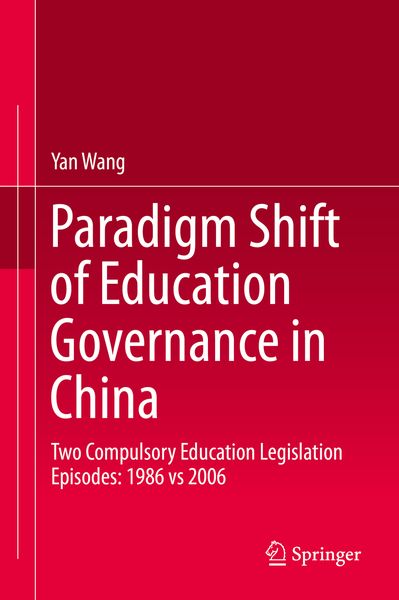
Produktbild: Paradigm Shift of Education Governance in China

Paradigm Shift of Education Governance in China Two Compulsory Education Legislation Episodes: 1986 vs 2006

51,99 €

inkl. gesetzl. MwSt., Versandkostenfrei


Beschreibung

The book addresses the paradigm shift in education governance in China through a study of two legislation episodes in China: the 1986 Compulsory Education Law and the 2006 Compulsory Education Law Amendment. The research began with two broad questions: how was the Compulsory Education Law made and amended?...

Beschreibung

The book addresses the paradigm shift in education governance in China through a study of two legislation episodes in China: the 1986 Compulsory Education Law and the 2006 Compulsory Education Law Amendment. The research began with two broad questions: how was the Compulsory Education Law made and amended? Why was it made and amended? Using ethnographic interviews and documentary analysis as the main research methods, more specific questions on both legislative processes were delved into as the research evolved: What were the driving forces behind the 1986 and 2006 legislation? What values of compulsory education were assumed in their central decisions? What was the institutional rationale underpinning them? Data was collected through ethnographic interviews with key informants involved in the policymaking process. The research findings were analyzed and presented on the basis of narration analysis. The policymaking process of the legislation was then analyzed from three paradigms: agenda-setting, decision-making and organizational behavior. Finally, by examining the results of the previous stages of analysis, and further comparing the two cases, the research arrived at a theoretical framework for education governance that embraces three essential elements: political ideology, perceived value of education, and institutional rationale. A thorough analysis of the two legislative processes identified that the political ideology ‒ which shifted from efficiency-oriented economic well-being to equity-oriented social cohesion ‒ steered the agenda-setting of the compulsory education legislation. The perceived value of education reflects the role that education plays in development, changing from economic value to social value. The institutional rationale essentially determines strategies by which compulsory education materializes, with a variance from governing by goal and mobilization to governing by accountability and regulation. In conclusion, education governance in China witnessed a paradigm shift from “economic instrumentalism” to “social rationalism” between mid-1980s and 2006.

Produktdetails

Einband

Gebundene Ausgabe

Erscheinungsdatum

28.10.2019

Abbildungen

XVII, 159 p. 18 illus.

Verlag Springer Berlin

Produktdetails

Einband

Gebundene Ausgabe

Erscheinungsdatum

28.10.2019

Abbildungen

XVII, 159 p. 18 illus.

Verlag Springer Berlin
Seitenzahl

159

Maße (L/B/H)

24,1/16/1,6 cm

Gewicht

390 g

Auflage

1st ed. 2019

Sprache

Englisch

ISBN

978-3-662-59513-8

Herstelleradresse

Springer-Verlag KG
Sachsenplatz 4-6
1201 Wien
AT

Email: ProductSafety@springernature.com

Noch keine Bewertungen vorhanden

Verfassen Sie die erste Bewertung zu diesem Artikel

Helfen Sie anderen Kundinnen und Kunden durch Ihre Meinung.

Kundinnen und Kunden meinen

Bewertungen (0)

  • Produktbild: Paradigm Shift of Education Governance in China
  • Introduction.- Chapter 1 Evoluaiton of Basic Education in China.- Chapter 2  Collecting and Tackling Data.- Chapter 3 Reflecting on Theoretical Context.- Chapter 4 Episode I: The 1986 Legislation.- Chapter 5 Episode II: The 2006 Legislation.- Chapter 6 Analysing The Two Legislation Episodes.- Chapter 7 Paradigm Shif of Education Governance.