Beschreibung
Produktdetails
Einband
Gebundene Ausgabe
Erscheinungsdatum
02.01.2020
Abbildungen
Illustrated in colour, farbige Illustrationen
Verlag
Ingram Publishers ServicesSeitenzahl
224
Maße (L/B/H)
28,9/26,3/3 cm
Gewicht
1493 g
Farbe
Anthrazit / Khaki
Sprache
Englisch
ISBN
978-0-87846-866-9
The first book to focus exclusively on Hokusai's landscapes, by one of the world's leading ukiyo-e specialists
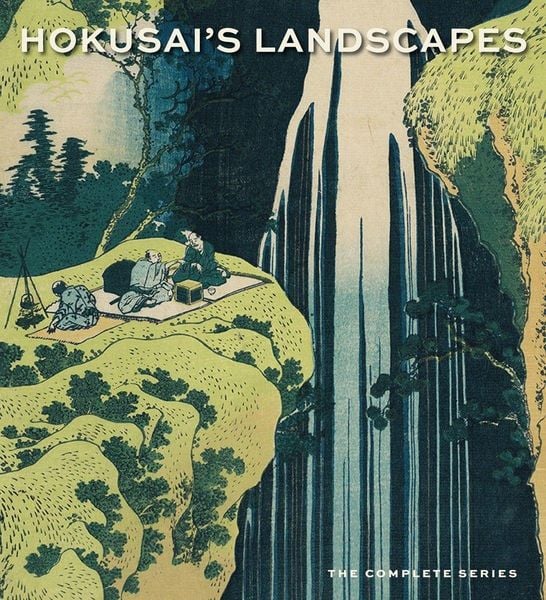
The best known of all Japanese artists, Katsushika Hokusai was active as a painter, book illustrator and print designer throughout his 90-year lifespan. Yet his most famous works-the color woodblock landscape prints issued in series-were produced within a relatively short time, in an amazing burst of creative energy that lasted from about 1830 to 1836.
Hokusai's landscapes revolutionized Japanese printmaking and became icons of world art within a few decades of the artist's death. Hokusai's Landscapes focuses exclusively on this pivotal body of the artist's work, the first book to do so. Featuring stunning color reproductions of works from the incomparable Japanese art collection at the Museum of Fine Arts, Boston (the largest collection of Japanese prints outside Japan), Hokusai's Landscapes examines the magnetic appeal of Hokusai's designs and the circumstances of their creation.
The book includes all published prints of the artist's eight major landscape series: Thirty-Six Views of Mount Fuji (1830-32), A Tour of Waterfalls in Various Provinces (1833-34), Snow, Moon and Flowers (1833), Eight Views of the Ryukyu Islands (1832-33), One Thousand Pictures of the Ocean (1832-33), Remarkable Views of Bridges in Various Provinces (1834), A True Mirror of Chinese and Japanese Poetry (1833) and One Hundred Poems Explained by the Nurse (1835).
Working prolifically in the years just before Japan opened to the West in 1853, Katsushika Hokusai (1760-1849) was the first Japanese artist to be internationally recognized. His cleverly composed ukiyo-e prints of everyday life and the landscapes of Edo Japan arrived in a 19th-century Europe gripped by Japonisme-mania, where they influenced artists such as Degas, Gauguin, Manet and Van Gogh.
Noch keine Bewertungen vorhanden
Verfassen Sie die erste Bewertung zu diesem Artikel
Helfen Sie anderen Kundinnen und Kunden durch Ihre Meinung.
Kurze Frage zu unserer Seite
Vielen Dank für Ihr Feedback
Wir nutzen Ihr Feedback, um unsere Produktseiten zu verbessern. Bitte haben Sie Verständnis, dass wir Ihnen keine Rückmeldung geben können. Falls Sie Kontakt mit uns aufnehmen möchten, können Sie sich aber gerne an unseren Kund*innenservice wenden.
zum Kundenservice