Beschreibung
Produktdetails
Format
Kopierschutz
Nein
Family Sharing
Nein
Text-to-Speech
Nein
Erscheinungsdatum
04.04.2019
Herausgeber
Mirza Hasanuzzaman + weitereVerlag
SpringerSeitenzahl
490 (Printausgabe)
Dateigröße
9244 KB
Sprache
Englisch
EAN
9783030061180
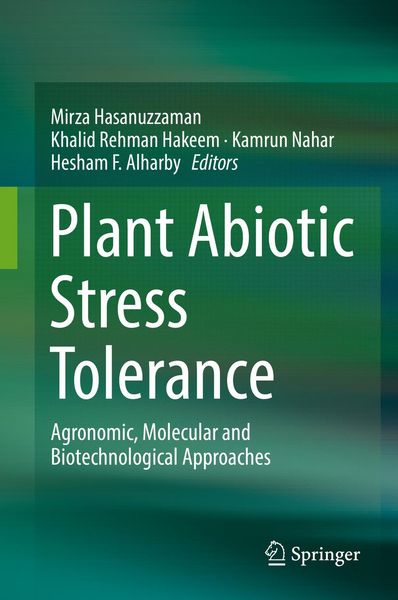
Plants have to manage a series of environmental stresses throughout their entire lifespan. Among these, abiotic stress is the most detrimental; one that is responsible for nearly 50% of crop yield reduction and appears to be a potential threat to global food security in coming decades. Plant growth and development reduces drastically due to adverse effects of abiotic stresses. It has been estimated that crop can exhibit only 30% of their genetic potentiality under abiotic stress condition. So, this is a fundamental need to understand the stress responses to facilitate breeders to develop stress resistant and stress tolerant cultivars along with good management practices to withstand abiotic stresses. Also, a holistic approach to understanding the molecular and biochemical interactions of plants is important to implement the knowledge of resistance mechanisms under abiotic stresses. Agronomic practices like selecting cultivars that is tolerant to wide range of climatic condition, planting date, irrigation scheduling, fertilizer management could be some of the effective short-term adaptive tools to fight against abiotic stresses. In addition, "system biology" and "omics approaches" in recent studies offer a long-term opportunity at the molecular level in dealing with abiotic stresses. The genetic approach, for example, selection and identification of major conditioning genes by linkage mapping and quantitative trait loci (QTL), production of mutant genes and transgenic introduction of novel genes, has imparted some tolerant characteristics in crop varieties from their wild ancestors. Recently research has revealed the interactions between micro-RNAs (miRNAs) and plant stress responses exposed to salinity, freezing stress and dehydration. Accordingly transgenic approaches to generate stress-tolerant plant are one of the most interesting researches to date.
This book presents the recent development of agronomic and molecular approaches in conferring plant abiotic stress tolerance in an organized way. The present volume will be of great interest among research students and teaching community, and can also be used as reference material by professional researchers.
Noch keine Bewertungen vorhanden
Verfassen Sie die erste Bewertung zu diesem Artikel
Helfen Sie anderen Kundinnen und Kunden durch Ihre Meinung.
Kurze Frage zu unserer Seite
Vielen Dank für Ihr Feedback
Wir nutzen Ihr Feedback, um unsere Produktseiten zu verbessern. Bitte haben Sie Verständnis, dass wir Ihnen keine Rückmeldung geben können. Falls Sie Kontakt mit uns aufnehmen möchten, können Sie sich aber gerne an unseren Kund*innenservice wenden.
zum Kundenservice