Gutscheinbedingungen

**Gültig nur für Bestellungen an die Wunsch-Poststation bis 10.06.2026 auf Spielzeug, Schreibwaren, Filme, Geschenke & Trends, Musik, tolino eReader & Zubehör, Hörbücher und Hörbuch-Downloads (außer Abo), nicht preisgebundene Bücher und Kalender online auf thalia.at und in der Thalia App. Einzelne Artikel können ausgeschlossen sein. Aufgrund der Buchpreisbindung sind deutschsprachige Bücher und eBooks ausgenommen. Zusätzlich ausgenommen sind preisgebundene Artikel, Abos & Flatrates, eBooks, Games, Geschenkkarten/-boxen, Shelfies, Software, Zeitschriften sowie einzelne Artikel von tonies®. Pro Einkauf einmal einlösbar. Kein Click & Collect möglich. Keine Barauszahlung. Nicht kombinierbar mit anderen Aktionen und Gutscheinen. Gutschein wird auf max. 500€ Bestellwert angerechnet. Nicht gültig für Versandkosten und Services.

  • Produktbild: Habermas's Public Sphere
  • Produktbild: Habermas's Public Sphere

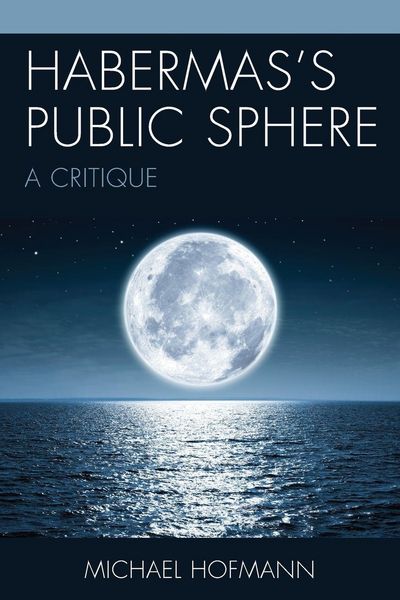
Habermas's Public Sphere A Critique

66,99 €

inkl. gesetzl. MwSt., Versandkostenfrei


Beschreibung

Produktdetails

Einband

Taschenbuch

Erscheinungsdatum

23.05.2019

Verlag

Fairleigh Dickinson University Press

Seitenzahl

286

Maße (L/B/H)

22,9/15,2/1,7 cm

Gewicht

468 g

Sprache

Englisch

ISBN

978-1-61147-990-4

Beschreibung

Produktdetails

Einband

Taschenbuch

Erscheinungsdatum

23.05.2019

Verlag

Fairleigh Dickinson University Press

Seitenzahl

286

Maße (L/B/H)

22,9/15,2/1,7 cm

Gewicht

468 g

Sprache

Englisch

ISBN

978-1-61147-990-4

Herstelleradresse

Libri GmbH
Europaallee 1
36244 Bad Hersfeld
DE

Email: gpsr@libri.de

Kundinnen und Kunden meinen

0 Bewertungen

Informationen zu Bewertungen

Zur Abgabe einer Bewertung ist eine Anmeldung im Konto notwendig. Die Authentizität der Bewertungen wird von uns nicht überprüft. Wir behalten uns vor, Bewertungstexte, die unseren Richtlinien widersprechen, entsprechend zu kürzen oder zu löschen.

Die Bewertungen sind nach Format, Anzahl Sterne und Datum sortiert.

Verfassen Sie die erste Bewertung zu diesem Artikel

Helfen Sie anderen Kund*innen durch Ihre Meinung

Kundinnen und Kunden meinen

0 Bewertungen filtern

Die Leseprobe wird geladen.
  • Produktbild: Habermas's Public Sphere
  • Produktbild: Habermas's Public Sphere
  • Preface
    1Introduction: Reassessing Habermas's Public Sphere Concept
    1.1. After Fifty Years: The Public Sphere, Reason, and Democracy
    1.2. The Concept's Lasting Contribution to Critical Theory and Practice
    1.3. The Concept's Key Challenge
    1.4. The Concept's Contradictory Sources
    1.5. The Concept's Interdisciplinary Structure
    2Public Reason and Popular Sovereignty: Habermas's Stylization of the French Revolution
    2.1. Revolutionary Dialectic: Synthesizing Rousseau and the Physiocrats?
    2.2. Revolutionary Philosophy: Uncoerced or Predetermined Opinion Publique?
    2.3. Revolutionary Mythology: Conservative / Liberal Uses of de Tocqueville's Ambivalence as an "Aristocratic Liberal" in The Old Regime and the Revolution
    2.4. Revolutionary Romantic: From Moral Theater to Aesthetic Utopia (Schiller)
    3The Third Estate, the Two Nations, and the Sovereignty of Reason: Kant's Public & Say's Law After the French Revolution
    3.1. Establishing the Third Estate as the Nation in England in 1832: Transcending History through a Unique Critique of Ideology?
    3.2. The English Century: One Nation under Say's Law and a Vast Secular Boom?
    3.3. Early Challenges to the Bourgeois Public: Hegel on Class Antagonism, Ricardo on Victims of Machinery, and Carlyle on the Callous "Cash Nexus"
    3.4. Property and Reform in Parliament: The Dialectics of Corn & Factory Legislation
    4From the Dutch Republic to the Fiscal-Military State of the Modern Whigs: Bourgeois Morality and Moral Censure of the Political Public Sphere Before the French Revolution
    4. 1. Crisis and Critique: The Origins of Political Economy in the Political Public Sphere of the Seventeenth Century
    4.2. The Fiscal-Military State of the Modern Whigs and its Critique in the Political Public Sphere
    4.3. The Moral Public Sphere and the Rise of Civilized Barbarism
    4.4. Moral Censure of the Political Public Sphere in the Eighteenth Century
    Conclusion
    Selected Bibliography
    Index
    About the Author