KI-Beratung Beta

  • Produktbild: The Grape Genome
  • Produktbild: The Grape Genome

The Grape Genome

219,99 €

inkl. gesetzl. MwSt., Versandkostenfrei


Beschreibung

This book describes the current state of international grape genomics, with a focus on the latest findings, tools and strategies employed in genome sequencing and analysis, and genetic mapping of important agronomic traits. It also discusses how these are having a direct impact on outcomes for grape...

Beschreibung

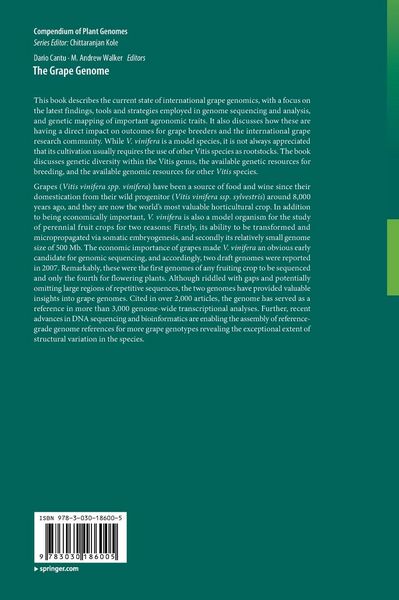
This book describes the current state of international grape genomics, with a focus on the latest findings, tools and strategies employed in genome sequencing and analysis, and genetic mapping of important agronomic traits. It also discusses how these are having a direct impact on outcomes for grape breeders and the international grape research community. While V. vinifera is a model species, it is not always appreciated that its cultivation usually requires the use of other Vitis species as rootstocks. The book discusses genetic diversity within the Vitis genus, the available genetic resources for breeding, and the available genomic resources for other Vitis species.
Grapes ( Vitis vinifera spp. vinifera ) have been a source of food and wine since their domestication from their wild progenitor ( Vitis vinifera ssp. sylvestris ) around 8,000 years ago, and they are now the world’s most valuable horticultural crop. In addition to being economically important, V. vinifera is also a model organism for the study of perennial fruit crops for two reasons: Firstly, its ability to be transformed and micropropagated via somatic embryogenesis, and secondly its relatively small genome size of 500 Mb. The economic importance of grapes made V. vinifera an obvious early candidate for genomic sequencing, and accordingly, two draft genomes were reported in 2007. Remarkably, these were the first genomes of any fruiting crop to be sequenced and only the fourth for flowering plants. Although riddled with gaps and potentially omitting large regions of repetitive sequences, the two genomes have provided valuable insights into grape genomes. Cited in over 2,000 articles, the genome has served as a reference in more than 3,000 genome-wide transcriptional analyses. Further, recent advances in DNA sequencing and bioinformatics are enabling the assembly of reference-grade genome references for more grape genotypes revealing the exceptional extent of structural variation in the species.

Portrait


Produktdetails

Einband

Gebundene Ausgabe

Erscheinungsdatum

03.12.2019

Abbildungen

XXVII, 367 p. 52 illus., 40 illus. in color.

Herausgeber Dario Cantu + weitere

Produktdetails

Einband

Gebundene Ausgabe

Erscheinungsdatum

03.12.2019

Abbildungen

XXVII, 367 p. 52 illus., 40 illus. in color.

Herausgeber
Verlag Springer
Seitenzahl

367

Maße (L/B/H)

26/18,3/2,7 cm

Gewicht

875 g

Sprache

Englisch

ISBN

978-3-030-18600-5

Herstelleradresse

Springer-Verlag GmbH
Europaplatz 3
69115 Heidelberg
DE

Email: ProductSafety@springernature.com

Noch keine Bewertungen vorhanden

Verfassen Sie die erste Bewertung zu diesem Artikel

Helfen Sie anderen Kundinnen und Kunden durch Ihre Meinung.

Kundinnen und Kunden meinen

Bewertungen (0)

  • Produktbild: The Grape Genome
  • Produktbild: The Grape Genome
  • Economic/Academic importance.- Grape taxonomy and germplasm.- Grape domestication.- Ancient DNA sequencing and grape archeology.- Strategies & tools for sequencing.- Gene annotation.- Database.- Molecular mapping of genes & QTLs.- Grape systems biology.- Grape epigenetics.- The genome of the grapevine holobiont.- Genes and water relations in the grapevine.- Genomics of berry ripening.- Grape transcriptomics and viticulture.- Wild grapes and rootstock breeding.- Breeding genetic resistance to biotic diseases.- Grape biotechnology, past present future (genome editing…).- Future prospects.