KI-Beratung Beta

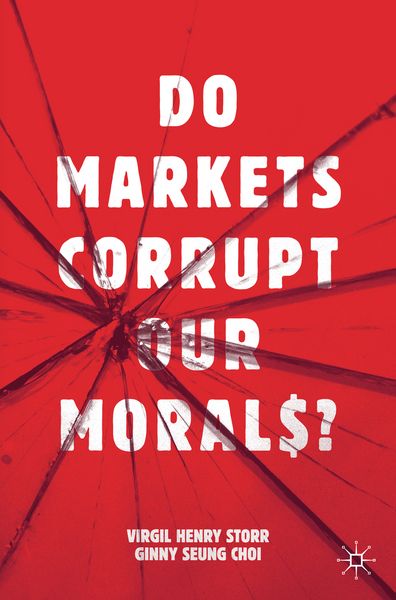
Produktbild: Do Markets Corrupt Our Morals?

Do Markets Corrupt Our Morals?

39,99 €

inkl. gesetzl. MwSt., Versandkostenfrei


Beschreibung

The most damning criticism of markets is that they are morally corrupting. As we increasingly engage in market activity, the more likely we are to become selfish, corrupt, rapacious and debased. Even Adam Smith, who famously celebrated markets, believed that there were moral costs associated with life...

Beschreibung

The most damning criticism of markets is that they are morally corrupting. As we increasingly engage in market activity, the more likely we are to become selfish, corrupt, rapacious and debased. Even Adam Smith, who famously celebrated markets, believed that there were moral costs associated with life in market societies.


This book explores whether or not engaging in market activities is morally corrupting. Storr and Choi demonstrate that people in market societies are wealthier, healthier, happier and better connected than those in societies where markets are more restricted. More provocatively, they explain that successful markets require and produce virtuous participants. Markets serve as moral spaces that both rely on and reward their participants for being virtuous. Rather than harming individuals morally, the market is an arena where individuals are encouraged to be their best moral selves. Do Markets Corrupt Our Morals? invites us to reassess the claim that markets corrupt our morals.

Rezension

“Storr and Choi are to be commended for directly addressing the question perennially put to markets—do they corrupt us?—and demonstrating that markets need not apologize for viciousness. They also are to be praised for the form of their argument that allows students of morality and markets across and outside academic disciplines … . This reader enjoyed gathering evidence to spread the good news that the market improves our lives both materially and morally.” (Brianne Wolf, The Review of Austrian Economics, Vol. 36 (1), 2023)

“The merit of this book is that it does take on those arguments and concerns directly, and offers some persuasive answers and attractive avenues for further inquiry.” (Michael Munger, Public Choice, Vol. 185, 2020)

Produktdetails

Einband

Taschenbuch

Erscheinungsdatum

24.08.2019

Verlag Springer
Seitenzahl

281

Produktdetails

Einband

Taschenbuch

Erscheinungsdatum

24.08.2019

Verlag Springer
Seitenzahl

281

Maße (L/B/H)

23,5/15,5/1,7 cm

Gewicht

452 g

Auflage

1st ed. 2019

Sprache

Englisch

ISBN

978-3-030-18415-5

Herstelleradresse

Springer-Verlag GmbH
Tiergartenstr. 17
69121 Heidelberg
DE

Email: ProductSafety@springernature.com

Noch keine Bewertungen vorhanden

Verfassen Sie die erste Bewertung zu diesem Artikel

Helfen Sie anderen Kundinnen und Kunden durch Ihre Meinung.

Kundinnen und Kunden meinen

Bewertungen (0)

  • Produktbild: Do Markets Corrupt Our Morals?
  • 1. Can Markets Be Moral?.- 2. Markets as Monsters.- 3. Markets as Unintentionally Moral Wealth Creators.- 4. People Can Improve Their Lives Through Markets.- 5. Markets Are Moral Spaces.- 6. Markets Are Moral Training Grounds.- 7. What If Markets Are Really Moral?.