Gutscheinbedingungen

**Gültig bis 25.06.2026 auf fremdsprachige Bücher online auf thalia.at und in der Thalia App. Einzelne Artikel können ausgeschlossen sein. Ausgenommen sind preisgebundene Artikel & eBooks. Pro Einkauf einmal einlösbar. Click & Collect nur bei Onlinevorabzahlung möglich. Keine Barauszahlung. Nicht kombinierbar mit anderen Aktionen und Gutscheinen. Gutschein wird auf max. 500€ Bestellwert angerechnet. Nicht gültig für Geschenkkarten, Versandkosten und Services.

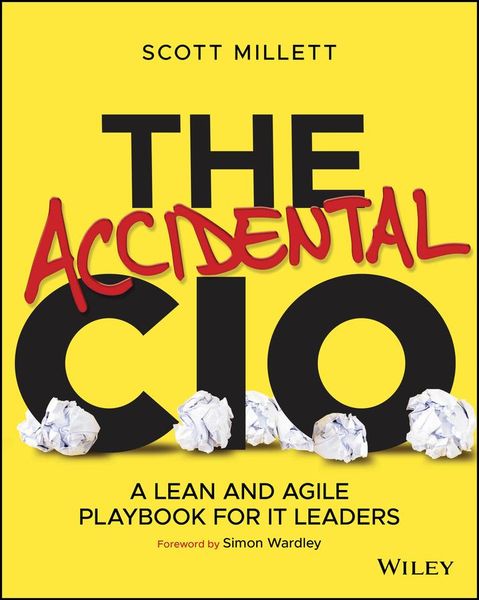
Produktbild: The Accidental CIO

The Accidental CIO A Lean and Agile Playbook for IT Leaders

37,99 €

inkl. gesetzl. MwSt., Versandkostenfrei


Beschreibung

Produktdetails

Einband

Taschenbuch

Erscheinungsdatum

07.05.2024

Verlag

John Wiley & Sons

Seitenzahl

528

Maße (L/B/H)

23,6/19/3,5 cm

Gewicht

726 g

Auflage

1. Auflage

Sprache

Englisch

ISBN

978-1-119-61209-4

Beschreibung

Produktdetails

Einband

Taschenbuch

Erscheinungsdatum

07.05.2024

Verlag

John Wiley & Sons

Seitenzahl

528

Maße (L/B/H)

23,6/19/3,5 cm

Gewicht

726 g

Auflage

1. Auflage

Sprache

Englisch

ISBN

978-1-119-61209-4

EU-Ansprechpartner

Zeitfracht Medien GmbH
Ferdinand-Jühlke-Straße 7
99095 Erfurt
DE
produktsicherheit@zeitfracht.de

Herstelleradresse

Wiley & Sons
1 Oldlands Way
PO22 9NQ Bognor Regis
GB
trade@wiley.com

Kundinnen und Kunden meinen

0 Bewertungen

Informationen zu Bewertungen

Zur Abgabe einer Bewertung ist eine Anmeldung im Konto notwendig. Die Authentizität der Bewertungen wird von uns nicht überprüft. Wir behalten uns vor, Bewertungstexte, die unseren Richtlinien widersprechen, entsprechend zu kürzen oder zu löschen.

Die Bewertungen sind nach Format, Anzahl Sterne und Datum sortiert.

Verfassen Sie die erste Bewertung zu diesem Artikel

Helfen Sie anderen Kund*innen durch Ihre Meinung

Kundinnen und Kunden meinen

0 Bewertungen filtern

Die Leseprobe wird geladen.
  • Produktbild: The Accidental CIO
  • Foreword xxv

    Introduction xxvii

    Part I A New System of Work 1

    1 Why We Need to Change The System 3

    The Age of Digital Disruption 4

    Operating in a Volatile, Uncertain, Complex, and Ambiguous Business Environment 6

    Leading IT in a Complex and Adaptive World 8

    Summary 12

    2 Philosophies for a New System 13

    Philosophies vs. Methodologies 14

    Discovering Value Using Design Thinking14

    Eliminating Waste with Lean 17

    Managing Complexity in Software Development with Agile 23

    Strategic Decision-Making Using Wardley Mapping 28

    Summary 34

    3 How to Change the System 37

    Being Agile vs. Doing Agile 38

    Why Only Adopting the Practices of Agile Won't Work 39

    Use Systems Thinking to Change Behavior 41

    Changing Leaders' Mental Models 46

    Instilling Drive through Purpose, Mastery, and Autonomy 50

    Summary 52

    Part II Designing An Adaptive Operating Model 55

    4 The Anatomy of an Operating Model 57

    The Anatomy of an Operating Model 58

    The Themes of an Adaptable Operating Model 59

    Summary 65

    5 How We Are Organized 67

    Organizational Structure 68

    Understanding the Influence of Conway's Law and the Cognitive Load Theory on Team Performance 76

    Product-Centric Development Teams 80

    Defining Product Team Boundaries 90

    Evolving to Business and IT Fusion Teams 100

    Managing Cross Team Dependency 102

    Summary 103

    6 How We Work 107

    IT Management Frameworks 108

    How to Solve Problems from Discovery to Delivery 110

    Problem-Solving Methodologies 112

    Discovery Tools for Understanding the Problem Space 118

    Approaches to Manage the Solution Space 140

    Summary 158

    7 How We Govern 163

    What Is Governance?  164

    Alignment: Linking Work to Strategic Intent 167

    Managing Demand: Visualizing Work 170

    Prioritization: Focusing on the Things That Matter 183

    Measurement: Defining and Cascading Value and Measures 196

    Investment: Funding for Outcomes 209

    Decision Rights: Empowering People 223

    Summary 240

    8 How We Source and Manage Talent 243

    Sourcing Strategy 244

    Recruiting 245

    Developing 249

    Retaining 253

    Summary 257

    9 How We Lead 259

    Adopting New Leadership Behaviors 260

    Embracing Servant Leadership 262

    Instilling Intrinsic Motivation 265

    Encouraging Growth and Development 269

    Focusing on Improving the System 272

    Summary 276

    Part III Strategy to Execution 279

    10 Understanding Your Business 281

    Business Anatomy 282

    Why IT Leaders Need to Understand the Anatomy of a Business 285

    Purpose: Starting with Why and Understanding Your North Star 286

    The Business Model: The System of Capturing Value 287

    Operating Model: How We Do the Work 293

    Business Context: Understanding What Can Impact Us 302

    Summary 323

    11 IT Strategic Contribution 325

    Linking IT Execution to Business Strategy Using Enterprise Architecture 326

    Creating an IT Strategy 333

    Determining IT Contribution to Addressing BAU Challenges and Achieving the Strategic Objectives 337

    Defining Principles to Guide Technical Solutions 349

    Determining Strategic Actions for IT Capability Maturity Improvements351

    Measuring Contribution in Terms of Business Outcomes 354

    Communicating IT Strategic Contribution 357

    Summary 371

    12 Tactical Planning: Deploying Strategy 375

    Planning Considerations 376

    Following Hoshin Kanri to Deploy Strategy 380

    Creating a Tactical Plan 384

    Clarify the Business Needs: Where Do We Need to Focus Our Investment? 391

    Review the Technology Landscape: What Do We Need to Optimize? 393

    Review the IT Operating Model: What Do We Need to Change? 405

    How Wardley Maps Can Help Inform Target Architecture and Operating Model Choices 407

    Defining and Prioritizing the IT Initiatives 420

    Communicating the IT Tactical Investment Road Map 427

    Summary 435

    13 Operational Planning: Execution, Learning and Adapting 437

    Operational Considerations 438

    Operational Planning 442

    Feedback, Learning, and Adapting 449

    Creating a Clear Line of Sight from Strategy to Execution 458

    A Worked Example: From Strategy to Tactics to Operational Execution 459

    Summary 477

    Index 479