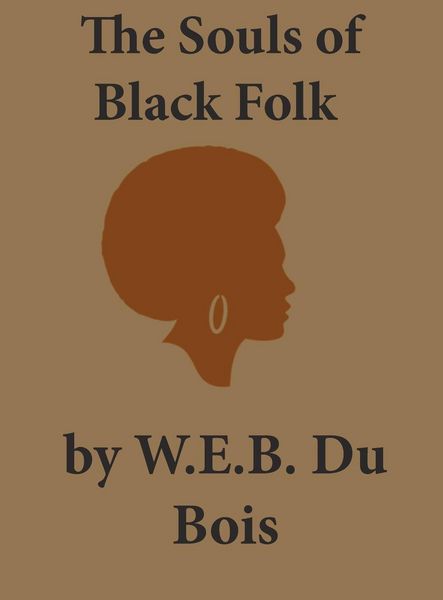

The Souls of Black Folk
-
- Hardcover ausgewählt
- Taschenbuch
- eBook
-
Sprache:Englisch
-
Verlag:Ancient Wisdom Publications
- Insight Publica 37,99 €
- Read & Co. Books 35,99 €
- Bibliotech Pr 31,99 €
- Random House N.Y. 22,99 €
- Classy Publishing 35,99 €
- Cosimo 34,99 €
- Penguin LLC US 31,99 €
- Union Square & Co. 16,99 €
- Ingram Publishers Services 21,99 €
- 12th Media Services 21,99 €
- Wilder Publications 29,99 €
- Www.bnpublishing.net 19,99 €
- Ancient Wisdom Publications 23,99 € ausgewählt
- Benediction Classics 33,99 €
- Stanford Inversiones SpA 24,99 €
- Chump Change 19,99 €
- Indoeuropeanpublishing.Com 29,99 €
- Gröls Verlag 20,50 €
23,99 €
inkl. gesetzl. MwSt.,
- Kostenlose Lieferung ab 30 € Einkaufswert
- Versandkostenfrei für Bonuscard-Kund*innen
Beschreibung
Produktdetails
Einband
Gebundene Ausgabe
Erscheinungsdatum
10.02.2019
Verlag
Ancient Wisdom PublicationsSeitenzahl
80
Maße (L/B/H)
28,6/22,1/0,9 cm
Gewicht
486 g
Sprache
Englisch
ISBN
978-1-950330-04-1
To develop this work, Du Bois drew from his own experiences as an African American in the American society. Outside of its notable relevance in African-American history, The Souls of Black Folk also holds an important place in social science as one of the early works in the field of sociology. In The Souls of Black Folk, Du Bois used the term "double consciousness", perhaps taken from Emerson ("The Transcendentalist" and "Fate"), applying it to the idea that black people must have two fields of vision at all times. They must be conscious of how they view themselves, as well as being conscious of how the world views them. Each chapter in The Souls of Black Folk begins with a pair of epigraphs: text from a poem, usually by a European poet, and the musical score of a spiritual, which Du Bois describes in his foreword ("The Forethought") as "some echo of haunting melody from the only American music which welled up from black souls in the dark past". Columbia University English and comparative literature professor Brent Hayes Edwards writes: It is crucial to recognize that Du Bois ... chooses not to include the lyrics to the spirituals, which often serve to underline the arguments of the chapters: Booker T. Washington's idealism is echoed in the otherworldly salvation hoped for in "A Great Camp-Meeting in the Promised Land", for example; likewise the determined call for education in "Of the Training of Black Men" is matched by the strident words of "March On". Edwards adds that Du Bois may have withheld the lyrics to mark a barrier for the reader, to suggest that black culture—life "within the veil"—remains inaccessible to white people. In "The Forethought", Du Bois states: "Leaving, then, the world of the white man, I have stepped within the Veil, raising it that you may view faintly its deeper recesses,—the meaning of its religion, the passion of its human sorrow, and the struggle of its greater souls." He concludes with the words: "...need I add that I who speak here am bone of the bone and flesh of the flesh of them that live within the Veil?"
Noch keine Bewertungen vorhanden
Verfassen Sie die erste Bewertung zu diesem Artikel
Helfen Sie anderen Kundinnen und Kunden durch Ihre Meinung.
Kurze Frage zu unserer Seite
Vielen Dank für Ihr Feedback
Wir nutzen Ihr Feedback, um unsere Produktseiten zu verbessern. Bitte haben Sie Verständnis, dass wir Ihnen keine Rückmeldung geben können. Falls Sie Kontakt mit uns aufnehmen möchten, können Sie sich aber gerne an unseren Kund*innenservice wenden.
zum Kundenservice