KI-Beratung Beta

Gutscheinbedingungen

**Gültig bis 30.11.2026 auf Spielzeug, Schreibwaren, Filme, Geschenke & Trends, Musik, tolino eReader & Zubehör, Hörbücher und Hörbuch-Downloads, nicht preisgebundene Bücher und Kalender online auf thalia.at und in der Thalia App. Einzelne Artikel können ausgeschlossen sein. Aufgrund der Buchpreisbindung sind deutschsprachige Bücher und eBooks ausgenommen. Zusätzlich ausgenommen sind Abos & Flatrates, Games, Geschenkkarten/-boxen, Shelfies, Software, Zeitschriften sowie einzelne Artikel von tonies®. Pro Einkauf einmal einlösbar. Nur gültig mit im Onlineshop hinterlegter Bonuscard. Click & Collect nur bei Onlinevorabzahlung möglich. Keine Barauszahlung. Nicht kombinierbar mit anderen Aktionen und Gutscheinen. Gutschein wird auf max. 500€ Bestellwert angerechnet. Nicht gültig für Versandkosten und Services.

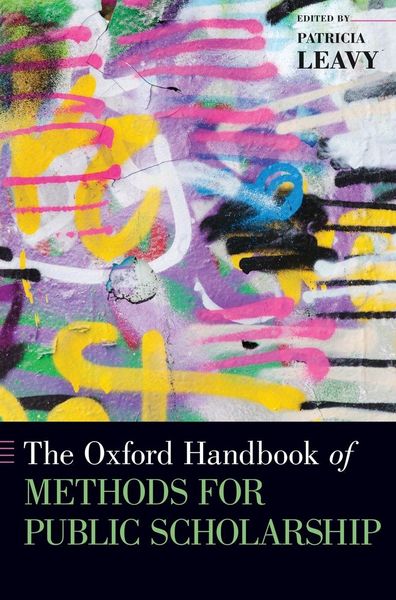
Produktbild: Oxford Handbook of Methods for Public Scholarship

Oxford Handbook of Methods for Public Scholarship

Aus der Reihe Oxford Handbooks

308,99 €

inkl. gesetzl. MwSt., Versandkostenfrei


Beschreibung

The Oxford Handbook of Methods for Public Scholarship presents the first comprehensive overview of research methods and practices for engaging in public scholarship. Public scholarship, which has been on the rise over the past 25 years, produces knowledge that is available outside of the academy, is...

Beschreibung

The Oxford Handbook of Methods for Public Scholarship presents the first comprehensive overview of research methods and practices for engaging in public scholarship. Public scholarship, which has been on the rise over the past 25 years, produces knowledge that is available outside of the academy, is useful to relevant stakeholders, and addresses publicly identified needs. By involving stakeholders in the entire process, and making the findings accessible, public scholars contribute to a crucial democratization of research. The Oxford Handbook of Methods for Public Scholarship features a wealth of highly respected interdisciplinary contributors, as well as emerging scholars, and chapters include robust examples from real world research in varied fields and cultures. The volume features ample discussion of working with non-academic stakeholders, coverage of traditional and emergent methods including those that draw from the arts, the internet, social media, and digital technologies, and coverage of key issues such as writing, publicity, and funding.

Produktdetails

Einband

Gebundene Ausgabe

Erscheinungsdatum

21.10.2019

Herausgeber Patricia Leavy
Verlag Oxford Academic

Produktdetails

Einband

Gebundene Ausgabe

Erscheinungsdatum

21.10.2019

Herausgeber Patricia Leavy
Verlag Oxford Academic
Seitenzahl

764

Maße (L/B/H)

25/17,5/4,5 cm

Gewicht

1417 g

Sprache

Englisch

ISBN

978-0-19-027448-1

Herstelleradresse

Libri GmbH
Europaallee 1
36244 Bad Hersfeld
DE

Email: gpsr@libri.de

Noch keine Bewertungen vorhanden

Verfassen Sie die erste Bewertung zu diesem Artikel

Helfen Sie anderen Kundinnen und Kunden durch Ihre Meinung.

Kundinnen und Kunden meinen

Bewertungen (0)

Die Leseprobe wird geladen.
  • Produktbild: Oxford Handbook of Methods for Public Scholarship
    • Preface
    • Part 1: The Changing Academic and Social Landscape
    • 1. Introduction to The Oxford Handbook of Methods for Public Scholarship
    • Patricia Leavy
    • 2. The 21st Century Academic Landscape: From a Disciplinary to a Transdisciplinary Model
    • Patricia Leavy
    • 3. Public scholarship, Public Intellectuals and the Role of Higher Education in a Time of Crisis
    • Henry Giroux
    • 4. Composing an Undivided Life as an Activist/Scholar: Methods for Practicing Engaged Social Movement Scholarship
    • Adria D. Goodson
    • Part 2: Research Design with Vulnerable Populations and Non-Academic Stakeholders
    • 5. Ethical Issues Working with Vulnerable Populations
    • Isabel Araiza
    • 6. Ethical Challenges Community-Based Researchers and Community-Based Organizations Face: Can We Still Work Together?
    • Margaret Boyd
    • 7. The Impossible Task of Community Art Practice: A methodological micro-guide for seven young Chicagoans
    • Jorge Lucero and William Estrada
    • 8. For the Sake of Humanity: Research on Cross-cultural Collaborative Arts for Public Health
    • Wendy L. Sternberg
    • 9. (Un)Settling Imagined Lands: A Par/Des(i) Approach to De/colonizing Methodologies Kakali Bhattacharya
    • 10. Disaster Research: Past, Present, and Future
    • Mark R. Landahl, DeeDee Bennett, and Brenda D. Phillips
    • Part 3: Taking Traditional Methods Public
    • 11. Interviews: Using conversations in public scholarship
    • Svend Brinkmann
    • 12. Public Ethnography
    • Tony E. Adams and Robin M. Boylorn
    • 13. Oral History, The Public Record, and The Story
    • Valerie J. Janesick
    • Part 4: The Arts
    • 14. Literature and Creative Writing as Public Scholarship
    • Sandra Faulkner and Sheila Squillante
    • 15. Health Theatre: Embodying Research
    • Susan Cox and George Belliveau
    • 16. Narrative Film as Public Scholarship
    • Yen Yen Woo
    • 17. Visual Art Campaigns
    • Raisa Foster
    • Part 5: The Internet, Social Media and Technology
    • 18. Cellphilms in Public Scholarship
    • Katie MacEntee, Casey Burkholder, and Joshua Schwab-Cartas
    • 19. Online, Asynchronous Data Collection in Qualitative Research
    • Tracy Spencer, Linnea Rademaker, Peter Williams, and Cynthia Loubier
    • 20. #spacesforknowledgeproduction
    • Daniel T. Barney, Lorrie Blair, and Juan Carlos Castro
    • 21. Data Collection via Email
    • Adrienne Trier-Bieniek
    • Part 6: Writing and Dissemination
    • 22. Audience and Voice (and Sometimes Reflexivity)
    • Yvonna Lincoln, Vassa Grichko, and Glenn Allen Phillips
    • 23. Creative Nonfiction in Qualitative Inquiry
    • Jessica Smartt Gullion and Jessica Spears Williams
    • 24. Writing Collaboratively
    • JeffriAnne Wilder
    • 25. Academic Blogs
    • Jimmie Manning
    • 26. Academics writing for a broader public audience
    • Phillip Vannini and Sarah Abbott
    • 27. Generating Publicity and Engaging with the Media to Promote Academic Research
    • Mark David Ryan
    • Part 7: Considerations
    • 28. Grant Writing as a Creative Process: Methods from Brainstorming to Project-Building, Mangement and Completion
    • Ellen Gorsevski, Kate Magsamen-Conrad, and Lisa Hanasono
    • 29. Growing the Revolutionary Intellectual, Creating the Counterpublic Sphere
    • Peter McLaren and Lilia D. Monzó
    • 30. A Brief Statement on the Future of Public Scholarship and the Research Methods Landscape
    • Patricia Leavy