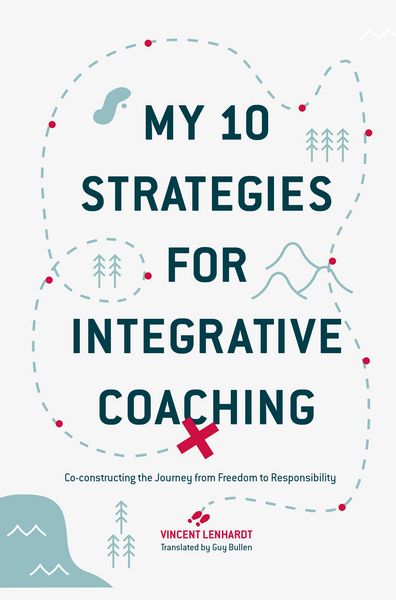
My 10 Strategies for Integrative Coaching Co-constructing the Journey from Freedom to Responsibility
-
- Hardcover
- Taschenbuch ausgewählt
- eBook
-
Sprache:Englisch
39,99 €
inkl. gesetzl. MwSt.,
Beschreibung
Produktdetails
Einband
Taschenbuch
Erscheinungsdatum
10.08.2018
Verlag
SpringerSeitenzahl
241
Maße (L/B/H)
23,5/15,5/1,5 cm
Gewicht
406 g
Auflage
Softcover reprint of the original 1st ed. 2017
Sprache
Englisch
ISBN
978-3-319-85484-7
This book gives coaches, and all leaders, the wider perspective and the practical tools to help those they work with to achieve deep and lasting change that generates long-term performance.
Who we are, and how we relate to others, is a major factor in the sustainable development of organizations and communities today. The helping relationship—whether as coach, manager, trainer, teacher or leader—is central to developing this capacity to relate—not only to others but also to ourselves.
This book provides a series of innovative concepts and practical tools for those involved in helping relationships, as they help others develop and transform. It provides five operational strategies that answers the questions “What should I do?” and “How should I do it?”. It then offers four strategies to help a person build their own identity. Finally, it describes a “crystallization” strategy that encompasses all the others, and enables a person to crystalize what has been occurring during the helping relationship.
It also provides a unique perspective on the place of coaching in the context of the evolution of our species towards an empathetic civilization, of our society to and beyond the third industrial revolution, and of our companies as they reinvent the way they organize in the 21 st century to give greater autonomy to those who work in them and harness the power of participative democracy in the workplace.
A central theme of the book is freedom and responsibility. Having found, then fully accepted our freedom, we go beyond freedom, and take the path towards responsibility. Both client and coach chart their path on this journey through the alliance they create, and through which deep meaning is born for both.
Noch keine Bewertungen vorhanden
Verfassen Sie die erste Bewertung zu diesem Artikel
Helfen Sie anderen Kundinnen und Kunden durch Ihre Meinung.
Kurze Frage zu unserer Seite
Vielen Dank für Ihr Feedback
Wir nutzen Ihr Feedback, um unsere Produktseiten zu verbessern. Bitte haben Sie Verständnis, dass wir Ihnen keine Rückmeldung geben können. Falls Sie Kontakt mit uns aufnehmen möchten, können Sie sich aber gerne an unseren Kund*innenservice wenden.
zum Kundenservice