Beschreibung
Produktdetails
Einband
Gebundene Ausgabe
Erscheinungsdatum
09.02.2021
Verlag
John Wiley & Sons IncSeitenzahl
320
Maße (L/B/H)
23,6/15,8/3,2 cm
Gewicht
521 g
Auflage
1. Auflage
Sprache
Englisch
ISBN
978-1-119-60182-1
Make AI technology the backbone of your organization to compete in the Fintech era
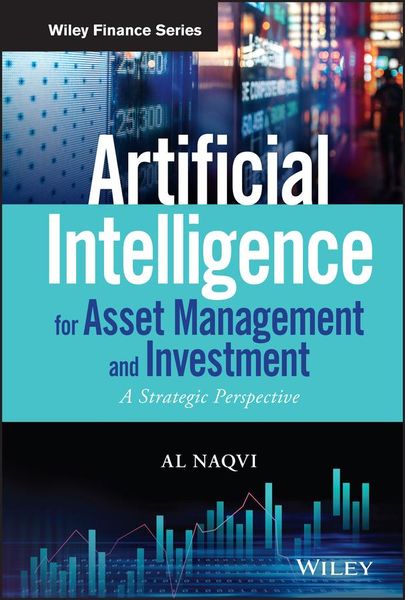
The rise of artificial intelligence is nothing short of a technological revolution. AI is poised to completely transform asset management and investment banking, yet its current application within the financial sector is limited and fragmented. Existing AI implementations tend to solve very narrow business issues, rather than serving as a powerful tech framework for next-generation finance. Artificial Intelligence for Asset Management and Investment provides a strategic viewpoint on how AI can be comprehensively integrated within investment finance, leading to evolved performance in compliance, management, customer service, and beyond.
No other book on the market takes such a wide-ranging approach to using AI in asset management. With this guide, you'll be able to build an asset management firm from the ground up--or revolutionize your existing firm--using artificial intelligence as the cornerstone and foundation. This is a must, because AI is quickly growing to be the single competitive factor for financial firms. With better AI comes better results. If you aren't integrating AI in the strategic DNA of your firm, you're at risk of being left behind.
* See how artificial intelligence can form the cornerstone of an integrated, strategic asset management framework
* Learn how to build AI into your organization to remain competitive in the world of Fintech
* Go beyond siloed AI implementations to reap even greater benefits
* Understand and overcome the governance and leadership challenges inherent in AI strategy
Until now, it has been prohibitively difficult to map the high-tech world of AI onto complex and ever-changing financial markets. Artificial Intelligence for Asset Management and Investment makes this difficulty a thing of the past, providing you with a professional and accessible framework for setting up and running artificial intelligence in your financial operations.
The rise of artificial intelligence is nothing short of a technological revolution. AI is poised to completely transform asset management and investment banking, yet its current application within the financial sector is limited and fragmented. Existing AI implementations tend to solve very narrow business issues, rather than serving as a powerful tech framework for next-generation finance. Artificial Intelligence for Asset Management and Investment provides a strategic viewpoint on how AI can be comprehensively integrated within investment finance, leading to evolved performance in compliance, management, customer service, and beyond.
No other book on the market takes such a wide-ranging approach to using AI in asset management. With this guide, you'll be able to build an asset management firm from the ground up--or revolutionize your existing firm--using artificial intelligence as the cornerstone and foundation. This is a must, because AI is quickly growing to be the single competitive factor for financial firms. With better AI comes better results. If you aren't integrating AI in the strategic DNA of your firm, you're at risk of being left behind.
* See how artificial intelligence can form the cornerstone of an integrated, strategic asset management framework
* Learn how to build AI into your organization to remain competitive in the world of Fintech
* Go beyond siloed AI implementations to reap even greater benefits
* Understand and overcome the governance and leadership challenges inherent in AI strategy
Until now, it has been prohibitively difficult to map the high-tech world of AI onto complex and ever-changing financial markets. Artificial Intelligence for Asset Management and Investment makes this difficulty a thing of the past, providing you with a professional and accessible framework for setting up and running artificial intelligence in your financial operations.
Noch keine Bewertungen vorhanden
Verfassen Sie die erste Bewertung zu diesem Artikel
Helfen Sie anderen Kundinnen und Kunden durch Ihre Meinung.
Kurze Frage zu unserer Seite
Vielen Dank für Ihr Feedback
Wir nutzen Ihr Feedback, um unsere Produktseiten zu verbessern. Bitte haben Sie Verständnis, dass wir Ihnen keine Rückmeldung geben können. Falls Sie Kontakt mit uns aufnehmen möchten, können Sie sich aber gerne an unseren Kund*innenservice wenden.
zum Kundenservice