KI-Beratung Beta

Gutscheinbedingungen

**Gültig bis 30.11.2026 auf Spielzeug, Schreibwaren, Filme, Geschenke & Trends, Musik, tolino eReader & Zubehör, Hörbücher und Hörbuch-Downloads, nicht preisgebundene Bücher und Kalender online auf thalia.at und in der Thalia App. Einzelne Artikel können ausgeschlossen sein. Aufgrund der Buchpreisbindung sind deutschsprachige Bücher und eBooks ausgenommen. Zusätzlich ausgenommen sind Abos & Flatrates, Games, Geschenkkarten/-boxen, Shelfies, Software, Zeitschriften sowie einzelne Artikel von tonies®. Pro Einkauf einmal einlösbar. Nur gültig mit im Onlineshop hinterlegter Bonuscard. Click & Collect nur bei Onlinevorabzahlung möglich. Keine Barauszahlung. Nicht kombinierbar mit anderen Aktionen und Gutscheinen. Gutschein wird auf max. 500€ Bestellwert angerechnet. Nicht gültig für Versandkosten und Services.

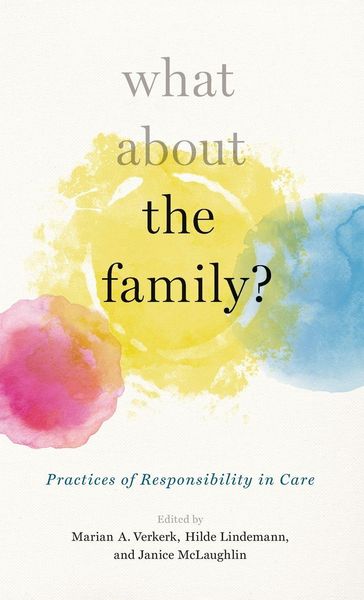
Produktbild: What about the Family?

What about the Family? Practices of Responsibility in Care

114,99 €

inkl. gesetzl. MwSt., Versandkostenfrei


Beschreibung

Health and social care decisions, and how they impact a family, are often viewed from the perspective of the individual family member making them--for example, the role of the parent in surrogacy questions, the care of the elderly, or decisions that involve fetuses or organ donations. What About the...

Beschreibung

Health and social care decisions, and how they impact a family, are often viewed from the perspective of the individual family member making them--for example, the role of the parent in surrogacy questions, the care of the elderly, or decisions that involve fetuses or organ donations. What About the Family? represents a concerted, collaborative effort to depart from this practice--it rather shows that the family unit as a whole is intrinsic and inseparable from patient's ethical decisions. This deeper level of thinking about families and health care poses an entirely new set of difficult questions. Which family members are relevant in influencing a patient? What is a family, in the first place? What duties does a family have to its own members? What makes an ethics of families distinctive from health care ethics, an ethic of care or feminist ethics is that it theorizes relationships characterized by ongoing intimacy and partiality among people who are not interchangeable, and remains centered on the practices of responsibility arising from these relationships. What About the Family? edited by bioethicists Hilde Lindemann, Marian Verkerk, and Janice McLaughlin, represents an interdisciplinary effort, drawing, among other resources, on its authors' backgrounds in sociology, nursing, philosophy, bioethics, and the medical sciences. Contributors begin from the assumption that any ethical examination of the significance of family ties to health and social care will benefit from a dialogue with the debates about family occuring in these other disciplinary areas, and examine why families matter, how families are recognized, how families negotiate responsibilities, how families can participate in treatment decision making, and how justice operates in families.

Produktdetails

Einband

Gebundene Ausgabe

Erscheinungsdatum

01.05.2019

Herausgeber Hilde Lindemann + weitere
Verlag Oxford University Press

Produktdetails

Einband

Gebundene Ausgabe

Erscheinungsdatum

01.05.2019

Herausgeber
Verlag Oxford University Press
Seitenzahl

206

Maße (L/B/H)

22,2/14,5/1,5 cm

Gewicht

337 g

Sprache

Englisch

ISBN

978-0-19-062488-0

Herstelleradresse

Libri GmbH
Europaallee 1
36244 Bad Hersfeld
DE

Email: gpsr@libri.de

Noch keine Bewertungen vorhanden

Verfassen Sie die erste Bewertung zu diesem Artikel

Helfen Sie anderen Kundinnen und Kunden durch Ihre Meinung.

Kundinnen und Kunden meinen

Bewertungen (0)

Die Leseprobe wird geladen.
  • Produktbild: What about the Family?
    • Introduction: Hilde Lindemann, Janice McLaughlin, and Marian Verkerk
    • Chapter 1: Why Families Matter, Hilde Lindemann
    • Case Study: Lesbian Parents' Search for "The Right Way" to Disclose Donor Conception to Their Children, Veerle Prevost
    • Chapter 2: Recognizing Family, Janice McLaughlin
    • Case Study: The Family Imperative in Genetic Testing, Lorraine Cowley
    • Case Study: What Counts as a Family-And Who Is to Decide? Margareta Hydén
    • Chapter 3: Negotiating Responsibilities, Marian A. Verkerk
    • Case Study: Paternal Responsibility for Children and Pediatric Hospital Policies in Romania, Daniela Cuta
    • Case Study: Family Care-Giving as a Problematic Category, Jacqueline Chin
    • Chapter 4: Health Care Decisions, Ulrik Kihlbom and Christian Munthe
    • Case Study: Family-Centeredness as Resource and Complication in Outpatient Care with Weak Adherence, Using Adolescent Diabetes Care as a Case in Point, Andre Herlitz and Christian Munthe
    • Case Study: Annie's Problem, Jackie Leach Scully
    • Chapter 5: Justice, Intimacy, and Autonomy
    • Jamie Lindemann Nelson and Simon Woods
    • Case Study: Young Carers, Gideon Calder
    • Case Study: Autism, Family Life, and Epistemic Injustice: A Case Study, Richard Ashcroft