Gutscheinbedingungen

**Gültig bis 17.08.2026 auf Schreibwaren & Office-Artikel online auf thalia.at, in der Thalia App und in teilnehmenden Thalia Buchhandlungen in Österreich mit Schulsortiment. In den Buchhandlungen nur gültig auf lagernde Ware. Einzelne Artikel können ausgeschlossen sein. Ausgenommen sind preisgebundene Artikel. Pro Einkauf einmal einlösbar. Nur gültig gegen Vorlage oder im Onlineshop hinterlegter Bonuscard. Infos zur Einlösung in der Buchhandlung sind auf der Bonuscard-Vorteilspreisseite zu finden. Click & Collect nur bei Onlinevorabzahlung möglich. Keine Einlösung bei Scan & Go-Bezahlung. Keine Barauszahlung. Nicht kombinierbar mit anderen Aktionen und Gutscheinen. Gutschein wird auf max. 500€ Bestellwert angerechnet. Nicht gültig für Geschenkkarten, Versandkosten und Services.

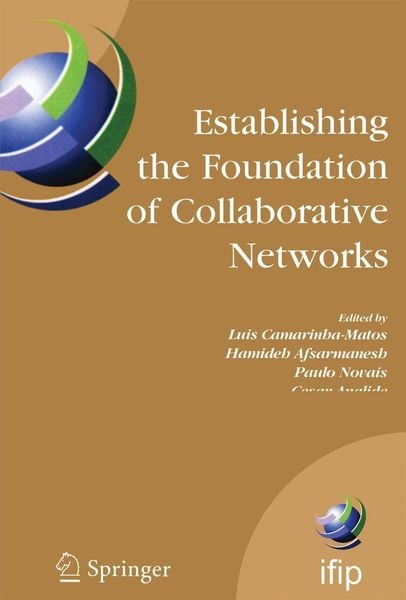
Produktbild: Establishing the Foundation of Collaborative Networks
Band 243 - 11%

Establishing the Foundation of Collaborative Networks IFIP TC 5 Working Group 5.5 Eighth IFIP Working Conference on Virtual Enterprises September 10-12, 2007, Guimarães, Portugal

11% sparen

104,99 € UVP 118,80 €

inkl. gesetzl. MwSt., Versandkostenfrei


Beschreibung

Produktdetails

Einband

Taschenbuch

Herausgeber

Luis Camarinha-Matos + weitere

Verlag

Springer Us

Seitenzahl

689

Maße (L/B)

23,5/15,5 cm

Auflage

1st ed. 2007

Sprache

Englisch

ISBN

978-1-4757-0564-5

Beschreibung

Produktdetails

Einband

Taschenbuch

Herausgeber

Verlag

Springer Us

Seitenzahl

689

Maße (L/B)

23,5/15,5 cm

Auflage

1st ed. 2007

Sprache

Englisch

ISBN

978-1-4757-0564-5

Herstelleradresse

Springer Heidelberg
Tiergartenstr. 17
69121 Heidelberg
DE
buchhandel-buch@springer.com

Noch keine Bewertungen vorhanden

Verfassen Sie die erste Bewertung zu diesem Artikel

Helfen Sie anderen Kundinnen und Kunden durch Ihre Meinung.

Kundinnen und Kunden meinen

Bewertungen (0)

Die Leseprobe wird geladen.
  • Produktbild: Establishing the Foundation of Collaborative Networks
  • Trust Aspects in Collaboration.- Towards Establishing Trust Relationships among Organizations in VBEs.- Fostering R&D Collaboration — The Interplay of Trust, Appropriability and Absorptive Capacity.- Trust Building in Collaborative Networked Organizations Supported by Communities of Practice.- Performance and Value Systems.- Measuring Collaboration Performance in Virtual Organizations.- A Conceptual Model for Virtual Breeding Environments Value Systems.- Towards a Conceptual Model of Value Systems in Collaborative Networks.- Collaboration Network Analysis.- Network Analysis by the Codesnet Approach.- Assessment of Collaborative Networks Structural Stability.- A Decision Support Framework for Collaborative Networks.- VO Breeding Environment Enablers.- Towards Governance Rules and Bylaws for Virtual Breeding Environments.- Enabling Virtual Organizations in a Technological District.- In Search for an Innovative Business Model or How to be Successful in the Nowadays Business Environment.- The Role of Universities Developing New Collaborative Environments: Analysing the Virtuelle Fabrik, Swiss Microtech and the Tenet Group.- Elements of Breeding Environments Management.- Ontology Engineering in Virtual Breeding Environments.- Causal Cross-Impact Analysis as Strategic Planning Aid for Virtual Organisation Breeding Environments.- Assessing the Value of Mediators in Collaborative Business Networks.- VO Creation.- A Computer-Assisted VO Creation Framework.- Collaboration Opportunity Finder.- An Ontology-Based Approach for Selecting Performance Indicators for Partners Suggestion.- Multiple Criteria Partner Selection in Virtual Enterprises.- e-Contracting in Collaborative Network Scenarios.- Fundaments of Virtual Organization E-contracting.- Intelligent Contracting: Software Agents, Corporate Bodies and Virtual Organizations.- Agent-Based Contracting in Virtual Enterprises.- A Lawful Framework for Distributed Electronic Markets.- Learning and Inheritance in VO.- Towards Learning Collaborative Networked Organizations.- Identification of Forms and Components of VO Inheritance.- Establishing and Keeping Inter-Organisational Collaboration. Some Lessons Learned.- Architectures for Collaboration.- A Generic Strategic Layer for Collaborative Networks.- A Privacy-Based Brokering Architecture for Collaboration in Virtual Environments.- Virtual Power Producers Integration into Mascem.- Agent-Based Architecture for Virtual Enterprises to Support Agility.- Modelling Frameworks for Collaborative Networks.- Towards an Architecture Modeling Language for Networked Organizations.- Evolving Virtue.- Business Modelling for Knowledge Networks.- Business Benefits in Networks.- Distribution of Network Generated Profit by considering Individual Profit Expectations.- An Estimation Model for Business Benefits in Horizontal Collaborative Networks.- Examining the Antecedents to Innovation in Electronic Networks of Practice.- Professional Virtual Communities.- Support for Power in Adaptation of Social Protocols for Professional Virtual Communities.- Understanding Users’ Response to Ontology Based Systems in the Context of an Enterprise Sponsored Virtual Community.- Continuous Management of Professional Virtual Community Inheritance Based on the Adaptation of Social Protocols.- Customer Involvement in Networks.- Virtual Customer Communities: An Innovative Case from the Media Industry.- The Impact of Customer Participation on Business Ecosystems.- Supporting Collaborative Work through Wireless Technologies Support in Patient Centric Virtual Organizations (PCVOS).- Social Network Analysis.- Social Network Analysis of Team Dynamics and Intra-Organizational Development in an Aerospace Firm.- The Tacit Dimensions of Collaborative Network Traffic.- Collaborative Services to Maintain Electronic Business Relationships.- Interoperability in Networks.- Towards Seamless Interoperability in Collaborative Networks.- Barriers Driven Methodology for Enterprise Interoperability.- Ambient Intelligence and Simulation in Health Care Virtual Scenarios.- Collaboration within the Tool-and-Die Manufacturing Industry through Open-Source Modular ERP/CRM Systems.- Collaborative Process Models.- A Cartography Based Methodology for Collaborative Process Definition.- Interactive User-Centered Business Process Managementservices.- Workflow Technology Supporting the Operation of Virtual ISPS.- Process Integration and Management.- Introducing a Collaborative Business Model for European ERP Value Chains of SMEs.- Integrated Construction Project Management System Based on IFC and ISO9001:2000.- Enhancing Enterprise Collaboration by Using Multifaceted Services.- Web Services and Fusion.- Application of the Fusion Approach for Assisted Composition of Web Services.- Semantic Integration of Business Applications across Collaborative Value Networks.- Web Service Discovery in a Semantically Extended UDDI Registry: The Case of Fusion.- Collaboration Environments Cases.- Supporting Mobile Virtual Team’s Coordination with SOA-Based Active Entities.- Collaborative Environments Work: A Case Study of Teacher Training.- A Knowledge Search Framework for Collaborative Networks.- Product-Oriented Collaboration.- Maintaining Dynamic Product Designs to Enable Effective Consortium Building in Virtual Breeding Environments.- Distributed Design of Product Oriented Manufacturing Systems.- Virtual Organisation in Cross Domain Engineering.- Adaptive Collaborative Frameworks.- Collaboration and Adaptation in Scheduling.- Virtual Organizations for Municipalities.- A Service Infrastructure to Support Ubiquitous Engineering Practices.- Evaluation and Management of Collaborative Supply Networks.- Engineering Methodology for Organisation Networks.- A Procedure for the Analysis of Industrial Networks.- The Evaluation of Coordination Policies in Logistics Services Markets.- Business Models for Collaborative Planning in Transportation: An Application to Wood Products.- Providing Transparency in the Business of Software: A Modeling Technique for Software Supply Networks.