Gutscheinbedingungen

**Gültig bis 25.06.2026 auf fremdsprachige Bücher online auf thalia.at und in der Thalia App. Einzelne Artikel können ausgeschlossen sein. Ausgenommen sind preisgebundene Artikel & eBooks. Pro Einkauf einmal einlösbar. Click & Collect nur bei Onlinevorabzahlung möglich. Keine Barauszahlung. Nicht kombinierbar mit anderen Aktionen und Gutscheinen. Gutschein wird auf max. 500€ Bestellwert angerechnet. Nicht gültig für Geschenkkarten, Versandkosten und Services.

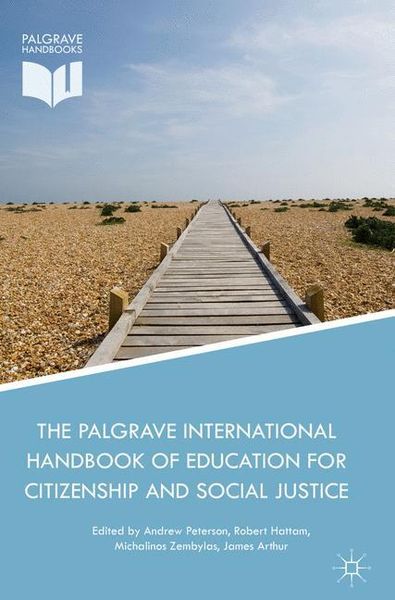
Produktbild: The Palgrave International Handbook of Education for Citizenship and Social Justice

The Palgrave International Handbook of Education for Citizenship and Social Justice

55,99 €

inkl. gesetzl. MwSt., Versandkostenfrei


Beschreibung

Produktdetails

Einband

Taschenbuch

Abbildungen

6 Illustrations, color 6 Illustrations, black and white XXXIII, 12 illus., 6 illus. in color.

Herausgeber

Andrew Peterson + weitere

Verlag

Palgrave Macmillan UK

Seitenzahl

675

Maße (L/B)

23,5/15,5 cm

Auflage

1st ed. 2016

Sprache

Englisch

ISBN

978-1-349-70322-7

Beschreibung

Portrait

Andrew Peterson is Professor of Civic and Moral Education at Canterbury Christ Church University, UK, and Adjunct Professor of Education at the University of South Australia. His latest book is Civics and Citizenship Education in Australia: Challenges, Practices and International Perspectives (co-edited with Libby Tudball).

Robert Hattam is Associate Professor in the School of Education, Associate Head of School: Research, Director of the Centre for Research in Education and Leader of the Pedagogies for Justice research group at the University of South Australia. He has been involved in numerous book projects with others including: Schooling for a Fair Go, Connecting Lives and Learning, and Pedagogies for Reconciliation. He also has published a book entitled Awakening-Struggle: Towards a Buddhist Critical Theory. 

Michalinos Zembylas is Associate Professor of Educational Theory and Curriculum Studies at the Open University of Cyprus. He is also Visiting Professor and Research Fellow at the Institute for Reconciliation and Social Justice, University of the Free State, South Africa. His latest book is titled Emotion and Traumatic Conflict: Re-claiming Healing in Education.

James Arthur is Professor of Education and Civic Engagement and Director of the Jubilee Centre for Character and Virtues at the University of Birmingham, UK. He has written numerous books and articles in the areas of history teaching, educational studies, citizenship and character education, and higher education and religion. He is the former Editor of the British Journal of Educational Studies and advises the English government on character education.

Produktdetails

Einband

Taschenbuch

Abbildungen

6 Illustrations, color 6 Illustrations, black and white XXXIII, 12 illus., 6 illus. in color.

Herausgeber

Verlag

Palgrave Macmillan UK

Seitenzahl

675

Maße (L/B)

23,5/15,5 cm

Auflage

1st ed. 2016

Sprache

Englisch

ISBN

978-1-349-70322-7

Herstelleradresse

Springer Palgrave Macmillan
Tiergartenstr. 17
69121 Heidelberg
DE
buchhandel-buch@springer.com

Kundinnen und Kunden meinen

0 Bewertungen

Informationen zu Bewertungen

Zur Abgabe einer Bewertung ist eine Anmeldung im Konto notwendig. Die Authentizität der Bewertungen wird von uns nicht überprüft. Wir behalten uns vor, Bewertungstexte, die unseren Richtlinien widersprechen, entsprechend zu kürzen oder zu löschen.

Die Bewertungen sind nach Format, Anzahl Sterne und Datum sortiert.

Verfassen Sie die erste Bewertung zu diesem Artikel

Helfen Sie anderen Kund*innen durch Ihre Meinung

Kundinnen und Kunden meinen

0 Bewertungen filtern

  • Produktbild: The Palgrave International Handbook of Education for Citizenship and Social Justice
  • Editors’ Introduction.- PART I.- Chapter 1. ‘Race’, ‘Ethnicity’ and Citizenship in Education:  Locating Intersectionality and Migration for Social Justice; Dina Kiwan.- Chapter 2. Citizenship, Schooling, and ‘Educational Disadvantage’; Robert Hattam.- Chapter 3. Gender, Social Justice and Citizenship in Education: Engaging Space, the Narrative Imagination, and Relationality; Jo-Anne Dillabough.- Chapter 4. Sexuality, Gender, Citizenship and Social Justice: Education’s Queer Relations; Mary Lou Rassmussen, Daniel Marshall, Rob Cover, and Peter Aggleton.- Chapter 5. Indigenous Peoples and Indigeneity; Veronica Tawhai.- Chapter 6. Disability and Education: More than Just Access; Heidi Lourens, Emma Mckinny, and Leslie Swartz.- Chapter 7. Refugees, Asylum Seekers and Education for Citizenship and Social Justice; Jody L. McBrien.- Chapter 8. Education for Citizenship and Social Justice: the Case of Gypsies, Travellers and Roma; Sarah Cemlyn and Andrew Ryder Corvinus.- Chapter 9. The Australian Reconciliation Process: A Case Study of Community Education, Andrew Gunstone.- Chapter 10. Global Human Rights, Liam Gearon.- Chapter 11. Postcolonial Insights for Engaging Difference in Educational Approaches to Social Justice and Citizenship, Sharon Stein and Vanessa Andreotti.- Chapter 12. Global Justice and Educating for Globally Oriented Citizenship; Andrew Peterson.- Chapter 13. Key Issues in Critical Peace Education Theory and Pedagogical Praxis: Implications for Social Justice and Citizenship Education, Michalinos Zembylas and Zvi Bekerman.- Chapter 14. The Place of Religion in Education for Citizenship and Social Justice; Alan Sears and Lindsay Herriot.- PART II: COUNTRY CASE STUDIES.- Chapter 15. The Australian Case of Education for Citizenship and Social Justice; John Smyth.- Chapter 16. Citizenship Education and Social Participation in an Unequal Society: The Case of Brazil; Ulisses F. Araujo.- Chapter 17. Multiculturalism and its Contradictions: Education for Citizenship and Social Justice in Canada; Abigail Bakan.- Chapter 18. Social Justice and Education for Citizenship in England; Andrew Peterson, and Ian Davies.- Chapter 19. Education for Citizenship at School in France: Trajectory, Tensions and Contradictions; Ibrahima Diallo, Mohamed Embarki, and Kaouthar Ben Abdallah.- Chapter 20. Hong Kong: Social Justice and Education for Justice-oriented Citizens in a Politicized Era; Shun-wing NG and Gail Yuen.- Chapter 21. Education for Democracy, Citizenship and Social Justice: The Case of Iceland; Brynja E. Halldórsdóttir, Ólafur Páll Jónsson, and Berglind Rós Magnúsdóttir.- Chapter 22. One Size Fits All? An Exploration of the Teaching of Civics in Israel from the Perspective of Social Justice; Aviv Cohen.- Chapter 23. México: Educating Citizens for Social Justice in a Highly Unequal Country; Leonel Pérez-Expósito.- Chapter 24. The Political Rhetoric and Everyday Realities of Citizenship in New Zealand Society and Schools; Martin Thrupp.- Chapter 25. Education for Citizenship Education and Social Justice in Northern Ireland; Tony Gallagher and Gavin Duffy.- Chapter 26. Social Justice and Citizenship in Scottish Education; Sheila Riddell.- Chapter 27. South Africa: The Struggle For Social Justice And Citizenship in South African Education; Crain Soudien.- Chapter 28. Citizenship Education Versus Reality: The Facts in Spain; Concepción Naval, and Elena Arbués.- Chapter 29. Citizenship Education and the Colonial Contract: The Elusive Search for Social Justice in U.S. Education; Zeus Leonardo and Maliheh M. Vafai.