KI-Beratung Beta

Gutscheinbedingungen

**Gültig am 25.11.2026 auf fremdsprachige Bücher online auf thalia.at und in der Thalia App. Einzelne Artikel können ausgeschlossen sein. Ausgenommen sind preisgebundene Artikel & eBooks. Pro Einkauf einmal einlösbar. Click & Collect nur bei Onlinevorabzahlung möglich. Keine Barauszahlung. Nicht kombinierbar mit anderen Aktionen und Gutscheinen. Gutschein wird auf max. 500€ Bestellwert angerechnet. Nicht gültig für Geschenkkarten, Versandkosten und Services.

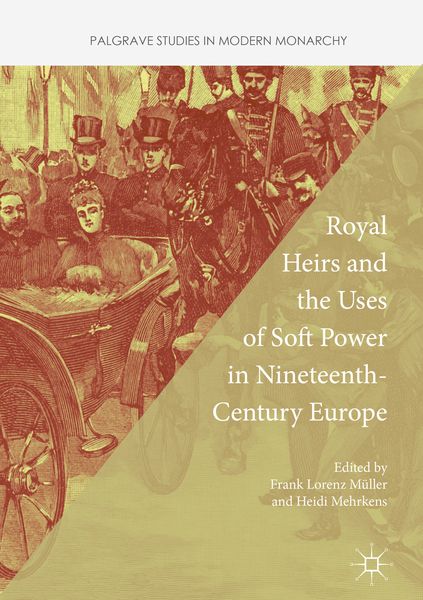
  • Produktbild: Royal Heirs and the Uses of Soft Power in Nineteenth-Century Europe
  • Produktbild: Royal Heirs and the Uses of Soft Power in Nineteenth-Century Europe

Royal Heirs and the Uses of Soft Power in Nineteenth-Century Europe

56,99 €

inkl. gesetzl. MwSt., Versandkostenfrei


Beschreibung

This volume brings together a fascinating selection of studies exploring the soft power tools used by heirs to the throne in order to enhance the communication of monarchies with their audiences during the nineteenth-century. How we perceive royals and their dynasties today – as families, as celebrities,...

Beschreibung

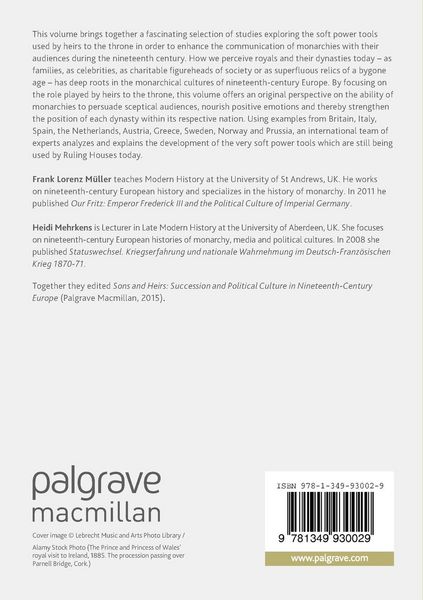
This volume brings together a fascinating selection of studies exploring the soft power tools used by heirs to the throne in order to enhance the communication of monarchies with their audiences during the nineteenth-century. How we perceive royals and their dynasties today – as families, as celebrities, as charitable figureheads of society or as superfluous relics of a bygone age – has deep roots in the monarchical cultures of nineteenth-century Europe. By focusing on the role played by heirs to the throne, this volume offers an original perspective on the ability of monarchies to persuade sceptical audiences, nourish positive emotions and thereby strengthen the position of each dynasty within its respective nation. Using examples from Britain, Italy, Spain, the Netherlands, Austria, Greece, Sweden, Norway and Prussia, an international team of experts analyzes and explains the development of the very soft power tools which are still being used by Ruling Houses today.

Portrait


Frank Lorenz Müller teaches Modern History at the University of St Andrews, UK. He works on nineteenth-century European history and specializes in the history of monarchy. In 2011 he published
Our Fritz: Emperor Frederick III and the Political Culture of Imperial Germany
. 


Heidi Mehrkens is Lecturer in Late Modern History at the University of Aberdeen, UK. She focuses on nineteenth-century European histories of monarchy, media and political cultures. In 2008 she published
Statuswechsel. Kriegserfahrung und nationale Wahrnehmung im Deutsch-Französischen Krieg 1870-71
.


Together they edited
Sons and Heirs: Succession and Political Culture in Nineteenth-Century Europe
(Palgrave Macmillan, 2015).

Produktdetails

Einband

Taschenbuch

Erscheinungsdatum

13.11.2020

Abbildungen

XVI, 319 p. 16 illus.

Herausgeber Frank Lorenz Müller + weitere

Produktdetails

Einband

Taschenbuch

Erscheinungsdatum

13.11.2020

Abbildungen

XVI, 319 p. 16 illus.

Herausgeber
Verlag Palgrave Macmillan UK
Seitenzahl

319

Maße (L/B/H)

21/14,8/1,9 cm

Gewicht

436 g

Auflage

1st edition 2016

Sprache

Englisch

ISBN

978-1-349-93002-9

Herstelleradresse

Springer-Verlag GmbH
Europaplatz 3
69115 Heidelberg
DE

Email: ProductSafety@springernature.com

Noch keine Bewertungen vorhanden

Verfassen Sie die erste Bewertung zu diesem Artikel

Helfen Sie anderen Kundinnen und Kunden durch Ihre Meinung.

Kundinnen und Kunden meinen

Bewertungen (0)

  • Produktbild: Royal Heirs and the Uses of Soft Power in Nineteenth-Century Europe
  • Produktbild: Royal Heirs and the Uses of Soft Power in Nineteenth-Century Europe

  • 1. ‘Winning their Trust and Affection’: Royal Heirs and the Uses of Soft Power in Nineteenth-Century Europe; Frank Lorenz Müller).- PART I: CONDUITS OF COMMUNICATION.- 2. The Royal Shop Window: Royal Heirs and the Monarchy in Post-Risorgimento Italy, 1860–78; Maria-Christina Marchi.- 3. A Visible Presence: Royal Events, Media Images and Popular Spectatorship in Oscarian Sweden; Kristina Widestedt.- 4. Royal Ambassadors: Monarchical Public Diplomacy and the United States; Erik Goldstein).- 5. Ocular Sovereignty, Acclamatory Rulership, and Political Communication: Visits of Princes of Wales to Bengal; Milinda Banerjee).- PART II: PERSUADING SCEPTICAL AUDIENCES.
    - 
    6. The Power of Presence: Crafting a Norwegian Identity for the Bernadotte Heirs
    ; 
    Trond Norén Isaksen.- 7. Bertie Prince of Wales: Prince Hal and the Widow of Windsor; Jane Ridley.- 8. Archduke Franz Ferdinand: An Uncharming Prince?; Alma Hannig).- PARTIII: EMOTIONAL APPEALS.- 9. Dynastic Heritage and Bourgeois Morals: Monarchy and Family in the Nineteenth Century; Monika Wienfort.- 10. The Importance of Looking the Part: Heirs and Male Aesthetics in Nineteenth-Century Spain; Richard Meyer Forsting.- 11. How to
    Fashion
    the Popularity of the British Monarchy: Alexandra, Princess of Wales and the Attractions of Attire; Imke Polland.- 12. Love, Duty and Diplomacy: The Mixed Response to the 1947 Engagement of Princess Elizabeth; Edward Owens.- PART IV: DYNASTIC IDENTITIES.- 13 A ‘Sporting Hermes’: Crown Prince Constantine and the Ancient Heritage of Modern Greece; Miriam Schneider).- 14. The King as Father, Orangism and the Uses of a Hero: King William I of the Netherlands and the Prince of Orange, 1815-1840; Jeroen Koch.- 15. Narrating Prince Wilhelm of Prussia: Commemorative Biography as Monarchical Politics of Memory; Frederik Frank Sterkenburgh.- 16. How Europeanwas Nineteenth-Century Royal Soft Power; Heidi Mehrkens.