KI-Beratung Beta

Gutscheinbedingungen

**Gültig bis 18.11.2026 auf englischsprachige Klassiker (klassiker-32728) online auf thalia.at und in der Thalia App. Einzelne Artikel können ausgeschlossen sein. Ausgenommen sind preisgebundene Artikel & eBooks. Pro Einkauf einmal einlösbar. Click & Collect nur bei Onlinevorabzahlung möglich. Keine Barauszahlung. Nicht kombinierbar mit anderen Aktionen und Gutscheinen. Gutschein wird auf max. 500€ Bestellwert angerechnet. Nicht gültig für Geschenkkarten, Versandkosten und Services.

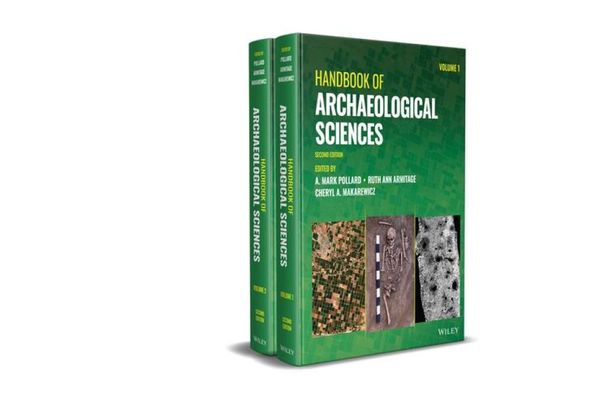
Produktbild: Handbook of Archaeological Sciences

Handbook of Archaeological Sciences

175,99 €

inkl. gesetzl. MwSt., Versandkostenfrei


Beschreibung

HANDBOOK OF ARCHAEOLOGICAL SCIENCES   A modern and comprehensive introduction to methods and techniques in archaeology   In the newly revised Second Edition of the Handbook of Archaeological Sciences, a team of more than 100 researchers delivers a comprehensive and accessible overview of modern methods used...

Beschreibung

HANDBOOK OF ARCHAEOLOGICAL SCIENCES
 
A modern and comprehensive introduction to methods and techniques in archaeology
 
In the newly revised Second Edition of the Handbook of Archaeological Sciences, a team of more than 100 researchers delivers a comprehensive and accessible overview of modern methods used in the archaeological sciences. The book covers all relevant approaches to obtaining and analyzing archaeological data, including dating methods, quaternary paleoenvironments, human bioarchaeology, biomolecular archaeology and archaeogenetics, resource exploitation, archaeological prospection, and assessing the decay and conservation of specimens.
 
Overview chapters introduce readers to the relevance of each area, followed by contributions from leading experts that provide detailed technical knowledge and application examples.
 
Readers will also find:
* A thorough introduction to human bioarchaeology, including hominin evolution and paleopathology
* The use of biomolecular analysis to characterize past environments
* Novel approaches to the analysis of archaeological materials that shed new light on early human lifestyles and societies
* In-depth explorations of the statistical and computational methods relevant to archaeology
 
Perfect for graduate and advanced undergraduate students of archaeology, the Handbook of Archaeological Sciences will also earn a prominent place in the libraries of researchers and professionals with an interest in the geological, biological, and genetic basis of archaeological studies.

Produktdetails

Einband

Gebundene Ausgabe

Erscheinungsdatum

13.02.2023

Herausgeber A. Mark Pollard + weitere
Verlag John Wiley & Sons

Produktdetails

Einband

Gebundene Ausgabe

Erscheinungsdatum

13.02.2023

Herausgeber
Verlag John Wiley & Sons
Seitenzahl

1328

Maße (L/B/H)

28,2/22,5/7,4 cm

Gewicht

4136 g

Auflage

2. Auflage

Sprache

Englisch

ISBN

978-1-119-59204-4

Herstelleradresse

Libri GmbH
Europaallee 1
36244 Bad Hersfeld
DE

Email: gpsr@libri.de

Noch keine Bewertungen vorhanden

Verfassen Sie die erste Bewertung zu diesem Artikel

Helfen Sie anderen Kundinnen und Kunden durch Ihre Meinung.

Kundinnen und Kunden meinen

Bewertungen (0)

Die Leseprobe wird geladen.
  • Produktbild: Handbook of Archaeological Sciences
  • Section 1. Dating
    Overview
    Quaternary geochronological frameworks
    New developments in Radiocarbon dating
    Dendrochronology and archaeology
    Trapped charge dating and archaeology
    U-series dating
    Archaeomagnetic dating
    Obsidian hydration dating with SIMS
    Amino acid dating
    An introduction to tephrochronology and the correlation of sedimentary sequences using volcanic ash layers

    Section 2. Quaternary Palaeoenvironments
    Overview
    Modelling Quaternary Palaeoclimates
    Ice core and marine sediment records of Quaternary environmental change
    Insects as palaeoenvironmental and archaeological indicators
    Non-marine molluscs as palaeoenvironmental indicators
    Mammals as palaeoenvironmental indicators
    Lake and peat records of climate change and archaeology
    Archaeological soil micromorphology
    Pollen and macroscopic plant remains as indicators of local and regional environments
    Environmental controls on human dispersal and adaptation
    Holocene climate changes and human consequences

    Section 3. Human Bioarchaeology
    Overview
    Hominin evolution
    Biological distance (normal variation/non-metrical and metrical analysis)
    Palaeopathology
    Integrating bioarchaeology and palaeodemography
    Palaeodiet through stable isotope analysis
    Palaeomobility through stable isotopes
    Preserved human bodies
    Cremated bone

    Section 4. Biomolecular Archaeology
    Overview
    Zooarchaeology by mass spectrometry (ZooMS)
    Archaeological proteomics
    The use of immunological methods in archaeology
    Lipids in archaeology
    Archaeological microbiology
    Dental calculus
    The biomolecular archaeology of psychoactive substances

    Section 5. Archaeogenetics
    Overview
    Sex and kinship typing of human archaeological remains
    Human populations ? origins and movement
    Palaeogenomics of extinct and archaic humans
    Palaeogenetics and palaeogenomics to study the domestication of animals
    Domestication of plants
    Palaeomicrobiology of human infectious diseases

    Section 6. Biological Resource Exploitation
    Overview
    Archaeobotany
    Human impact on vegetation
    Zooarchaeology
    Coprolites/intestinal contents
    Invertebrates
    Secondary animal and plant products

    Section 7. Inorganic Resource Exploitation
    Overview
    Lithic exploitation and usewear analysis
    Ancient binders and pigments
    Materials analysis of ceramics
    The archaeometry of glass
    Mining and resource procurement: methods and approaches to the appropriation of mineral raw materials in past societies
    Making and using metals
    Provenancing inorganic materials: biography and mutability

    Section 8. Archaeological Prospection
    Overview
    Approaches to archaeological surface survey
    Geophysical survey techniques
    Remote sensing/LIDAR
    Geochemical prospecting
    Integrating survey data

    Section 9. Burial, Decay and Archaeological Conservation
    Overview
    Defining the burial environment
    Metallic corrosion processes and information from corrosion products
    Post-depositional changes in archaeological ceramics and glass
    Deterioration of organic materials
    Diagenetic alterations to vertebrate mineralized tissues
    Forensic taphonomy

    Section 10. Statistical and Computational Methods
    Overview
    Spatial information in archaeology
    Multivariate analysis in archaeology
    The Bayesian inferential paradigm in archaeology
    Quantification in zooarchaeology and palaeoethno(archaeo)botany
    The use of kernel density estimates on chemical and isotopic data in archaeology
    Modelling/Simulations in archaeology
    Big data in archaeology