KI-Beratung Beta

Gutscheinbedingungen

**Gültig bis 30.11.2026 auf Spielzeug, Schreibwaren, Filme, Geschenke & Trends, Musik, tolino eReader & Zubehör, Hörbücher und Hörbuch-Downloads, nicht preisgebundene Bücher und Kalender online auf thalia.at und in der Thalia App. Einzelne Artikel können ausgeschlossen sein. Aufgrund der Buchpreisbindung sind deutschsprachige Bücher und eBooks ausgenommen. Zusätzlich ausgenommen sind Abos & Flatrates, Games, Geschenkkarten/-boxen, Shelfies, Software, Zeitschriften sowie einzelne Artikel von tonies®. Pro Einkauf einmal einlösbar. Nur gültig mit im Onlineshop hinterlegter Bonuscard. Click & Collect nur bei Onlinevorabzahlung möglich. Keine Barauszahlung. Nicht kombinierbar mit anderen Aktionen und Gutscheinen. Gutschein wird auf max. 500€ Bestellwert angerechnet. Nicht gültig für Versandkosten und Services.

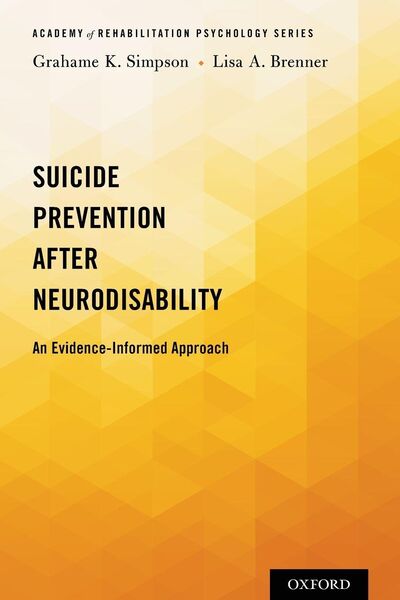
Produktbild: SUICIDE PREVENT AFTER NEURODISAB AARP P

SUICIDE PREVENT AFTER NEURODISAB AARP P

97,99 €

inkl. gesetzl. MwSt., Versandkostenfrei


Beschreibung

Suicide risk after disabling neurological conditions is up to five times higher than for the general population; however, knowledge about the extent of the problem, associated risk factors, and effective evidence-informed suicide prevention approaches are limited and fragmented. Suicide Prevention after...

Beschreibung

Suicide risk after disabling neurological conditions is up to five times higher than for the general population; however, knowledge about the extent of the problem, associated risk factors, and effective evidence-informed suicide prevention approaches are limited and fragmented. Suicide Prevention after Neurodisability focuses on the challenges faced by eight different types of neurodisability, namely stroke, spinal cord injury, traumatic brain injury, amyotrophic lateral sclerosis, epilepsy, Huntington's disease, multiple sclerosis, and Parkinson's disease. It pulls together the current knowledge about this risk, detailing a complex interplay between neuropathological, psychiatric, psychological, and psychosocial factors that in part account for this increased presence of suicidal thoughts and behaviors. Despite the challenges, suicide is often preventable. The best available evidence-informed approaches to suicide prevention in neurodisability are outlined, including clinical approaches to screening, suicide risk assessment, psychotherapeutic interventions, and psychosocial management. The reader-friendly approach will help make suicide prevention after neurodisability everyone's business.

Produktdetails

Einband

Taschenbuch

Erscheinungsdatum

07.03.2019

Verlag Academic
Seitenzahl

290

Produktdetails

Einband

Taschenbuch

Erscheinungsdatum

07.03.2019

Verlag Academic
Seitenzahl

290

Maße (L/B/H)

23,4/15,6/1,6 cm

Gewicht

445 g

Sprache

Englisch

ISBN

978-0-19-992841-5

Herstelleradresse

Libri GmbH
Europaallee 1
36244 Bad Hersfeld
DE

Email: gpsr@libri.de

Noch keine Bewertungen vorhanden

Verfassen Sie die erste Bewertung zu diesem Artikel

Helfen Sie anderen Kundinnen und Kunden durch Ihre Meinung.

Kundinnen und Kunden meinen

Bewertungen (0)

Die Leseprobe wird geladen.
  • Produktbild: SUICIDE PREVENT AFTER NEURODISAB AARP P
    • Acknowledgements
    • Dedication
    • Preface
    • PART 1
    • UNDERSTANDING SUICIDE AFTER NEURODISABILITY
    • Chapter 1
    • Introduction
    • Chapter 2
    • Understanding neurodisability
    • Chapter 3
    • Understanding Suicide
    • Chapter 4
    • Theories of suicide
    • Chapter 5
    • Neuroanatomy, neurobiology and neuropsychology of suicide
    • Chapter 6
    • Epidemiology, risk and protective factors for suicide after neurodisability
    • PART 2
    • SUICIDE PREVENTION AFTER NEURODISABILITY
    • Chapter 7
    • Screening for suicide risk
    • Chapter 8
    • Suicide risk assessment
    • Chapter 9
    • Evidence-based interventions
    • Chapter 10
    • Clinical practice approaches
    • Chapter 11
    • Cross-cultural practice in suicide prevention
    • Chapter 12
    • Public health and organizational approaches
    • Chapter 13
    • Legal and ethical issues
    • Chapter 14
    • Conclusions
    • Appendix 1
    • Reference List