KI-Beratung Beta

Produktbild: How to Teach Nature Journaling

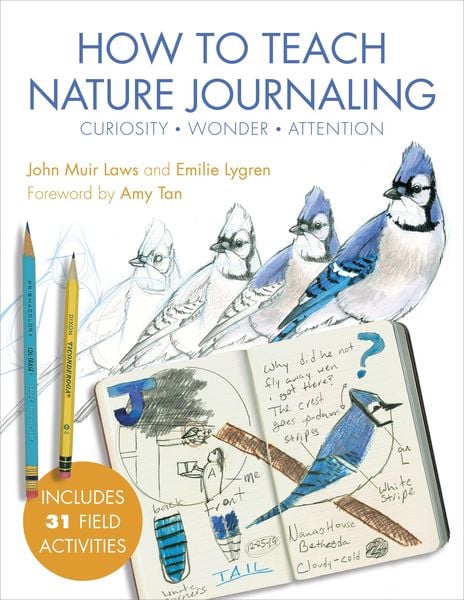
How to Teach Nature Journaling Curiosity, Wonder, Attention

32,99 €

inkl. gesetzl. MwSt., Versandkostenfrei


Beschreibung

The first-ever comprehensive book devoted to helping educators use nature journaling as an inspiring teaching tool to engage young people with wild places.

"It was through John Muir Laws that I learned that the important skills I needed to develop were the ones I had left behind in childhood—to be intensely...

Beschreibung

The first-ever comprehensive book devoted to helping educators use nature journaling as an inspiring teaching tool to engage young people with wild places.

"It was through John Muir Laws that I learned that the important skills I needed to develop were the ones I had left behind in childhood—to be intensely curious, to wonder aloud, to see the story in front of me." —Amy Tan, from the foreword

In their workshops, John Muir Laws and Emilie Lygren are often asked the how-tos of teaching nature journaling: how to manage student groups in the outdoors, teach drawing skills (especially from those who profess to have none), connect journaling to educational standards, and incorporate journaling into longer lessons. This book, expanding on the philosophy and methods of The Laws Guide to Nature Drawing and Journaling puts together curriculum plans, advice, and in-the-field experience so that educators of all stripes can leap into journaling with their students. The approaches are designed to work in a range of ecosystems and settings, and are suitable for classroom teachers, outdoor educators, camp counselors, and homeschooling parents.

Full-color illustrations and sample journal pages from notable naturalists show how to put each lesson into practice. Field-tested by over a hundred educators, this book includes dozens of activities that easily support the Common Core and the Next Generation Science Standards—and, just as important, it will show kids and mentors alike how to recognize the wonder and intrigue in their midst.

Produktdetails

Verkaufsrang

18136

Einband

Taschenbuch

Erscheinungsdatum

28.04.2020

Abbildungen

Illustrationen, nicht spezifiziert

Produktdetails

Verkaufsrang

18136

Einband

Taschenbuch

Erscheinungsdatum

28.04.2020

Abbildungen

Illustrationen, nicht spezifiziert

Verlag Ingram Publishers Services
Seitenzahl

296

Maße (L/B/H)

27,7/21,4/1,5 cm

Gewicht

964 g

Farbe

Lichtgrau

Sprache

Englisch

ISBN

978-1-59714-490-2

Herstelleradresse

Libri GmbH
Europaallee 1
36244 Bad Hersfeld
DE

Email: gpsr@libri.de

Noch keine Bewertungen vorhanden

Verfassen Sie die erste Bewertung zu diesem Artikel

Helfen Sie anderen Kundinnen und Kunden durch Ihre Meinung.

Kundinnen und Kunden meinen

Bewertungen (0)

Weitere Artikel finden Sie in

  • Produktbild: How to Teach Nature Journaling
  • TABLE OF CONTENTS

    THE NATURE JOURNAL QUICKSTART GUIDE (inside front cover)

    FOREWORD BY AMY TAN

    INTRODUCTION

    • Why We Teach Nature Journaling
    • Why Nature Journaling?
    • You Can Do This, and It Is Worth It
    • MANAGING THE OUTDOOR CLASSROOM
      • How to Lead Journaling Activities
      • Nature Journaling In Different Contexts

      NATURE JOURNALING ACTIVITIES

      • Activity Format

      GETTING STARTED: INTRODUCTORY JOURNALING TECHNIQUES AND ACTIVITIES

      • Example Journal Pages 
        • Use Words, Pictures, and Numbers
        • Mix It Up
      • Activites
        • I Notice, I Wonder, It Reminds Me
        • My Secret Plant
        • To Each Its Own
        • Comparison
        • Zoom In, Zoom Out

        OBSERVATION AND NATURAL HISTORY

        • Example Journal Pages
          • Look Big, Look Small
          • Make Comparisons and Study Categories
          • Get Lost in Wonder
        • Activities
          • Collection or Field Guide
          • Timeline
          • String Safari
          • Animal Encounters
          • Species Account
          • Forest Karaoke: Transcribing Birdsong
          • Soundscape Maps

          INQUIRY, INVESTIGATION, AND SCIENTIFIC THINKING

          • Intentional Curiosity and Inquiry
          • The Crosscutting Concepts
          • Who, What, Where, When, How, and Why
          • International Baccalaureate Key Concepts
          • How Do You Answer Your Questions?
          • Example Journal Pages
            • Ask Questions and Think Like a Scientist
            • Practiced Precision
            • Nature Puzzles
            • Follow Curiosity Chains
          • Activities
            • Mysteries and Explanations
            • Questioning Questions
            • Mapping
            • Landscape Cross Section
            • Phenomenon Model
            • Team Observation

            WORDS: ARTICULATED THOUGHT AND STORYTELLING

            • Writing to Think and Observe
            • Example Journal Pages
              • Find Poems Within and Around You
              • Reflection, Connection, and Joy
              • Practice Scientific Storytelling
              • What Pictures Cannot Show
            • Activities
              • Writing to Observe, Writing to Think
              • Event Comic
              • Event Map
              • Poetry of Place and Moment
              • Sit Spot

              PICTURES: DRAWING AND VISUAL THINKING

              • Observational Drawing
              • Observational Drawing, Step-by-Step
              • Building New Skills: Basic Drawing Exercises
              • Drawing Tricks and Tips: Instruction for Students
              • Page Structure and Layout
              • Example Journal Pages
                • Think with Pictures
                • Balancing Flexibility and Structure
                • Look, and Look Again
              • Activities
                • Inside Out
                • Nature Blueprints
                • Infographic
                • Photo, Pencil, and Found-Object Collage

                NUMBERS: QUANTIFICATION AND MATHEMATICAL THINKING

                • Numbers and Quantification
                • Making Quantification Tool Kits
                • Example Jounral Pages
                  • Show Where the Numbers Came From
                  • Use Numbers to Find the Pattern
                • Activities
                  • Hidden Figures
                  • Biodiversity Inventory
                  • Timed Observations
                  • Change Over Time

                  INCORPORATING JOURNALING INTO LESSONS, FRAMEWORKS, AND ASSESSMENTS

                  • Journaling Over Time
                  • Developing Skills: Ideas, Practice, and Feedback
                  • Grading and Evaluation
                  • Evaluation Rubric
                  • From Activities to Longer Lessons
                  • Journaling in Units
                  • The Next Generation Science Standards
                  • The Common Core State Standards
                  • Teaching Science and Inquiry: A Deeper Dive

                  FINAL THOUGHTS

                  APPENDICES

                  • A: Tools and Materials
                  • B: Activity Summaries, Learning Goals, and Possible Phenomena
                  • C: NGSS Connections
                  • D: Evaluation Rubric
                  • E: Cut-and-Paste Nature Journal Strategie
                  • F: Cut-and-Paste Quantification Tool Kit

                  Notes

                  Acknowledgements

                  About the Naturalist Journal Contributors

                  About the Authors