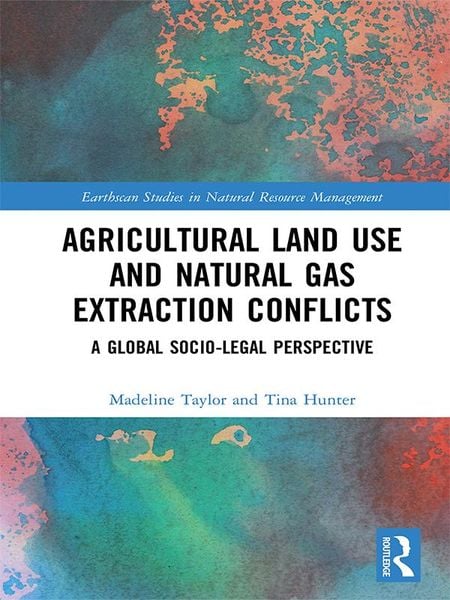
Agricultural Land Use and Natural Gas Extraction Conflicts A Global Socio-Legal Perspective
-
- Taschenbuch
- eBook ausgewählt
-
Form:Einzelkauf Download
-
Sprache:Englisch
-
eBook Format:PDF
- ePUB 3 64,30 €
- PDF 64,30 € ausgewählt
64,30 €
inkl. gesetzl. MwSt.Beschreibung
Produktdetails
Format
Kopierschutz
Ja
Family Sharing
Nein
Text-to-Speech
Nein
Erscheinungsdatum
02.11.2018
Verlag
Taylor & Francis eBooksSeitenzahl
276 (Printausgabe)
Dateigröße
6918 KB
Auflage
1. Auflage
Sprache
Englisch
EAN
9781351332705
Onshore unconventional gas operations, in most jurisdictions, operate on the legal principle that all activities during exploration and extraction are 'temporary' in nature. The concept that the onshore unconventional gas industry has a temporary effect on the land on which it operates creates a regulatory paradox. On one hand, unconventional gas activities create energy security, national wealth and a bourgeoning export industry. On the other, agricultural land and agriculturalists may be significantly disadvantaged by unconventional gas activities potentially producing permanent damage to non-renewable fertile soils and spoiling the underground water tables. Thus, threatening future food security and food sovereignty.
This book explores the socio-regulatory dimensions of coexistence between agricultural and onshore unconventional gas land uses in the jurisdictions with the highest concentration of proven unconventional gas reserves - Australia, Canada, the USA, the UK, France, Poland and China. In exploring the differing regulatory standpoints of unconventional gas land uses on productive farming land in the chosen jurisdictions, this book provides an original three-part categorisation of regulatory approaches addressing the coexistence of agricultural land and unconventional gas namely: adaptive management, precautionary and, finally, statism. It offers a timely and topical approach to socio-legal natural resource governance theory based on the participation, transparency and empowerment for agricultural landholders, examining how differing frameworks such as the collective bargaining framework can create equitable and sustainable contractual arrangements with unconventional gas companies.
Noch keine Bewertungen vorhanden
Verfassen Sie die erste Bewertung zu diesem Artikel
Helfen Sie anderen Kundinnen und Kunden durch Ihre Meinung.
Kurze Frage zu unserer Seite
Vielen Dank für Ihr Feedback
Wir nutzen Ihr Feedback, um unsere Produktseiten zu verbessern. Bitte haben Sie Verständnis, dass wir Ihnen keine Rückmeldung geben können. Falls Sie Kontakt mit uns aufnehmen möchten, können Sie sich aber gerne an unseren Kund*innenservice wenden.
zum Kundenservice