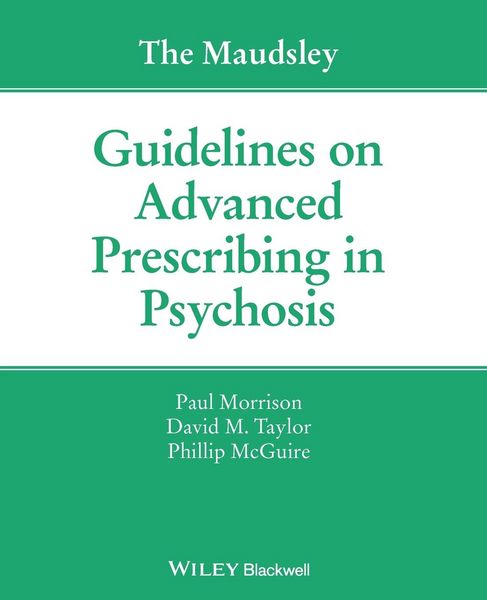
Produktbild: The Maudsley Guidelines on Advanced Prescribing in Psychosis

The Maudsley Guidelines on Advanced Prescribing in Psychosis

28,99 €

inkl. gesetzl. MwSt., zzgl. Versandkosten


  • Kostenlose Lieferung ab 30 € Einkaufswert
  • Versandkostenfrei für Bonuscard-Kund*innen

Beschreibung

Produktdetails

Einband

Taschenbuch

Erscheinungsdatum

30.01.2020

Verlag

John Wiley & Sons Inc

Seitenzahl

112

Maße (L/B/H)

23,5/19,1/0,7 cm

Gewicht

226 g

Auflage

1. Auflage

Sprache

Englisch

ISBN

978-1-119-57844-4

Beschreibung

Produktdetails

Einband

Taschenbuch

Erscheinungsdatum

30.01.2020

Verlag

John Wiley & Sons Inc

Seitenzahl

112

Maße (L/B/H)

23,5/19,1/0,7 cm

Gewicht

226 g

Auflage

1. Auflage

Sprache

Englisch

ISBN

978-1-119-57844-4

Herstelleradresse

Libri GmbH
Europaallee 1
36244 Bad Hersfeld
DE

Email: gpsr@libri.de

Kundinnen und Kunden meinen

0 Bewertungen

Informationen zu Bewertungen

Zur Abgabe einer Bewertung ist eine Anmeldung im Konto notwendig. Die Authentizität der Bewertungen wird von uns nicht überprüft. Wir behalten uns vor, Bewertungstexte, die unseren Richtlinien widersprechen, entsprechend zu kürzen oder zu löschen.

Die Bewertungen sind nach Format, Anzahl Sterne und Datum sortiert.

Verfassen Sie die erste Bewertung zu diesem Artikel

Helfen Sie anderen Kund*innen durch Ihre Meinung

Kundinnen und Kunden meinen

0 Bewertungen filtern

Die Leseprobe wird geladen.
  • Produktbild: The Maudsley Guidelines on Advanced Prescribing in Psychosis
  • List of tables ix

    Preface xi

    Glossary xiii

    Acknowledgments xv

    Chapter 1 Psychosis 1

    1.1 What is psychosis? 1

    1.2 Lack of insight 1

    1.3 Causes of psychosis 2

    1.4 Schizophrenia: loss of personality and psychosocial decline 2

    1.5 Bipolar disorder 3

    1.6 Cannabis, synthetic cannabinoids, and psychosis 4

    Chapter 2 Towards evidence based treatments for psychosis 7

    2.1 Traditional medicine 7

    2.2 The randomised controlled trial 7

    2.3 The roots of community care 8

    2.4 Treatment algorithms versus personalised care 8

    Chapter 3 The antipsychotics 9

    3.1 General principles in the pharmacology of psychosis 9

    3.2 Neurotransmitters and receptors 10

    3.3 Choosing drugs 12

    3.4 Acute psychotic episodes 13

    3.4.1 Olanzapine in acute psychotic episodes 15

    3.4.2 Antipsychotic dosing in acute psychotic episodes 15

    3.4.3 Timescale of response in acute psychotic episodes 17

    3.4.4 Very agitated patients 17

    3.5 The maintenance phase: relapse prevention 18

    3.5.1 Beyond the early years: more harm than good? 18

    3.6 The utility of long?]acting depot antipsychotics 22

    3.7 Principles of long?]acting depot antipsychotic prescribing 23

    3.7.1 Clozapine 25

    3.7.2 Clozapine resistant psychosis 26

    3.7.3 Side effects of clozapine 27

    3.7.4 Myocarditis: inflammation of heart muscle 28

    3.7.5 Cardiomyopathy: impaired function of heart muscle 29

    3.7.6 The effects of clozapine at muscarinic M1-M4 acetylcholine receptors 29

    3.7.7 Weight?]gain and type II diabetes 30

    3.7.8 Neutropenia and agranulocytosis 30

    3.7.9 Lowered seizure threshold 31

    Chapter 4 Bipolar disorder 33

    4.1 Diagnosis of bipolar 33

    4.2 Treatment of mania 34

    4.3 Treatment of bipolar depression 34

    4.4 The maintenance phase of bipolar: relapse prevention 39

    4.5 Bipolar in females of childbearing age 41

    4.5.1 Valproate and carbamazepine in females of childbearing age 41

    4.5.2 Lithium in females of childbearing age 41

    4.5.3 Lamotrigine in females of childbearing age 42

    4.5.4 Antipsychotics in females of childbearing age 42

    Chapter 5 The role of talking therapies in the treatment of psychosis 43

    5.1 Psychoanalytical insights 43

    5.2 Psychological treatments 43

    Chapter 6 Side effects of antipsychotic treatment 45

    6.1 Weight gain 45

    6.1.1 Antipsychotics at 5HT2c receptors 45

    6.1.2 The management of weight gain and obesity 46

    6.2 Type II diabetes 46

    6.3 Dyslipidemia 48

    6.3.1 The management of dyslipidemia in psychosis services 48

    6.4 Motor side effects 49

    6.4.1 Tardive dyskinesia 51

    6.4.2 First versus second generation 51

    6.5 Hyperprolactinemia 51

    6.5.1 The management of hyperprolactinemia 52

    6.6 Sexual side effects 52

    6.6.1 Management 53

    6.7 Prolonged QTc 53

    6.7.1 Calculating the QTc 53

    6.7.2 QTc thresholds 54

    6.7.3 Torsades de points 54

    6.7.4 Antipsychotics and QTc prolongation 54

    6.7.5 Management 55

    6.8 Neuroleptic malignant syndrome 55

    6.8.1 Management 56

    Chapter 7 Services: pathway specific care 57

    7.1 Background 57

    7.2 The at?]risk?]mental?]state 57

    7.3 Early intervention services 58

    7.4 Acute services 59

    7.5 Continuing care services: promoting recovery 59

    Chapter 8 Measuring outcomes 61

    8.1 Value?]based healthcare 61

    8.2 Evidence?]based healthcare management (EBMGT) 62

    Appendix 1 Pharmacokinetics of selected psychotropics 65

    Appendix 2 The metabolic syndrome 71

    Appendix 3 Physical health monitoring for patients prescribed antipsychotics 73

    Appendix 4 Physical health monitoring for patients prescribed mood stabilisers 75

    References 77

    Index 91