Gutscheinbedingungen

**Gültig bis 25.06.2026 auf fremdsprachige Bücher online auf thalia.at und in der Thalia App. Einzelne Artikel können ausgeschlossen sein. Ausgenommen sind preisgebundene Artikel & eBooks. Pro Einkauf einmal einlösbar. Click & Collect nur bei Onlinevorabzahlung möglich. Keine Barauszahlung. Nicht kombinierbar mit anderen Aktionen und Gutscheinen. Gutschein wird auf max. 500€ Bestellwert angerechnet. Nicht gültig für Geschenkkarten, Versandkosten und Services.

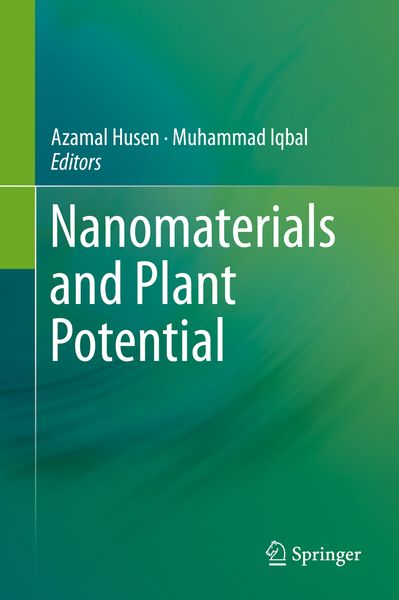
  • Produktbild: Nanomaterials and Plant Potential
  • Produktbild: Nanomaterials and Plant Potential

Nanomaterials and Plant Potential

99,99 €

inkl. gesetzl. MwSt., Versandkostenfrei


Beschreibung

Produktdetails

Einband

Gebundene Ausgabe

Erscheinungsdatum

15.03.2019

Abbildungen

IX, 121 illus., 86 illus. in color., schwarz-weiss Illustrationen, farbige Illustrationen

Herausgeber

Azamal Husen + weitere

Verlag

Springer

Seitenzahl

605

Maße (L/B/H)

24,1/16/3,9 cm

Gewicht

1080 g

Auflage

1st ed. 2019

Sprache

Englisch

ISBN

978-3-030-05568-4

Beschreibung

Portrait

Dr. Azamal Husen, Full Professor of Biology at University of Gondar, Gondar, Ethiopia, has served there as Coordinator of MSc (biology) program and Head of the Department of Biology, and has a more than 20 year experience of teaching and research (in India and Ethiopia). He specializes in (i) molecular/biochemical/physiological strategies adopted by plant species for their sustenance under abiotic stress; (ii) nanomaterials and their applications in cutting-edge areas (iii) plant response to nanomaterials at molecular/biochemical/physiological levels; and (iv) clonal propagation of plants and its modulation by external factors. He has conducted research projects sponsored by the Indian Council of Forest Research Education (ICFRE); the World Bank; the Indian Council of Agriculture Research (ICAR) and the Japan Bank for International Cooperation (JBIC), at Forest Research Institute, Dehra Dun (India), and the Research & Community Service Core Process at University of Gondar, Ethiopia.He has produced more than 50 research papers, 20 review articles, 10 book chapters, 10 conference papers, and over a dozen of manuals and monographs. A member of five scientific organisations, Husen received four fellowships from India and a recognition award from University of Gondar, Ethiopia, for excellent teaching, research and community service. An active organizer of seminars/conferences and an efficient evaluator of various international research projects and book proposals as he is, Husen has been on the Editorial board and the panel of reviewers of several reputed international journals. He is also the Editor-in-Chief of American Journal of Plant Physiology.

Dr. Muhammad Iqbal, Professor of Botany, has served Jamia Hamdard (Deemed University), New Delhi (India) as Head of the Department of Botany, Dean of the Faculty of Science, Controller of admissions, and the Vice Chancellor. Earlier, he worked at Aligarh Muslim University, Aligarh (India) and King Saud University, Riyadh (Saudi Arabia). Specializing in Developmental, Environmental and Medicinal Botany, he has produced about 400 publications, including 265 research papers in journals, 70 book chapters, 8 books, 52 popular articles, and several technical reports and book reviews, besides over 200 abstracts of conference presentations. He has guided research of 36 PhD, 4 MPhil and 6 Post-doctoral students. Under the International Scientists Exchange Program of the Indian National Science Academy, he was a Visiting Professor in universities of Poland and South Korea. He chaired technical sessions of conferences and delivered invited talks in educational institutions not only in India but also in Austria, Azerbaijan, Bangladesh, Hong Kong, Japan, Jordan, Malaysia, Oman, Poland, Russia, Saudi Arabia, South Korea, Thailand and Turkey. A life member of 20 scientific organisations as he is, Iqbal has been on the editorial boards of 18 well-known research journals, on the executive of many scientific bodies, and on various panels of experts drawn by the Science & Technology Councils/Ministries of India, Croatia and Hungary. He was the Vice President of Indian Botanical Society (2003-04) and International Society of Environmental Botanists (2013-18), and the President of Academy of Environmental Biology (2006-09). He received 12 awards and 8 fellowships from Indian as well as foreign institutions. His personal profile has appeared in several biographical directories published from India, UK and USA.

Produktdetails

Einband

Gebundene Ausgabe

Erscheinungsdatum

15.03.2019

Abbildungen

IX, 121 illus., 86 illus. in color., schwarz-weiss Illustrationen, farbige Illustrationen

Herausgeber

Verlag

Springer

Seitenzahl

605

Maße (L/B/H)

24,1/16/3,9 cm

Gewicht

1080 g

Auflage

1st ed. 2019

Sprache

Englisch

ISBN

978-3-030-05568-4

Herstelleradresse

Springer-Verlag GmbH
Tiergartenstr. 17
69121 Heidelberg
DE

Email: ProductSafety@springernature.com

Kundinnen und Kunden meinen

0 Bewertungen

Informationen zu Bewertungen

Zur Abgabe einer Bewertung ist eine Anmeldung im Konto notwendig. Die Authentizität der Bewertungen wird von uns nicht überprüft. Wir behalten uns vor, Bewertungstexte, die unseren Richtlinien widersprechen, entsprechend zu kürzen oder zu löschen.

Die Bewertungen sind nach Format, Anzahl Sterne und Datum sortiert.

Verfassen Sie die erste Bewertung zu diesem Artikel

Helfen Sie anderen Kund*innen durch Ihre Meinung

Kundinnen und Kunden meinen

0 Bewertungen filtern

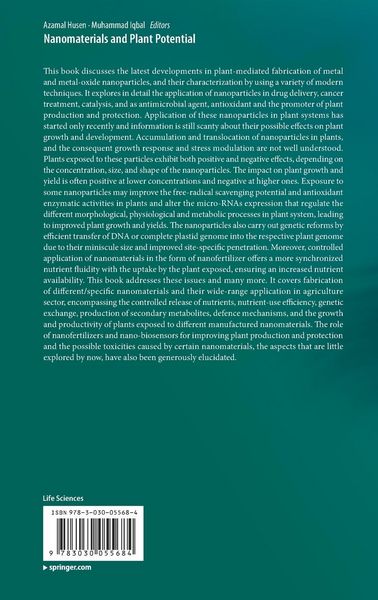
  • Produktbild: Nanomaterials and Plant Potential
  • Produktbild: Nanomaterials and Plant Potential
  • DRAFT

    Preface
    1. Chemistry and biochemistry of nanomaterials  Mahmoud Nasrollahzadeh, S. Mohammad Sajadi, Zahra Isaabadi, Mohadeseh Sajjadi
    2. Nanomaterials fabrication from plants Priyanka Singh, Josua Markus, Yu-Jin Kim, Dabing Zhang, Deok Chun Yang
    3. Natural product based-nanomaterials (ZnO, Ag and Au): fabrication, mechanisms and characterization for cutting-edge bio-applications Myalowenkosi Sabela, Suvardhan Kanchi, Krishna Bisetty
    4. Impacts of metal and metal-oxides nanoparticles on physiology and functioning of plants Mukesh Kumar Kanwar, Xianyao Chu, Jie Zhou
    5. Fabrication of silver nanoparticles by plant system and their application Vinod Kumar Mishra, Azamal Husen, Syed Sohrab Sartaj
    6. Biogenic fabrication of gold nanoparticles and their application Azamal Husen, Muhammad Iqbal, R.K. Bachheti, Nazia Khanam 
    7. Phytomediated synthesis of cerium-oxide nanoparticles and their applications Shakeel Ahmed, Annu and Saiqa Ikram
    8. Plant-mediated green synthesis of zinc oxide nanoparticles and their application R.K.Bachheti, Archana Joshi Bachheti, Azamal Husen
    9. Plant-mediated synthesis of copper oxide nanoparticles, their characterization and applications in cutting-edge areas Archana Joshi Bachheti, R.K.Bachheti, Ashutosh Sharma, Azamal Husen
    10. Andrographolide from Andrographis paniculata: From traditional to nano medicine for cancer therapy Rabea Parveen, Bushra Parveen, Sayeed Ahmad
    11. Impact of nanomaterials on plant physiology and functions Rubbel Singla, Avnesh Kumari, Sudesh Kumar Yadav
    12. Biochemical/Phytochemical changes in plants due to exposure to nanomaterials  Pasupuleti Visweswara Rao, T.N.V.K.V.Prasad
    13. Non-enzymatic defense and the protection of plant against metallic nanoparticles toxicity  A.C. Durate, N.A. Anjum
    14. Genetic exchange and production of secondary metabolites in plants exposed to different manufactured nanomaterials Mahmood Rasool, Arif Malik, Sara Zahid, Fatima Zahid, Syed Sohrab Sartaj
    15. Nanofertilizers and plant production Syed Sohrab Sartaj, Ihsanullah Daur
    16. Nanomaterials as nanofertilizers for plant growth improvement and protection Md. Kamrul Hasan, Yongcai Lai, Wei Li, Jie Zhou
    17. Nanoparticulate delivery of plant nutrients for sustained crop productivity and biofortification T.N.V.K.V.Prasad, P. Visweswara Rao
    18. Nanomaterials: a better tool for crop disease management Rakesh Kumar
    Glossary
    Index
    List of Contributors:  Mahmoud Nasrollahzadeh, Department of Chemistry, Faculty of Science, University of Qom, Qom 37185-359, Iran S. Mohammad Sajadi, Department of Petroleum Geoscience, Faculty of Science, Soran University, PO Box 624, Soran, Kurdistan Regional Government, Iraq Zahra Isaabadi, Department of Chemistry, Faculty of Science, University of Qom, Qom, 37185-359, Iran Mohadeseh Sajjadi ?
    Priyanka Singh, Department of Oriental Medicinal Biotechnology, College of Life Sciences, Kyung Hee University, Korea Josua Markus, Graduate School of Biotechnology, Kyung Hee University, Korea Yu-Jin Kim, Department of Oriental Medicine Biotechnology, College of Life Science, Kyung Hee University, Yongin 446-701, Korea Joint International Research Laboratory of Metabolic & Developmental Sciences, Shanghai Jiao Tong University–University of Adelaide Joint Centre for Agriculture and Health, State Key Laboratory of Hybrid Rice, School of Life Sciences and Biotechnology, Shanghai Jiao Tong University, Shanghai, China Dabing Zhang, Joint International Research Laboratory of Metabolic & Developmental Sciences, Shanghai Jiao Tong University–University of Adelaide Joint Centre for Agriculture and Health, State Key Laboratory of Hybrid Rice, School of Life Sciences and Biotechnology, Shanghai Jiao Tong University, Shanghai, China Deok Chun Yang, Department of Oriental Medicinal Biotechnology, College of Life Sciences, Kyung Hee University, Korea
    Myalowenkosi Sabela, Department of Chemistry, Durban University of Technology, P.O. Box 1334, Durban 4000, South Africa Suvardhan Kanchi, Department of Chemistry, Durban University of Technology, P.O. Box 1334, Durban 4000, South Africa Krishna Bisetty, Department of Chemistry, Durban University of Technology, P.O. Box 1334, Durban 4000, South Africa
    Mukesh Kumar Kanwar, Department of Environmental Sciences, Sri Guru Granth Sahib World University, Fatehgarh Sahib 140406, Punjab, India Xianyao Chu,  Jie Zhou
    Vinod Kumar Mishra,  Syed Sohrab Sartaj, Special Infectious Agent Unit, King Fahd Medical Research Center, King Abdulaziz University
    R.K. Bachheti, Graphic Era University, Dehra Dūn, India Nazia Khanam,  P. G. Department of Pharmaceutics, College of Pharmaceutical Sciences, Berhampur-760002 Orissa, India
    Shakeel Ahmed, Department of Chemistry, Jamia Millia Islamia (A Central University) New Delhi, India-110025 Annu, Department of Chemistry, Jamia Millia Islamia (A Central University) New Delhi, India-110025  Saiqa Ikram, Department of Chemistry, Jamia Millia Islamia (A Central University) New Delhi, India-110025 Archana Joshi Bachheti, Graphic Era University, Dehra Dūn, India Ashutosh Sharma, Department of Applied Sciences, Graphic Era University, Dehradun India
    Rabea Parveen, Department of Pharmaceutics, Faculty of Pharmacy, Jamia Hamdard, New Delhi-110062 Bushra Parveen, Faculty of Pharmacy, Jamia Hamdard, New Delhi, India Sayeed Ahmad, Department of Pharmacognosy and Phytochemistry, Faculty of PharmacyHamdard UniversityNew DelhiIndia
    Rubbel Singla, Council of Scientific and Industrial Research (CSIR), Institute of Himalayan Bioresource Technology, Himachal Pradesh 176062, India Avnesh Kumari, Council of Scientific and Industrial Research (CSIR), Institute of Himalayan Bioresource Technology, Himachal Pradesh 176062, India Sudesh Kumar Yadav, Council of Scientific and Industrial Research (CSIR), New Delhi, India
    Pasupuleti Visweswara Rao, Faculty of Agro-Based Industry, Universiti Malaysia Kelantan, Campus Jeli, Jeli, Kelantan, Malaysia T.N.V.K.V.Prasad, Nanotechnology Laboratory, Institute of Frontier Technology, Regional Agricultural Research Station, Acharya N G Ranga Agricultural University, AP, India
    A.C. Durate, CESAM-Centre for Environmental and Marine Studies & Department of Chemistry, University of Aveiro, Aveiro, Portugal N.A. Anjum, CESAM-Centre for Environmental and Marine Studies & Department of Chemistry, University of Aveiro, Aveiro, Portugal 
    Mahmood Rasool, Center of Excellence in Genomic Medicine Research (CEGMR), King Abdulaziz University, Jeddah, Saudi Arabia Arif Malik, Institute of Molecular Biology and Biotechnology, (IMBB), The University of Lahore, Lahore 54000, Pakistan Sara Zahid, Institute of Molecular Biology and Biotechnology, (IMBB), The University of Lahore, Lahore 54000, Pakistan Fatima Zahid, 
    Ihsanullah Daur, Department of arid land agriculture, King Abdulaziz University Jeddah, Saudi Arabia
    Md. Kamrul Hasan,  Yongcai Lai, Heilongjiang Academy of Agricultural Sciences, Harbin, China  Wei Li, ? Rakesh Kumar, National Environmental Engineering Research Institute,  Mumbai, India