Beschreibung
Produktdetails
Einband
Gebundene Ausgabe
Erscheinungsdatum
11.09.2019
Verlag
KNV BesorgungSeitenzahl
190
Maße (L/B/H)
24/16,1/1,5 cm
Gewicht
455 g
Sprache
Englisch
ISBN
978-0-19-883611-7
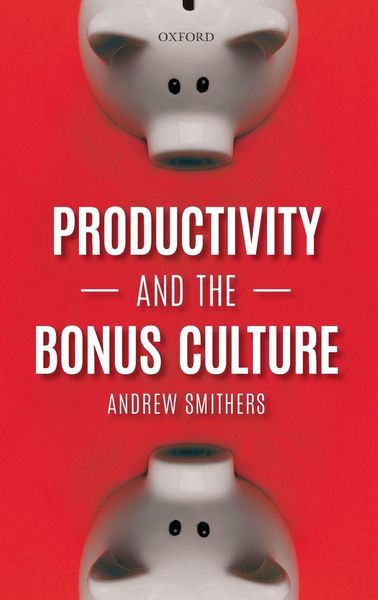
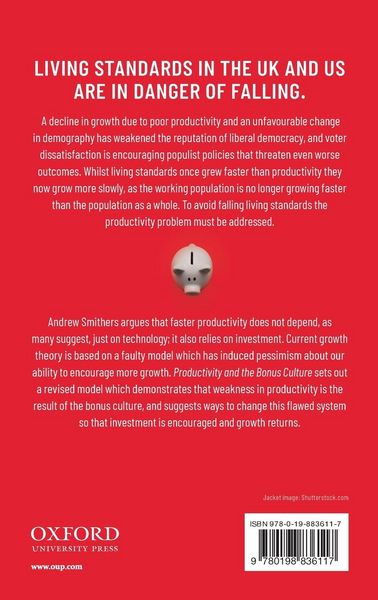
Living standards in the UK and US are in danger of falling. A decline in growth due to poor productivity and an unfavourable change in demography has weakened the stand of liberal democracy, and voter dissatisfaction is encouraging populist policies that threaten even worse outcomes. Whilst living standards once grew faster than productivity they now grow more slowly, and the working population is no longer growing faster than the population as a whole. To avoid
falling living standards the productivity problem must be addressed.
Andrew Smithers argues that faster productivity does not depend, as many suggest, on technology; it also relies on investment. Current growth theory is based on a faulty model which has induced pessimism about our ability to encourage more growth. Productivity and the Bonus Culture sets out a revised model which demonstrates that weakness in productivity is the result of the bonus culture, and suggests ways to change this flawed system so that investment is encouraged and growth
returns.
falling living standards the productivity problem must be addressed.
Andrew Smithers argues that faster productivity does not depend, as many suggest, on technology; it also relies on investment. Current growth theory is based on a faulty model which has induced pessimism about our ability to encourage more growth. Productivity and the Bonus Culture sets out a revised model which demonstrates that weakness in productivity is the result of the bonus culture, and suggests ways to change this flawed system so that investment is encouraged and growth
returns.
Noch keine Bewertungen vorhanden
Verfassen Sie die erste Bewertung zu diesem Artikel
Helfen Sie anderen Kundinnen und Kunden durch Ihre Meinung.
Kurze Frage zu unserer Seite
Vielen Dank für Ihr Feedback
Wir nutzen Ihr Feedback, um unsere Produktseiten zu verbessern. Bitte haben Sie Verständnis, dass wir Ihnen keine Rückmeldung geben können. Falls Sie Kontakt mit uns aufnehmen möchten, können Sie sich aber gerne an unseren Kund*innenservice wenden.
zum Kundenservice