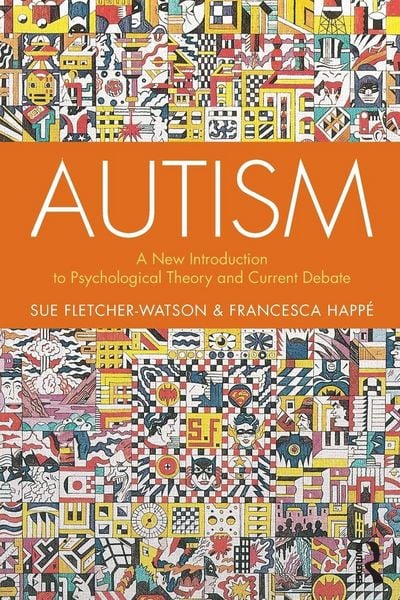
Autism A New Introduction to Psychological Theory and Current Debate
-
- Hardcover
- Taschenbuch ausgewählt
- eBook
-
Sprache:Englisch
51,99 €
inkl. gesetzl. MwSt.,
Beschreibung
Produktdetails
Einband
Taschenbuch
Erscheinungsdatum
25.02.2019
Abbildungen
5 Tabellen
Verlag
Taylor & FrancisSeitenzahl
210
Maße (L/B/H)
23,4/15,6/1,2 cm
Gewicht
327 g
Auflage
2. Auflage
Sprache
Englisch
ISBN
978-1-138-10612-3
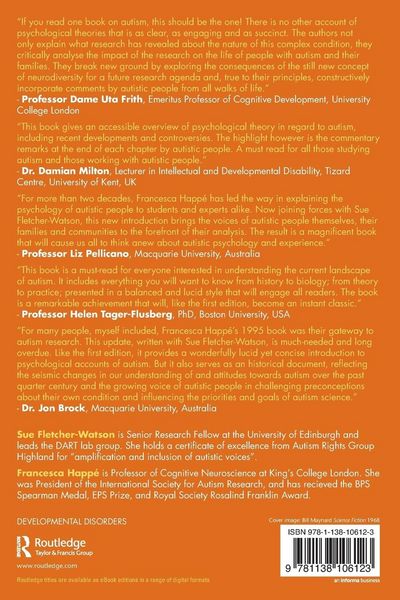
Based on Francesca Happé's best-selling textbook, Autism: An Introduction to Psychological Theory, this completely new edition provides a concise overview of contemporary psychological theories about autism. Fletcher-Watson and Happé explore the relationship between theories of autism at psychological (cognitive), biological and behavioural levels, and consider their clinical and educational impact.
The authors summarise what is known about the biology and behavioural features of autism, and provide concise but comprehensive accounts of all influential psychological models including 'Theory of Mind' (ToM) models, early social development models and alternative information processing models such as 'weak central coherence' theory. The book also discusses more recent attempts to understand autism, including the 'Double Empathy Problem' and Bayesian theories. In each case, the authors describe the theory, review the evidence and provide critical analysis of its value and impact. Recognising the multiplicity of theoretical views, and rapidly changing nature of autism research, each chapter considers current debates and major questions that remain for the future.
Importantly, the book includes the voices of autistic people, including parents and practitioners, who were asked to provide commentaries on each chapter, helping to contextualise theory and research evidence with accounts of real-life experience. The book embraces neurodiversity whilst recognising the real needs of autistic people and their families. Thus Autism: A New Introduction to Psychological Theory and Current Debate provides the reader with a critical overview of psychological theory but also embeds this within community perspectives, making it a relevant and progressive contribution to understanding autism, and essential reading for students and practitioners across educational, clinical and social settings.
Noch keine Bewertungen vorhanden
Verfassen Sie die erste Bewertung zu diesem Artikel
Helfen Sie anderen Kundinnen und Kunden durch Ihre Meinung.
Kurze Frage zu unserer Seite
Vielen Dank für Ihr Feedback
Wir nutzen Ihr Feedback, um unsere Produktseiten zu verbessern. Bitte haben Sie Verständnis, dass wir Ihnen keine Rückmeldung geben können. Falls Sie Kontakt mit uns aufnehmen möchten, können Sie sich aber gerne an unseren Kund*innenservice wenden.
zum Kundenservice