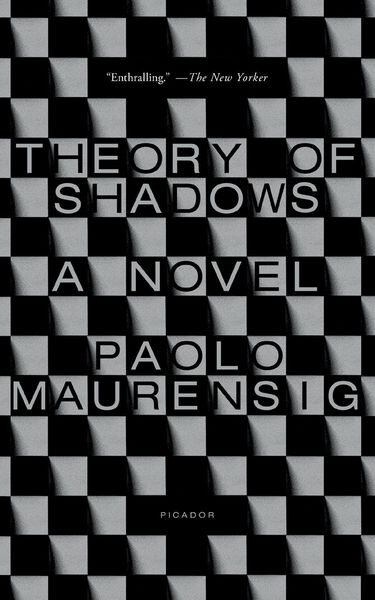
Theory of Shadows
-
- Englisch ausgewählt
21,99 €
inkl. gesetzl. MwSt.,
- Kostenlose Lieferung ab 30 € Einkaufswert
- Versandkostenfrei für Bonuscard-Kund*innen
Beschreibung
Produktdetails
Einband
Taschenbuch
Erscheinungsdatum
15.01.2019
Verlag
HarperCollinsSeitenzahl
190
Maße (L/B/H)
20,3/12,7/1,1 cm
Gewicht
211 g
Sprache
Englisch
ISBN
978-1-250-31031-6
The strange circumstances surrounding the death of the world chess champion and alleged Nazi collaborator Alexander Alekhine, as investigated by a literary grand master
On the morning of March 24, 1946, the world chess champion Alexander Alekhine-"sadist of the chess world," renowned for his eccentric behavior as well as the ruthlessness of his playing style-was found dead in his hotel room in Estoril, Portugal. He was fully dressed and wearing an overcoat, slumped back in a chair, in front of a meal, a chessboard just out of reach. The doctor overseeing the autopsy certified that Alekhine died of asphyxiation due to a piece of meat stuck in his larynx and assured the world that there was absolutely no evidence of suicide or foul play.
Some, of course, have commented that the photos of the corpse look suspiciously theatrical, as though staged. Others have wondered why Alekhine would have sat down to his dinner in a hot room while wearing a heavy overcoat. And what about all these rumors concerning Alekhine's activities during World War II? Did he really pen a series of articles on the inherent inferiority of Jewish chess players? Can he really be seen in photographs with high-ranking Nazi officials? And as for his own homeland, is it true that the Russians considered him a traitor, as well as a possible threat to the new generation of supposedly superior Soviet chess masters?
With the atmosphere of a thriller, the insight of a poem, and a profound knowledge of the world of chess ("the most violent sport there is," according to the Russian world champion Garry Kasparov), Paolo Maurensig's Theory of Shadows leads us through the life and death of Alekhine: not so much trying to figure out whodunit as using the story of one infuriating and unapologetic genius to tease out "that which the novel alone can discover."
Noch keine Bewertungen vorhanden
Verfassen Sie die erste Bewertung zu diesem Artikel
Helfen Sie anderen Kundinnen und Kunden durch Ihre Meinung.
Kurze Frage zu unserer Seite
Vielen Dank für Ihr Feedback
Wir nutzen Ihr Feedback, um unsere Produktseiten zu verbessern. Bitte haben Sie Verständnis, dass wir Ihnen keine Rückmeldung geben können. Falls Sie Kontakt mit uns aufnehmen möchten, können Sie sich aber gerne an unseren Kund*innenservice wenden.
zum Kundenservice