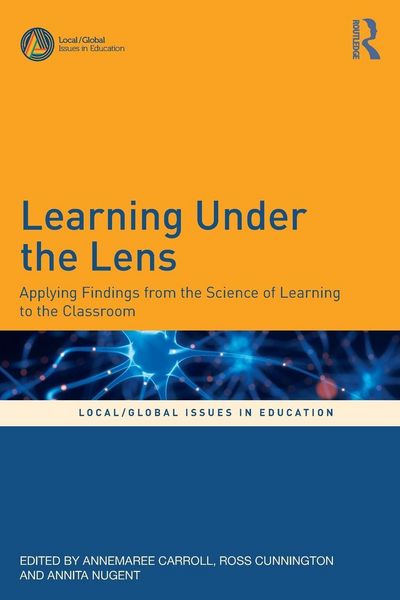
Learning Under the Lens Applying Findings from the Science of Learning to the Classroom
-
- Hardcover
- Taschenbuch ausgewählt
- eBook
-
Sprache:Englisch
53,99 €
inkl. gesetzl. MwSt.,
Beschreibung
Produktdetails
Einband
Taschenbuch
Erscheinungsdatum
02.12.2020
Abbildungen
18 SW-Abb., 17 SW-Fotos, 1 SW-Zeichn., 3 Tabellen
Herausgeber
Carroll Annemaree + weitereVerlag
Taylor & FrancisSeitenzahl
256
Maße (L/B/H)
23,4/15,6/1,4 cm
Gewicht
395 g
Sprache
Englisch
ISBN
978-0-367-13663-5
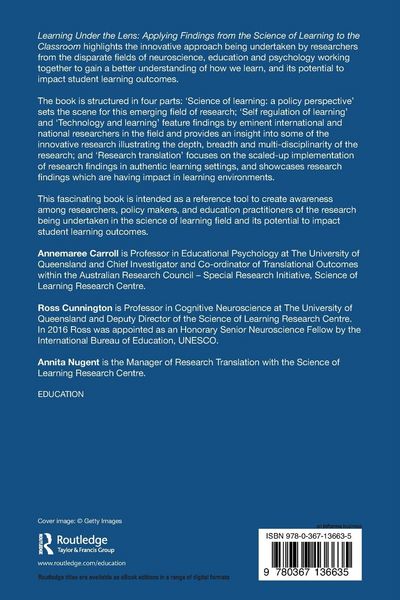
The book is structured in four parts: 'Science of learning: a policy perspective' sets the scene for this emerging field of research; 'Self regulation of learning' and 'Technology and learning' feature findings by eminent international and national researchers in the field and provides an insight into some of the innovative research illustrating the depth, breadth and multi-disciplinarity of the research; and 'Research translation' focuses on the scaled-up implementation of research findings in authentic learning settings, and showcases research findings which are having impact in learning environments.
This fascinating book is intended as a reference tool to create awareness among researchers, policy makers, and education practitioners of the research being undertaken in the science of learning field and its potential to impact student learning outcomes.
Noch keine Bewertungen vorhanden
Verfassen Sie die erste Bewertung zu diesem Artikel
Helfen Sie anderen Kundinnen und Kunden durch Ihre Meinung.
Kurze Frage zu unserer Seite
Vielen Dank für Ihr Feedback
Wir nutzen Ihr Feedback, um unsere Produktseiten zu verbessern. Bitte haben Sie Verständnis, dass wir Ihnen keine Rückmeldung geben können. Falls Sie Kontakt mit uns aufnehmen möchten, können Sie sich aber gerne an unseren Kund*innenservice wenden.
zum Kundenservice