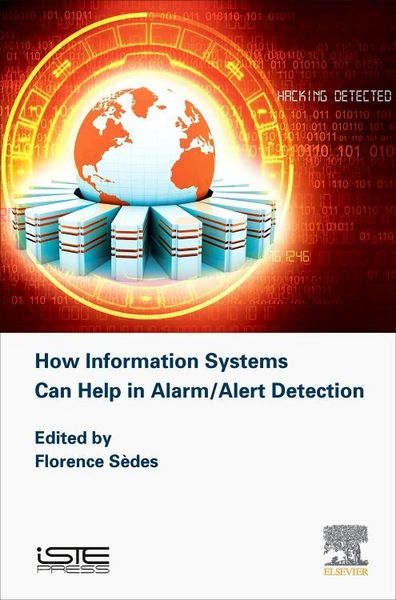
Sedes, F: How Information Systems Can Help in Alarm/Alert De
124,99 €
inkl. gesetzl. MwSt.,
Beschreibung
Produktdetails
Einband
Gebundene Ausgabe
Erscheinungsdatum
08.11.2018
Herausgeber
Florence SedesVerlag
Elsevier Science & TechnologySeitenzahl
280
Maße (L/B/H)
22,9/15,2/1,6 cm
Gewicht
570 g
Sprache
Englisch
ISBN
978-1-78548-302-8
Alarm or alert detection remains an issue in various areas from nature, i.e. flooding, animals or earthquake, to software systems. Liveness, dynamicity, reactivity of alarm systems: how to ensure the warning information reach the right destination at the right moment and in the right location, still being relevant for the recipient, in spite of the various and successive filters of confidentiality, privacy, firewall policies, etc.? Also relevant in this context are to technical contingency issues: material failure, defect of connection, break of channels, independence of information routes and sources? Alarms with crowd media, (mis)information vs. rumours: how to make the distinction?
The prediction of natural disasters (floods, avalanches, etc.), health surveillance (affectionate fevers of cattle, pollution by pesticides, etc.), air, sea and land transport, or space surveillance to prevent Risks of collisions between orbital objects involve more and more actors within Information Systems, one of whose purposes is the dissemination of alerts. Recently, the Twitter microblogging platform announced a broadcast service, designed to help government organizations with alerts to the public. The proper functioning of such systems depends on fundamental properties such as resilience, liveliness and responsiveness: any alert must absolutely reach the right recipient at the right time and in the right place, while remaining relevant to him, despite the various constraints. on the one hand to external events, such as hardware failures, connection faults, breaks in communication channels, on the other hand to confidentiality, such as the collection and use of personal data (with or without the consent of the user), or the disparity of access policies (generation according to industrial, technological, security constraints, management of internal / external policies, etc.) between actors. This book opens the discussion on the "procrastination", the dynamics and the reactivity of the alert systems, but also the problems of confidentiality, filtering of information, and the means of distinguishing information and rumor.
Noch keine Bewertungen vorhanden
Verfassen Sie die erste Bewertung zu diesem Artikel
Helfen Sie anderen Kundinnen und Kunden durch Ihre Meinung.
Kurze Frage zu unserer Seite
Vielen Dank für Ihr Feedback
Wir nutzen Ihr Feedback, um unsere Produktseiten zu verbessern. Bitte haben Sie Verständnis, dass wir Ihnen keine Rückmeldung geben können. Falls Sie Kontakt mit uns aufnehmen möchten, können Sie sich aber gerne an unseren Kund*innenservice wenden.
zum Kundenservice