Gutscheinbedingungen

**Gültig bis 17.08.2026 auf Schreibwaren & Office-Artikel online auf thalia.at, in der Thalia App und in teilnehmenden Thalia Buchhandlungen in Österreich mit Schulsortiment. In den Buchhandlungen nur gültig auf lagernde Ware. Einzelne Artikel können ausgeschlossen sein. Ausgenommen sind preisgebundene Artikel. Pro Einkauf einmal einlösbar. Nur gültig gegen Vorlage oder im Onlineshop hinterlegter Bonuscard. Infos zur Einlösung in der Buchhandlung sind auf der Bonuscard-Vorteilspreisseite zu finden. Click & Collect nur bei Onlinevorabzahlung möglich. Keine Einlösung bei Scan & Go-Bezahlung. Keine Barauszahlung. Nicht kombinierbar mit anderen Aktionen und Gutscheinen. Gutschein wird auf max. 500€ Bestellwert angerechnet. Nicht gültig für Geschenkkarten, Versandkosten und Services.

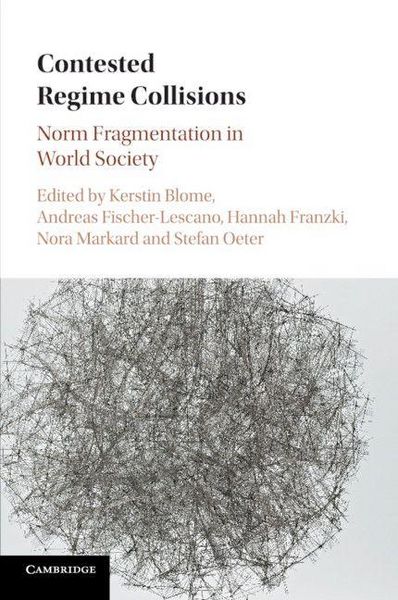
  • Produktbild: Contested Regime Collisions
  • Produktbild: Contested Regime Collisions

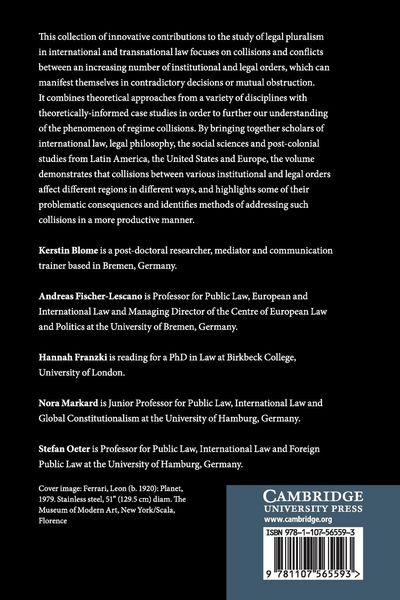
Contested Regime Collisions Norm Fragmentation in World Society

64,99 €

inkl. gesetzl. MwSt., Versandkostenfrei


Beschreibung

Produktdetails

Einband

Taschenbuch

Erscheinungsdatum

24.08.2018

Herausgeber

Blome Kerstin + weitere

Verlag

Cambridge Academic

Seitenzahl

396

Maße (L/B/H)

22,9/15,2/2,1 cm

Gewicht

580 g

Sprache

Englisch

ISBN

978-1-107-56559-3

Beschreibung

Produktdetails

Einband

Taschenbuch

Erscheinungsdatum

24.08.2018

Herausgeber

Verlag

Cambridge Academic

Seitenzahl

396

Maße (L/B/H)

22,9/15,2/2,1 cm

Gewicht

580 g

Sprache

Englisch

ISBN

978-1-107-56559-3

Noch keine Bewertungen vorhanden

Verfassen Sie die erste Bewertung zu diesem Artikel

Helfen Sie anderen Kundinnen und Kunden durch Ihre Meinung.

Kundinnen und Kunden meinen

Bewertungen (0)

Die Leseprobe wird geladen.
  • Produktbild: Contested Regime Collisions
  • Produktbild: Contested Regime Collisions
  • Contested collisions: an introduction Kerstin Blome, Andreas Fischer-Lescano, Hannah Franzki, Nora Markard and Stefan Oeter; Part I. Between Collisions and Interaction: 1. Regime collisions from a perspective of global constitutionalism Stefan Oeter; 2. How to avoid regime collisions Jeffrey L. Dunoff; 3. Regime-interplay management: lessons from environmental policy and law Sebastian Oberthür; 4. Responsive legal pluralism: the emergence of transnational conflicts law Lars Viellechner; Part II. Addressing Collisions: Regulation and Self-Regulation: 5. Horizontal fundamental rights as conflict of laws rules: how transnational pharma-groups manipulate scientific publications Isabell Hensel and Gunther Teubner; 6. (Dis)solving constitutional problems: transconstitutionalism beyond collisions Marcelo Neves; 7. Governance polycentrism or regulated self-regulation: rule systems for human rights impacts of economic activity where national, private, and international regimes collide Larry Catá Backer; 8. Non-financial reporting for business enterprises: an effective tool to address human rights violations? Sebastian Eickenjäger; Part III. Collisions Otherwise: Law and the Collision with Non-Legal Spheres: 9. A critical theory of transnational regimes: creeping managerialism and the quest for a destituent power Kolja Möller; 10. Materialism of form: on the self-reflection of law Christoph Menke; 11. The dialectic of democracy and capitalism before the backdrop of a transnational legal pluralism in crisis Sonja Buckel; 12. Putting proportionality in proportion: whistleblowing in transnational law Andreas Fischer-Lescano; 13. On the critical potential of law - and its limits: double fragmentation of law in Chevron Corp. v. Ecuador Hannah Franzki and Johan Horst.