Gutscheinbedingungen

**Gültig bis 17.08.2026 auf Schreibwaren & Office-Artikel online auf thalia.at, in der Thalia App und in teilnehmenden Thalia Buchhandlungen in Österreich mit Schulsortiment. In den Buchhandlungen nur gültig auf lagernde Ware. Einzelne Artikel können ausgeschlossen sein. Ausgenommen sind preisgebundene Artikel. Pro Einkauf einmal einlösbar. Nur gültig gegen Vorlage oder im Onlineshop hinterlegter Bonuscard. Infos zur Einlösung in der Buchhandlung sind auf der Bonuscard-Vorteilspreisseite zu finden. Click & Collect nur bei Onlinevorabzahlung möglich. Keine Einlösung bei Scan & Go-Bezahlung. Keine Barauszahlung. Nicht kombinierbar mit anderen Aktionen und Gutscheinen. Gutschein wird auf max. 500€ Bestellwert angerechnet. Nicht gültig für Geschenkkarten, Versandkosten und Services.

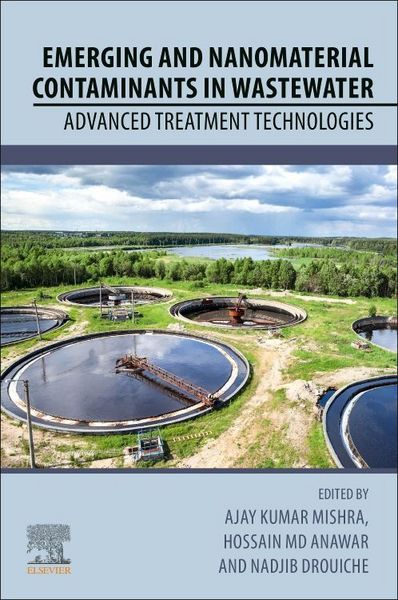
Produktbild: Emerging and Nanomaterial Contaminants in Wastewater

Emerging and Nanomaterial Contaminants in Wastewater

192,99 €

inkl. gesetzl. MwSt., Versandkostenfrei


Beschreibung

Produktdetails

Einband

Taschenbuch

Erscheinungsdatum

25.10.2019

Herausgeber

Ajay Kumar Mishra + weitere

Verlag

Elsevier Science & Technology

Maße (L/B/H)

1,8/15,2/22,9 cm

Gewicht

570 g

Sprache

Englisch

ISBN

978-0-12-814673-6

Beschreibung

Portrait

Prof. Ajay Kumar Mishra is a Research Professor in the Nanotechnology and Water Sustainability Research Unit at the University of South Africa. He obtained a B.Sc. in chemistry and a Ph.D. in bio-inorganic chemistry. His primary research interests are in nanoscience and nanotechnology, materials science, polymers, composites / nanocomposites, and water research. He is the editor of several books and published over 160 articles in international scientific journals. Prof Mishra currently awarded as Fellow and chartered scientist at a royal society of chemistry, UK

Dr. Hossain Md Anawar has a Bachelor of Science (Honours) in Chemistry, a Master of Science in Environmental Chemistry, and a Ph.D. in Environmental Biogeochemistry and Environmental Science. His current area of research is environmental chemistry, biogeochemistry and water quality. He is currently Visiting Associate with Macquarie University in Sydney, Australia. He is co-author of two books and contributed to four other books. He published 58 articles in international peer reviewed scientific journals.

Dr. Nadjib Drouiche is the Head of Environmental Team, Centre de Recherche en Technologie des Semi-conducteurs pour l'Energétique in Algeria. He holds a Ph.D. degree in environmental engineering. His research interests encompass desalination, wastewater treatment by membranes, and recovery of byproducts resulting from treatment of PV wastewater and cutting oil used for manufacturing of wafers. He was awarded TWAS-ARO YAS Prize 2012 for Sustainable Management of Water Resources in the Arab Region. He published over 80 articles in international scientific journals.

Produktdetails

Einband

Taschenbuch

Erscheinungsdatum

25.10.2019

Herausgeber

Verlag

Elsevier Science & Technology

Maße (L/B/H)

1,8/15,2/22,9 cm

Gewicht

570 g

Sprache

Englisch

ISBN

978-0-12-814673-6

EU-Ansprechpartner

Zeitfracht Medien GmbH
Ferdinand-Jühlke-Straße 7|99095|Erfurt|DE
produktsicherheit@zeitfracht.de

Herstelleradresse

Elsevier Science & Technology
125 London Wall|EC2Y 5AS|London|GB
tradeorders@elsevier.com

Noch keine Bewertungen vorhanden

Verfassen Sie die erste Bewertung zu diesem Artikel

Helfen Sie anderen Kundinnen und Kunden durch Ihre Meinung.

Kundinnen und Kunden meinen

Bewertungen (0)

Die Leseprobe wird geladen.
  • Produktbild: Emerging and Nanomaterial Contaminants in Wastewater
  • Part 1: General Overview
    1. What are the current emerging contaminants, types of nanomaterials, synthesis processes and reactors development?
    2. An overview of treatment technologies for the removal of emerging and nanomaterial contaminants from municipal and industrial wastewater

    Part 2: Green Technology
    3. Transport and fate of the emerging compounds and their by-products in water environment, and their toxicity level: removal by natural process of flocculation, agglomeration, precipitation, colloid formation and sedimentation
    4. Long-term performance and feasibility of using constructed wetlands for treatment of emerging and nanomaterial (ENM) contaminants in municipal and industrial wastewater
    5. Synthesis of biosorbents from natural/agricultural wastes and sustainable green technology for treatment of metallic nanoparticles in municipal and industrial wastewater

    Part 3: Individual Processes
    6. Comparison of different nano processes and natural adsorbents such as red mud, steel slag, fly ashes and industrial waste for treating wastewaters laden with metallic nanomaterial contaminants
    7. Composite membranes for removal of emerging organic pollutants and potentially toxic metals from wastewater
    8. Advanced oxidation methods such as UV, Ozonation and Fenton Oxidation for the removal of emerging organic contaminants from wastewater
    9. Destruction of recalcitrant nanomaterials contaminants in industrial wastewater
    10. Removal of emerging pollutants from water through adsorption onto carbon-based materials
    11. Nanomaterial-based treatment technologies for remediation of emerging organic pollutants and heavy metals in wastewater

    Part 4: Combined Processes
    12. Membrane bioreactor and nanofiltration hybrid system for treatment of municipal and industrial wastewater: performance assessment and hydrodynamic analysis
    13. Treatment of nanomaterial contaminants in industrial and municipal wastewater by conventional filtration, nanofiltration and reverse osmosis membrane techniques
    14. Different polymer-based nanosized engineering material adsorbents and catalyst for treating wastewaters containing inorganic and organic nanomaterial contaminants
    15. Treatment of nanomaterial contaminants in wastewater by solar photocatalysis using low TiO2 concentrations, hydrogen peroxide, ferrate(VI) or nanoporous ZnO
    16. Combined electrochemical advanced oxidation and enzymatic process for treatment of wastewater containing emerging organic contaminants

    Part 5: Conclusion
    17. Case studies focusing on the most successful advanced methods/approach for the treatment of nanomaterials in wastewater
    18. Removal of emerging contaminates from wastewater through individual and combination of different methods: comparative removal efficiency