KI-Beratung Beta

Gutscheinbedingungen

**Gültig bis 30.11.2026 auf Spielzeug, Schreibwaren, Filme, Geschenke & Trends, Musik, tolino eReader & Zubehör, Hörbücher und Hörbuch-Downloads, nicht preisgebundene Bücher und Kalender online auf thalia.at und in der Thalia App. Einzelne Artikel können ausgeschlossen sein. Aufgrund der Buchpreisbindung sind deutschsprachige Bücher und eBooks ausgenommen. Zusätzlich ausgenommen sind Abos & Flatrates, Games, Geschenkkarten/-boxen, Shelfies, Software, Zeitschriften sowie einzelne Artikel von tonies®. Pro Einkauf einmal einlösbar. Nur gültig mit im Onlineshop hinterlegter Bonuscard. Click & Collect nur bei Onlinevorabzahlung möglich. Keine Barauszahlung. Nicht kombinierbar mit anderen Aktionen und Gutscheinen. Gutschein wird auf max. 500€ Bestellwert angerechnet. Nicht gültig für Versandkosten und Services.

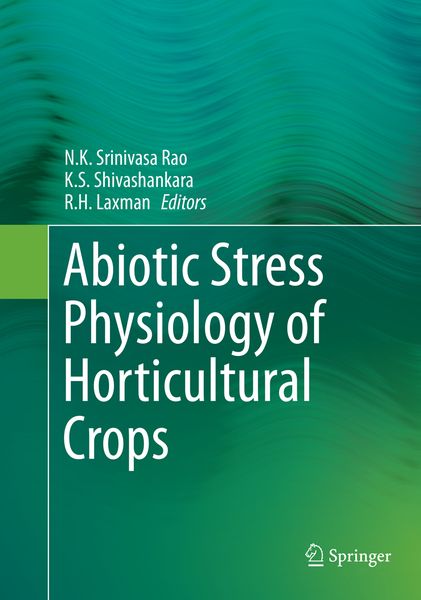
Produktbild: Abiotic Stress Physiology of Horticultural Crops
- 12%

Abiotic Stress Physiology of Horticultural Crops

12% sparen

144,99 € UVP 164,99 €

inkl. gesetzl. MwSt., Versandkostenfrei


Beschreibung

This book brings together recent advances in the area of abiotic stress tolerance in various vegetables, fruit crops, plantation crops and tuber crops. The main challenges to improving the productivity of horticultural crops are the different types of abiotic stresses generally caused by climate change...

Beschreibung

This book brings together recent advances in the area of abiotic stress tolerance in various vegetables, fruit crops, plantation crops and tuber crops. The main challenges to improving the productivity of horticultural crops are the different types of abiotic stresses generally caused by climate change at the regional and global level. Heat, drought, cold and salinity are the major abiotic stresses that adversely affect growth and productivity and can trigger a series of morphological, physiological, biochemical and molecular changes in various horticultural crops. To date, there are no books covering horticultural crop-specific abiotic stress tolerance mechanisms and their management. Addressing that gap, the book is divided into 2 sections, the first of which highlights recent advances in the general aspects of abiotic stress tolerance like the role of hormones, reactive oxygen species, seed treatments, molecular mechanisms of heat tolerance and heavy metal toxicity, while the second focuses on the abiotic stress tolerance mechanisms of various vegetables, fruit crops, plantation crops and tuber crops. It includes comprehensive discussions of fruit crops like mango, grapes, banana, litchi and arid zone fruits; vegetables crops like tomato, capsicum, onion and tuber crops; and plantation crops like coconut, areca nut, oil palm and black pepper. Among the strategies for plant stress survival, examples of both avoidance and tolerance relevant to particular crops are examined in detail, supported by selected comprehensive case studies of progress. As such, the book offers a valuable resource suited for scientists and graduate students working in the fields of crop improvement, genetic engineering, and the abiotic stress tolerance of horticultural crops.


Portrait

Dr. N. K. Srinivasa Rao, Principal Scientist (Plant Physiology-Retd.) and Ex Emeritus Scientist, Indian Institute of Horticultural Research, Bangalore, was born on 31.01.1950 at Bangalore. He belongs to the first batch of Agricultural Research Service. He has passed ARS examination with first rank and the joined ICAR service on 29.11.1976 at IIHR, Bangalore in the discipline of Plant Physiology. He has contributed significantly to the understanding of mechanism of abiotic stress tolerance in horticultural crops.

Some of his publications are:

1.Srinivasa Rao, N.K. and Bhatt, R.M. (1990) Response of photosynthesis to Water stress in two eggplant Cultivars (Solanum melongena L.) Photosynthetica, 24: 

2. Srinivasa Rao, N.K. and Bhatt,R.M.(1990). Effect of two temperature regimes on photosynthesis and growth in two cultivars of tomato (Lycopersicon esculentum Mill.). Photosynthetica 26: 625-63


Dr. Kodthalu Seetharamaiah Shivashankara is currently working as principal scientist in Indian Institute of Horticultural Research, Bangalore.

Some of his publications are:

1)  Sheshshayee, M.S., Shivashankara, K.S., Ramaswamy, G.S.,     Davendra, R., Shankar, A.G., Prasad, T.G., Udaya Kumar, M.,1991. A new method to generate different CO2 concentrations  to develop  CO2 response curves. Curr. Sci., 62: 538‑540.

2)   Shivashankara, K.S., Mithila,J and Maiti, S., 2000. A new method for vegetative multiplication of betelvine.  J. Plantation Crops. 28(2): 94-98


Dr. Laxman Ramanna Hunashikatti is currently working as principal scientist in ICAR-Indian Institute of Horticultural Research, Bengaluru.


Produktdetails

Einband

Taschenbuch

Erscheinungsdatum

22.04.2018

Abbildungen

XIV, 368 p. 65 illus., 41 illus. in color.

Herausgeber N.K. Srinivasa Rao + weitere

Produktdetails

Einband

Taschenbuch

Erscheinungsdatum

22.04.2018

Abbildungen

XIV, 368 p. 65 illus., 41 illus. in color.

Herausgeber
Verlag Springer India
Seitenzahl

368

Maße (L/B/H)

25,4/17,8/2 cm

Gewicht

807 g

Auflage

1. Auflage

Sprache

Englisch

ISBN

978-81-322-3825-6

Herstelleradresse

Springer-Verlag KG
Sachsenplatz 4-6
1201 Wien
AT

Email: ProductSafety@springernature.com

Noch keine Bewertungen vorhanden

Verfassen Sie die erste Bewertung zu diesem Artikel

Helfen Sie anderen Kundinnen und Kunden durch Ihre Meinung.

Kundinnen und Kunden meinen

Bewertungen (0)

  • Produktbild: Abiotic Stress Physiology of Horticultural Crops
  • Part 1. Mechanisms of Abiotic Stress Tolerance Responses.- 1. Physiological and Morphological Responses of Horticultural Crops to Abiotic Stresses.- 2.Role of Plant Hormones in Abiotic Stress Tolerance Responses.- 3. Role of Antioxidants in Abiotic Stress Tolerance Responses.- 4. Molecular Mechanisms of Thermotolerance.- 5. Mechanisms of Heavy Metal Toxicity in Plants.- 6. Seed Priming for Abiotic Stress Tolerance: An Overview.- Part 2. Abiotic Stress Tolerance in Horticultural Crops: Vegetables.- 7. Tomato.- 8. Onion.- 9. Capsicum (Hot Pepper and Bell Pepper).- Part 3. Abiotic Stress tolerance in Horticultural Crops: Fruit Crops.- 10. Mango.- 11. Grapes.- 12. Banana.- 13. Arid Zone Fruit Crops.- 14. Litchi.- Part 4. Abiotic Stress Tolerance in Horticultural Crops: Plantation and Tuber crops.- 15. Coconut and Arecanut.- 16. Cashew and Cocoa.- 17. Water Stress Induced Changes in Black Pepper.- 18. Oil Palm.- 19. Tuber Crops.