KI-Beratung Beta

Gutscheinbedingungen

**Gültig am 27.11.2026 auf Spielzeug, Schreibwaren, Filme, Geschenke & Trends, Musik, tolino eReader & Zubehör, Hörbücher und Hörbuch-Downloads, nicht preisgebundene Bücher und Kalender online auf thalia.at und in der Thalia App. Einzelne Artikel können ausgeschlossen sein. Aufgrund der Buchpreisbindung sind deutschsprachige Bücher und eBooks ausgenommen. Zusätzlich ausgenommen sind Abos & Flatrates, Games, Geschenkkarten/-boxen, Shelfies, Software, Zeitschriften sowie einzelne Artikel von tonies®. Pro Einkauf einmal einlösbar. Click & Collect nur bei Onlinevorabzahlung möglich. Keine Barauszahlung. Nicht kombinierbar mit anderen Aktionen und Gutscheinen. Gutschein wird auf max. 500€ Bestellwert angerechnet. Nicht gültig für Versandkosten und Services.

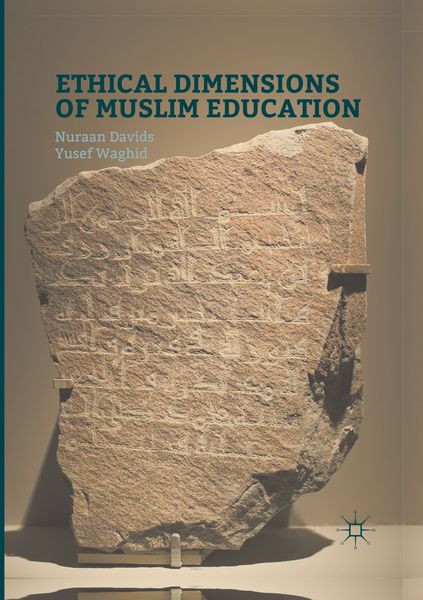
Produktbild: Ethical Dimensions of Muslim Education
- 10%

Ethical Dimensions of Muslim Education

10% sparen

88,99 € UVP 98,99 €

inkl. gesetzl. MwSt., Versandkostenfrei


Beschreibung

This book draws upon ethical dimensions of Muslim education as a means through which to address contemporary issues, such as social and societal conflicts, exclusion and marginalisation, and violence. It argues that an ethical Muslim education is underscored by the practice of autonomous, critical and...

Beschreibung

This book draws upon ethical dimensions of Muslim education as a means through which to address contemporary issues, such as social and societal conflicts, exclusion and marginalisation, and violence. It argues that an ethical Muslim education is underscored by the practice of autonomous, critical and deliberative engagement that can engender reflective judgement, compassionate recognition and a responsible ethical (Muslim) community. Such a community is not only capable of cultivating human relationships based on non-coercion, truthful and peaceful human coexistence, but can also quell the stereotypes and forms of dystopia and exclusion that are pervasive in contemporary society. Put differently, Muslim education extends the neo-Kantian view that ethical human conduct can be rationalised in terms of achieving morally worthwhile action towards forms of engagement that are potentially disruptive.

Rezension

“Ethical Dimensions of Muslim Education has a vital role to play in clearing up confusion around various issues pertaining to Muslim education. The book’s rich analysis of the concepts used in the Islamic texts in relation to education and ethics shows the erudition of the authors. … Ethical Dimensions of Muslim Education is an enlightening book that is much needed in the contemporary sphere of thought.” (Khosrow Bagheri Noaparast, Educational Theory , Vol. 68 (3), 2018)


Produktdetails

Einband

Taschenbuch

Erscheinungsdatum

07.06.2018

Abbildungen

XXX, 162 p.

Verlag Springer

Produktdetails

Einband

Taschenbuch

Erscheinungsdatum

07.06.2018

Abbildungen

XXX, 162 p.

Verlag Springer
Seitenzahl

162

Maße (L/B/H)

21/14,8/1,2 cm

Gewicht

271 g

Auflage

Softcover reprint of the original 1st ed. 2016

Sprache

Englisch

ISBN

978-3-319-80540-5

Herstelleradresse

Springer-Verlag GmbH
Tiergartenstr. 17
69121 Heidelberg
DE

Email: ProductSafety@springernature.com

Noch keine Bewertungen vorhanden

Verfassen Sie die erste Bewertung zu diesem Artikel

Helfen Sie anderen Kundinnen und Kunden durch Ihre Meinung.

Kundinnen und Kunden meinen

Bewertungen (0)

  • Produktbild: Ethical Dimensions of Muslim Education
  • Preface; Part I: Ethics, Islam and Education.- Chapter 1. Qurānic Conceptual Framework of Ethics.- Chapter 2. The Qurān and the Espousal of Ethics.- Chapter 3. Qurānic Conceptions of being Muslim.- Chapter 4. Qurānic Conceptions of Education.- Part II. Participants in Muslim Education.- Chapter 5. The Qurān and Individual Autonomy.- Chapter 6. Qurānic Conceptions of Community.- Chapter 7. Qurānic Conceptions of being Human.- Chapter 8. Qurānic Conceptions of being Muslim, Mu’min, and Muh’sin.- Part III: Instances of Ethical Dimensions.- Chapter 9. Categories of Human Excellence.- Chapter 10. Relationships among People.- Chapter 11. Social and Societal Conflicts.- Chapter 12. Stereotypes, Marginalisation and Exclusion.