KI-Beratung Beta

Gutscheinbedingungen

**Gültig bis 30.11.2026 auf Spielzeug, Schreibwaren, Filme, Geschenke & Trends, Musik, tolino eReader & Zubehör, Hörbücher und Hörbuch-Downloads, nicht preisgebundene Bücher und Kalender online auf thalia.at und in der Thalia App. Einzelne Artikel können ausgeschlossen sein. Aufgrund der Buchpreisbindung sind deutschsprachige Bücher und eBooks ausgenommen. Zusätzlich ausgenommen sind Abos & Flatrates, Games, Geschenkkarten/-boxen, Shelfies, Software, Zeitschriften sowie einzelne Artikel von tonies®. Pro Einkauf einmal einlösbar. Nur gültig mit im Onlineshop hinterlegter Bonuscard. Click & Collect nur bei Onlinevorabzahlung möglich. Keine Barauszahlung. Nicht kombinierbar mit anderen Aktionen und Gutscheinen. Gutschein wird auf max. 500€ Bestellwert angerechnet. Nicht gültig für Versandkosten und Services.

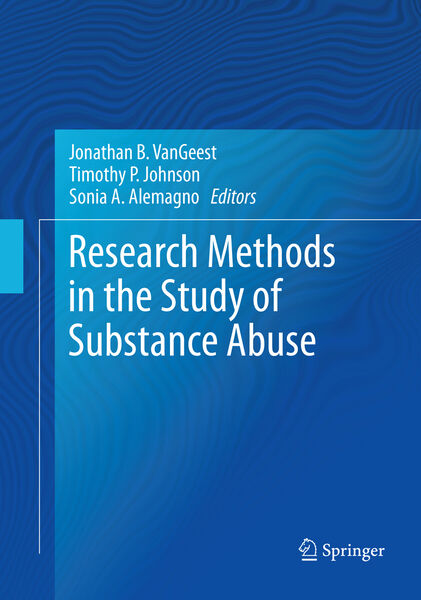
  • Produktbild: Research Methods in the Study of Substance Abuse
  • Produktbild: Research Methods in the Study of Substance Abuse

Research Methods in the Study of Substance Abuse

151,99 €

inkl. gesetzl. MwSt., Versandkostenfrei


Beschreibung

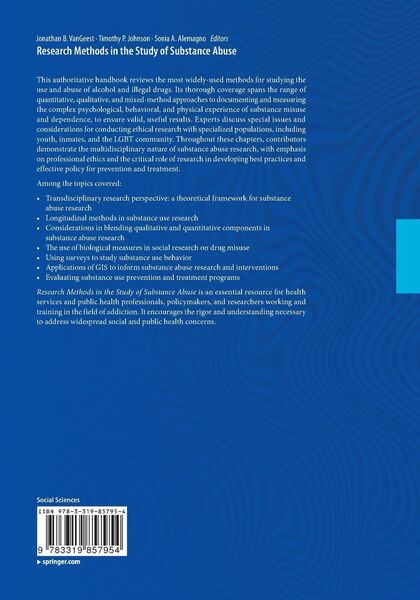
This authoritative handbook reviews the most widely-used methods for studying the use and abuse of alcohol and illegal drugs. Its thorough coverage spans the range of quantitative, qualitative, and mixed-method approaches to documenting and measuring the complex psychological, behavioral, and physical...

Beschreibung

This authoritative handbook reviews the most widely-used methods for studying the use and abuse of alcohol and illegal drugs. Its thorough coverage spans the range of quantitative, qualitative, and mixed-method approaches to documenting and measuring the complex psychological, behavioral, and physical experience of substance misuse and dependence, to ensure valid, useful results. Experts discuss special issues and considerations for conducting ethical research with specialized populations, including youth, inmates, and the LGBT community. Throughout these chapters, contributors demonstrate the multidisciplinary nature of substance abuse research, with emphasis on professional ethics and the critical role of research in developing best practices and effective policy for prevention and treatment.

Among the topics covered: 

·         Transdisciplinary research perspective: a theoretical framework for substance abuse research

·         Longitudinal methodsin substance use research

·         Considerations in blending qualitative and quantitative components in substance abuse research

·         The use of biological measures in social research on drug misuse

·         Using surveys to study substance use behavior

·         Applications of GIS to inform substance abuse research and interventions

·         Evaluating substance use prevention and treatment programs

Research Methods in the Study of Substance Abuse is an essential resource for health services and public health professionals, policymakers, and researchers working and training in the field of addiction. It encourages the rigor and understanding necessary to address widespread social and public health concerns.

Rezension

“This is an up-to-date look at the most widely used methodologies and statistical analyses applied to research studies examining the use and abuse of alcohol and illegal drugs. … This is a highly technical book aimed primarily at researchers in this area. … This book is valuable to those in the field as well as anyone trying to understand the validity of the methodology, analysis, and conclusions of various studies before applying them to influence policy or treatment.” (Michael Easton, Doody's Book Reviews, September, 2017)

Portrait

Jonathan B. VanGeest, PhD

Jonathan VanGeest is a Professor in the Department of Health Policy and Management at Kent State University. His main areas of expertise include racial and ethnic disparities in health care, limited health literacy, and care outcomes associated with structural changes in medicine.  He also has extensive experience in survey research methodology, program evaluation and research on substance abuse issues among homeless persons and other marginalized risk groups.

Timothy P. Johnson, PhD

Timothy Johnson is the Director of the Survey Research Laboratory and a Professor in the Department of Public Administration at the University of Illinois at Chicago.  His main areas of expertise include health disparities, survey methodology and health behaviors in disadvantaged populations. Within the field of survey methodology, his work has focused primarily on sources of measurement and nonresponse error. Johnson has also invested considerable effort in examining the health behaviors of disadvantaged populations. Among the disadvantaged populations he has worked with are homeless persons, immigrants, cultural minorities, criminal justice populations and mental health populations. Some of the health behaviors he has examined among these populations include cancer screening, nutrition, physical activity, tobacco use, alcohol consumption and drug abuse.

Sonia Alemagno, PhD

Sonia Alemagno is the Dean of the College of Public Health and a Professor in the Department of Health Policy and Management at Kent State University. She has focused her research on substance abuse and HIV/STD prevention, particularly examining public health services delivered within criminal justice settings such as prisons and detention centers.  Honors include a National Institutes of Health Career Development Award from the National Institute on Drug Abuse and the University of Akron Outstanding Researcher Award in 2005. In addition, she has been the principal investigator on research projects and Small Business Innovation Research funded by the National Institutes of Health, the Centers for Disease Control, the National Institute of Justice and the SAMSHA Center for Substance Abuse Treatment.

Produktdetails

Einband

Taschenbuch

Erscheinungsdatum

02.08.2018

Abbildungen

XIII, 450 p. 19 illus., 12 illus. in color.

Herausgeber Jonathan B. VanGeest + weitere

Produktdetails

Einband

Taschenbuch

Erscheinungsdatum

02.08.2018

Abbildungen

XIII, 450 p. 19 illus., 12 illus. in color.

Herausgeber
Verlag Springer
Seitenzahl

450

Maße (L/B/H)

25,4/17,8/2,5 cm

Gewicht

866 g

Auflage

Softcover reprint of the original 1st ed. 2017

Sprache

Englisch

ISBN

978-3-319-85795-4

Herstelleradresse

Springer-Verlag GmbH
Tiergartenstr. 17
69121 Heidelberg
DE

Email: ProductSafety@springernature.com

Noch keine Bewertungen vorhanden

Verfassen Sie die erste Bewertung zu diesem Artikel

Helfen Sie anderen Kundinnen und Kunden durch Ihre Meinung.

Kundinnen und Kunden meinen

Bewertungen (0)

  • Produktbild: Research Methods in the Study of Substance Abuse
  • Produktbild: Research Methods in the Study of Substance Abuse
  • Part 1: Overview.- History of Substance Abuse Research in the United States.- Transdisciplinary Research Perspective: A Theoretical Framework for Substance Abuse Research.- part 2: Quantitive Approaches.- Randomized Controlled Trials in Substance Abuse Treatment Research: Fundamental Aspects and New Developments in Random Assignment Strategies, Comparison/Control Conditions, and Design Characteristics.- Sampling Strategies for Substance Abuse Research.- Common Statistical Methods for Primary and Secondary Analysis in Substance Abuse Research.- Longitudinal Methods in Substance Use Research.- part 3: Qualitative and Mixed Method Approaches.- Qualitative Methods in Substance Abuse Research.- Qualitative Data Analysis in Drug Research.- Using GIS for Substance Abuse Research and Intervention.- All Mixed Up: Considerations in Blending Qualitative and Quantitative Components in Substance Abuse Research.- Part 4: Measurement Issues.- Assessment of Substance Misuse.- Validity:Conceptual and Methodological Issues in Substance Abuse Research.- Using Surveys to Study Substance Use Behavior.- The Use of Biological Measures in Social Research on Drug Misuse.- Part 5: Special Polulations.- Conducting Research on Adolescent Substance Abuse.- LGBT Populations and Substance Abuse Research: An Overview.- Conducting Substance Abuse Research: Incarcerated Populations.- Part 6: Application: What Role Does Research Play in Shaping Subtance Abuse Policy?.- Economic Evaluation of Substance Abuse and Prevention Programs.- Evaluating Substance Use Prevention and Treatment Programs.- Index.