Gutscheinbedingungen

**Gültig nur für Bestellungen an die Wunsch-Poststation bis 10.06.2026 auf Spielzeug, Schreibwaren, Filme, Geschenke & Trends, Musik, tolino eReader & Zubehör, Hörbücher und Hörbuch-Downloads (außer Abo), nicht preisgebundene Bücher und Kalender online auf thalia.at und in der Thalia App. Einzelne Artikel können ausgeschlossen sein. Aufgrund der Buchpreisbindung sind deutschsprachige Bücher und eBooks ausgenommen. Zusätzlich ausgenommen sind preisgebundene Artikel, Abos & Flatrates, eBooks, Games, Geschenkkarten/-boxen, Shelfies, Software, Zeitschriften sowie einzelne Artikel von tonies®. Pro Einkauf einmal einlösbar. Kein Click & Collect möglich. Keine Barauszahlung. Nicht kombinierbar mit anderen Aktionen und Gutscheinen. Gutschein wird auf max. 500€ Bestellwert angerechnet. Nicht gültig für Versandkosten und Services.

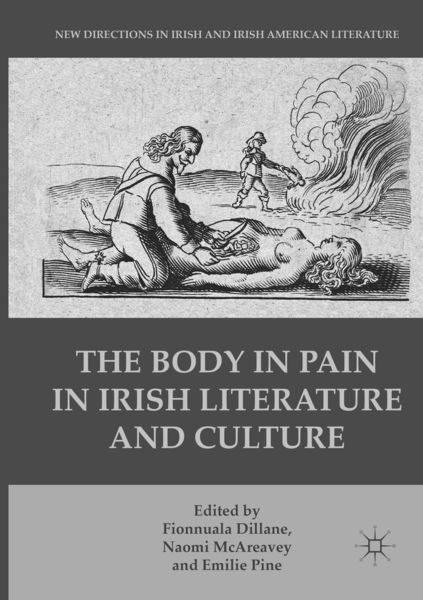
Produktbild: The Body in Pain in Irish Literature and Culture

The Body in Pain in Irish Literature and Culture

108,99 €

inkl. gesetzl. MwSt., Versandkostenfrei


Beschreibung

Produktdetails

Einband

Taschenbuch

Erscheinungsdatum

11.07.2018

Abbildungen

XVI, 1 illus., schwarz-weiss Illustrationen

Herausgeber

Fionnuala Dillane + weitere

Verlag

Springer

Seitenzahl

283

Maße (L/B/H)

21/14,8/1,7 cm

Gewicht

391 g

Auflage

Softcover reprint of the original 1st edition 2016

Sprache

Englisch

ISBN

978-3-319-81029-4

Beschreibung

Rezension

“It provides novel approaches to the study of the relationship between body, pain and historical memory. … It is undisputable that this book provides a valuable and interdisciplinary variety of theoretical and methodological approaches that fill a gap in bibliography about Irish cultural history.” (Shadia Abdel-Rahman Téllez, Review of Irish Studies in Europe – RISE, Vol. 2 (1-2), March, 2018)

“Each essay offers significant insight into representations of pain in a specific historical context … . Scholars and students of any period of Irish history, culture, and literature will certainly find fodder for further exploration here as will those concerned with violence and its legacy in other regions.” (Valerie McGowan-Doyle, Renaissance Quarterly, Vol. 71 (1), 2018)

Portrait

Fionnuala Dillane is Lecturer in Victorian Literature at University College Dublin, Ireland. She is author of Before George Eliot: Marian Evans in the Periodical Press , joint winner of the 2014 Robert and Vineta Colby Scholarly Book Prize.

Naomi McAreavey is Lecturer in Renaissance Literature at University College Dublin, Ireland. She has published widely on the 1641 rebellion, and her edition of The Letters of the First Duchess of Ormonde is forthcoming.

Emilie Pine is Lecturer in Modern Drama at University College Dublin, Ireland. She is the author of The Politics of Irish Memory (Palgrave, 2011), incoming Editor of the Irish University Review , and founding Director of the Irish Memory Studies Network.

Produktdetails

Einband

Taschenbuch

Erscheinungsdatum

11.07.2018

Abbildungen

XVI, 1 illus., schwarz-weiss Illustrationen

Herausgeber

Verlag

Springer

Seitenzahl

283

Maße (L/B/H)

21/14,8/1,7 cm

Gewicht

391 g

Auflage

Softcover reprint of the original 1st edition 2016

Sprache

Englisch

ISBN

978-3-319-81029-4

Herstelleradresse

Springer-Verlag GmbH
Tiergartenstr. 17
69121 Heidelberg
DE

Email: ProductSafety@springernature.com

Kundinnen und Kunden meinen

0 Bewertungen

Informationen zu Bewertungen

Zur Abgabe einer Bewertung ist eine Anmeldung im Konto notwendig. Die Authentizität der Bewertungen wird von uns nicht überprüft. Wir behalten uns vor, Bewertungstexte, die unseren Richtlinien widersprechen, entsprechend zu kürzen oder zu löschen.

Die Bewertungen sind nach Format, Anzahl Sterne und Datum sortiert.

Verfassen Sie die erste Bewertung zu diesem Artikel

Helfen Sie anderen Kund*innen durch Ihre Meinung

Kundinnen und Kunden meinen

0 Bewertungen filtern

  • Produktbild: The Body in Pain in Irish Literature and Culture
  • Introduction.- Introduction: The Body in Pain in Irish Literature and Culture; Fionnuala Dillane, Naomi McAreavey and Emilie Pine.- 1. Where Does It Hurt? How Pain Makes History in Early Modern Ireland; Patricia Palmer.- 2. 'Most barbarously and inhumaine maner butchered’: Masculinity, Trauma and Memory in Early Modern Ireland; Dianne Hall.- 3. ‘Those Savage Days of Memory’: John Temple and his Narrative of the 1641 Uprising; Sarah Covington.- 4. Severed Heads and Floggings: The Undermining of Oblivion in Ulster in the Aftermath of 1798; Guy Beiner.- 5. ‘Tá mé ag imeacht’: The Execution of Myles Joyce and its Afterlives; Margaret Kelleher.- 6. Pain, Trauma and Memory in the Irish War of Independence: Remembering and Contextualizing Irish Suffering; Ian Miller.- 7. Pain, Pleasure and Revolution: The Body in Roger Casement’s Writings; Michael G. Cronin.- 8. ‘Targets of Shame’: Negotiating the Irish Female Migrant Experience in Kathleen Nevin’s You’ll Never Go Back (1946) and Kate O’Brien’s Mary Lavelle (1936); Sinéad Wall.- 9. ‘Intertextual quotation’: Troubled Irish Bodies and Jewish Intertextual Memory in Colum McCann’s ‘Cathal’s Lake’ and ‘Hunger Strike’; Alison Garden.- 10. The Vulnerable Body on Stage: Reading Interpersonal Violence in Rape as Metaphor; Lisa Fitzpatrick.- 11. Recovery and Forgetting: Haunting Remains in Northern Irish Culture; Shane Alcobia Murphy.- 12. ‘That’s not so comfortable for you, is it?’: The Spectre of Misogyny in The Fall; Caroline Magennis.- 13. ‘The Art of Grief’: Irish Women’s Poetry of Loss and Healing; Catriona Clutterbuck.- Bibliography.- Index.