Gutscheinbedingungen

**Gültig bis 06.07.2026 auf fremdsprachige Bücher online auf thalia.at, in der Thalia App ab einem Mindestbestellwert von 30€ und in allen Thalia Buchhandlungen in Österreich. In den Buchhandlungen nur gültig auf lagernde Ware. Einzelne Artikel können ausgeschlossen sein. Ausgenommen sind preisgebundene Artikel & eBooks. Pro Einkauf einmal einlösbar. Nur gültig gegen Vorlage oder im Onlineshop hinterlegter Bonuscard. Infos zur Einlösung in der Buchhandlung sind auf der Bonuscard-Vorteilspreisseite zu finden. Click & Collect nur bei Onlinevorabzahlung möglich. Keine Einlösung bei Scan & Go-Bezahlung. Keine Barauszahlung. Nicht kombinierbar mit anderen Aktionen und Gutscheinen. Gutschein wird auf max. 500€ Bestellwert angerechnet. Nicht gültig für Versandkosten und Services.

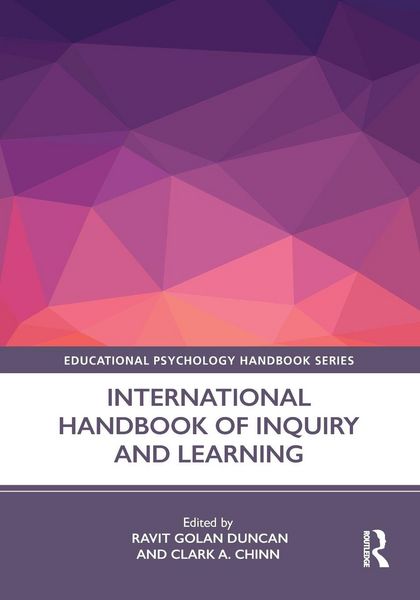
  • Produktbild: International Handbook of Inquiry and Learning
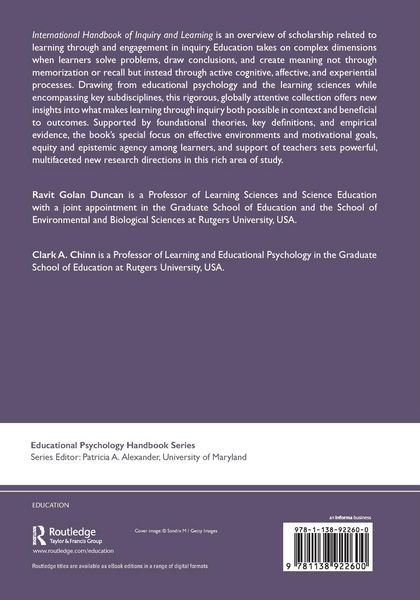
  • Produktbild: International Handbook of Inquiry and Learning

International Handbook of Inquiry and Learning

155,99 €

inkl. gesetzl. MwSt., Versandkostenfrei


Beschreibung

Produktdetails

Einband

Taschenbuch

Erscheinungsdatum

30.06.2021

Abbildungen

schwarz-weiss Illustrationen, Raster, schwarz-weiss, Zeichnungen, schwarz-weiss, Tabellen, schwarz-weiss

Herausgeber

Ravit Golan Duncan + weitere

Verlag

Taylor & Francis

Seitenzahl

398

Maße (L/B/H)

25,4/17,8/2,1 cm

Gewicht

716 g

Sprache

Englisch

ISBN

978-1-138-92260-0

Beschreibung

Rezension

"Inquiry learning has been promoted in education research and policy as having a multitude of benefits for learning across disciplines. Yet getting inquiry to take hold in formal and informal learning environments has been a pernicious problem in the field, in part because the core characteristics of inquiry learning are rarely articulated.

However, over the past several decades, we have amassed theoretical and practical knowledge about the nature of inquiry learning broadly construed and in different disciplines as well as how to support such learning. Reaping the benefits of this work, this handbook takes on the challenge of defining key features of inquiry learning and distinguishing it from other forms of learning.

Calling on leading experts in the field, the editors compiled an impressive and must-read volume for anyone interested in the design and study of inquiry learning environments, including the identification of key components of such environments, issues of equity in inquiry learning, and how to support such learning in different disciplines and in both formal and informal settings. The International Handbook of Inquiry and Learning is timely and highly informative for understanding and tackling the challenging global political, economic, and social dilemmas with which the world is faced."

-Susan Goldman, Distinguished Professor of Liberal Arts & Sciences, Psychology, and Education and Founding Co-Director of Learning Sciences Research Institute at the University of Illinois at Chicago, USA

Produktdetails

Einband

Taschenbuch

Erscheinungsdatum

30.06.2021

Abbildungen

schwarz-weiss Illustrationen, Raster, schwarz-weiss, Zeichnungen, schwarz-weiss, Tabellen, schwarz-weiss

Herausgeber

Verlag

Taylor & Francis

Seitenzahl

398

Maße (L/B/H)

25,4/17,8/2,1 cm

Gewicht

716 g

Sprache

Englisch

ISBN

978-1-138-92260-0

Herstelleradresse

Libri GmbH
Europaallee 1
36244 Bad Hersfeld
DE

Email: gpsr@libri.de

Noch keine Bewertungen vorhanden

Verfassen Sie die erste Bewertung zu diesem Artikel

Helfen Sie anderen Kundinnen und Kunden durch Ihre Meinung.

Kundinnen und Kunden meinen

Bewertungen (0)

Die Leseprobe wird geladen.
  • Produktbild: International Handbook of Inquiry and Learning
  • Produktbild: International Handbook of Inquiry and Learning
  • INTRODUCTION. FOUNDATIONAL ISSUES. 1 Philosophical foundations of inquiry. Paul Thagard / Harvey Siegel / Phillip Kitcher. 2 Inquiry as epistemic practices. Richard Duschl. 3 Learning to inquire. Carol Smith / Leona Schauble / David Hammer / Susan Goldman. 4 Learning content through inquiry. Anat Zohar / Carol Smith. 5 Skill acquisition perspectives on learning to inquire. Alexander Renkl / Kurt VanLehn. 6 Situative perspectives on learning and inquiry. Melissa Gresalfi / Angela Calbrese-Barton /David Hammer / Ed Hutchins. 7 Learning general vs. specific inquiry practices. Frank Fischer / Clark Chinn / Chris Schunn. 8 Sociocultural approaches to learning through inquiry. Leslie Herrenkohl / AnneMarie Palincsar. DESIGN OF INQUIRY ENVIRONMENTS. 9 Design frameworks for designing inquiry learning environments. Iris Tabak / Brian Reiser. 10 Professional development to support teaching through inquiry. Paul Cobb / Hilda Borko / Megan Franke / Lani Horn / Judy Luft. 11 Establishing and running design teams. Jim Slotta / Joe Krajcik. 12 Developing designs through design-based research and design-based implementation research. Bill Penuel / Paul Cobb / Bill Sandoval. 13 Scaling Up Design of Inquiry Environments. Jeremy Roschelle. 14 Designing assessments of inquiry practices. Kathleen Scalise / Rich Lehrer / Nancy Songer / Drew Gitomer. COMPONENTS OF INQUIRY ENVIRONMENTS. 15 Motivation in inquiry environments. Toni Rogat Kempler. 16 Scaffolding inquiry. Yael Kali / Chris Quintana. 17 Role of teachers or facilitators in inquiry learning. Betsey Davis / Lani Horn / Mark Windschitl. 18 Argumentation in inquiry learning. Krista Asterhan / Armin Weinberger. 19 Collaborative Interactions in inquiry learning. Carol Chan. 20 Metacognition and engaging with multiple perspectives. Sarit Barzilai. 21 Technology in inquiry environments. Ton de Jong / Marcia Linn. FORMS OF LEARNING THROUGH INQUIRY. 22 Problem-based learning. Cindy Hmelo-Silver. 23 Critical Inquiry. Louis Gomez. 24 Project-based learning. Joe Krajcik. 25 Model-based inquiry. Ravit Duncan & Clark Chinn. 26 Knowledge building. Jun Oshima. 27 Inquiry as preparation for instruction. Manu Kapur. LEARNING AND INQUIRY IN THE DISCIPLINES. 28 Differences in learning and inquiry across disciplines. Susan Goldman / Leslie Herrenkohl. 29 Learning and inquiry in history. Carla van Boxtel / Bruce VanSledRight / Sam Wineburg. 30 Learning and inquiry in mathematics. Pablo Mejia-Ramos & Keith Weber. 31 Learning and inquiry in science. Sibyl Erduran / David Treagust. 32 Learning and inquiry in engineering. Anette Kolmos / Erik de Graaf / Cynthia Atman. 33 Learning and inquiry in early childhood. Lilian Katz or a former student or colleague that she recommends. 34 Learning and inquiry in informal settings. Jennifer Adams / Kevin Crowley. CONCLUSION.