Gutscheinbedingungen

**Gültig bis 06.07.2026 auf fremdsprachige Bücher online auf thalia.at, in der Thalia App ab einem Mindestbestellwert von 30€ und in allen Thalia Buchhandlungen in Österreich. In den Buchhandlungen nur gültig auf lagernde Ware. Einzelne Artikel können ausgeschlossen sein. Ausgenommen sind preisgebundene Artikel & eBooks. Pro Einkauf einmal einlösbar. Nur gültig gegen Vorlage oder im Onlineshop hinterlegter Bonuscard. Infos zur Einlösung in der Buchhandlung sind auf der Bonuscard-Vorteilspreisseite zu finden. Click & Collect nur bei Onlinevorabzahlung möglich. Keine Einlösung bei Scan & Go-Bezahlung. Keine Barauszahlung. Nicht kombinierbar mit anderen Aktionen und Gutscheinen. Gutschein wird auf max. 500€ Bestellwert angerechnet. Nicht gültig für Versandkosten und Services.

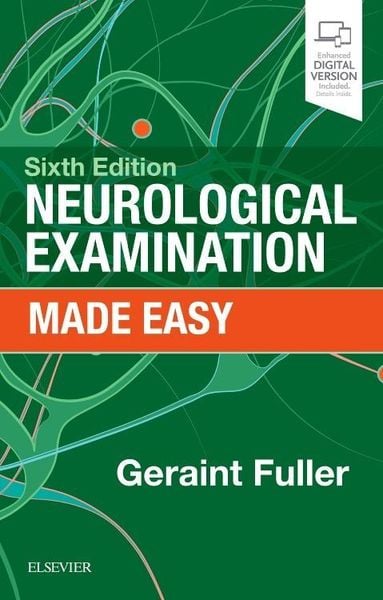
Produktbild: Neurological Examination Made Easy

Neurological Examination Made Easy

Aus der Reihe Made Easy (Elsevier)

26,99 €

inkl. gesetzl. MwSt., zzgl. Versandkosten


  • Kostenlose Lieferung ab 30 € Einkaufswert
  • Versandkostenfrei für Bonuscard-Kund*innen

Beschreibung

Produktdetails

Einband

Taschenbuch

Erscheinungsdatum

01.05.2019

Abbildungen

Approx. 122 illustrations (90 in color), Illustrationen, nicht spezifiziert

Verlag

Elsevier LTD

Seitenzahl

243

Maße (L/B/H)

21,8/13,6/1,5 cm

Gewicht

370 g

Auflage

6. Auflage

Sprache

Englisch

ISBN

978-0-7020-7627-5

Beschreibung

Rezension

"If I hadn't been sent this book to review, I would have almost certainly bought it. That's how good it is. BMA Awards 2005

This] textbook provides a simple framework for how to perform a straightforward neurological examination up to house officer level. the book is well set out in concise chapters, with useful and easy to understand diagrams to back up the text. There is also a useful chapter on how to pass neurological examinations at finals level. Very useful as a reference text for third years and upwards. 3rd Year Medical Student, Sphincter - Liverpool Medical Magazine, November 2004

There are few books which are recommended student to student by word of mouth. This is one of those few books. This book not only provides clear, step by step instruction on how to examine, but also provides some information on what the findings could mean. The text is clearly and concisely written. It is brilliantly organised into sub-headings, bold-lettering and bullet points, making it easy to find the information you are looking for, and fast! --Medical Student, GKT Gazette, June 2004

    Produktdetails

    Einband

    Taschenbuch

    Erscheinungsdatum

    01.05.2019

    Abbildungen

    Approx. 122 illustrations (90 in color), Illustrationen, nicht spezifiziert

    Verlag

    Elsevier LTD

    Seitenzahl

    243

    Maße (L/B/H)

    21,8/13,6/1,5 cm

    Gewicht

    370 g

    Auflage

    6. Auflage

    Sprache

    Englisch

    ISBN

    978-0-7020-7627-5

    Herstelleradresse

    Libri GmbH
    Europaallee 1
    36244 Bad Hersfeld
    DE

    Email: gpsr@libri.de

    Noch keine Bewertungen vorhanden

    Verfassen Sie die erste Bewertung zu diesem Artikel

    Helfen Sie anderen Kundinnen und Kunden durch Ihre Meinung.

    Kundinnen und Kunden meinen

    Bewertungen (0)

    Die Leseprobe wird geladen.
    • Produktbild: Neurological Examination Made Easy
    • History and examination.
      Speech.
      Mental state and higher function.
      Gait.
      Cranial nerves: general.
      Cranial nerve 1: olfactory nerve.
      Cranial nerves: the eye 1 - pupils, acuity, fields.
      Cranial nerves: the eye 2 - fundi.
      Cranial nerves III, IV, VI: eye movements.
      Cranial nerves: nystagmus.
      Cranial nerves V and VII: the face.
      Cranial nerve VIII: auditory nerve.
      Cranial nerves IX, X, XII: the mouth.
      Cranial nerve XI: accessory nerve.
      Motor system: key anatomy.
      Motor system: tone.
      Motor system: arms.
      Motor system: legs.
      Motor system: reflexes.
      Motor system: what you find and what it means.
      Sensation: general.
      Sensation: what you find and what it means.
      Co-ordination.
      Abnormal movements.
      Special signs and other tests.
      The autonomic nervous system.
      The unconscious or confused patient.
      Summary of standard neurological examination.
      Passing clinical examinations.