Gutscheinbedingungen

**Gültig bis 06.07.2026 auf fremdsprachige Bücher online auf thalia.at, in der Thalia App ab einem Mindestbestellwert von 30€ und in allen Thalia Buchhandlungen in Österreich. In den Buchhandlungen nur gültig auf lagernde Ware. Einzelne Artikel können ausgeschlossen sein. Ausgenommen sind preisgebundene Artikel & eBooks. Pro Einkauf einmal einlösbar. Nur gültig gegen Vorlage oder im Onlineshop hinterlegter Bonuscard. Infos zur Einlösung in der Buchhandlung sind auf der Bonuscard-Vorteilspreisseite zu finden. Click & Collect nur bei Onlinevorabzahlung möglich. Keine Einlösung bei Scan & Go-Bezahlung. Keine Barauszahlung. Nicht kombinierbar mit anderen Aktionen und Gutscheinen. Gutschein wird auf max. 500€ Bestellwert angerechnet. Nicht gültig für Versandkosten und Services.

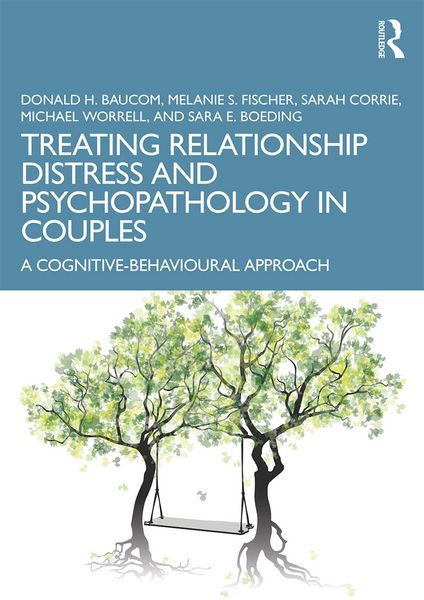
Produktbild: Treating Relationship Distress and Psychopathology in Couples

Treating Relationship Distress and Psychopathology in Couples A Cognitive-Behavioural Approach

51,99 €

inkl. gesetzl. MwSt., Versandkostenfrei


Beschreibung

Produktdetails

Einband

Taschenbuch

Erscheinungsdatum

16.10.2019

Verlag

Taylor & Francis

Seitenzahl

334

Maße (L/B/H)

17,4/24,6/1,9 cm

Gewicht

612 g

Sprache

Englisch

ISBN

978-1-138-12402-8

Beschreibung

Rezension

"This team of authors integrates their international leadership on adapting evidence-based couple therapy to couples in which one partner has a major psychiatric disorder, along with a wealth of clinical wisdom as therapists, supervisors, and trainers, to create this exceptional volume. When I teach my graduate course in couple therapy at UCLA, I believe it is essential to include this work; otherwise, I would be negligent. The current book should be on the bookshelf of couple researchers and therapists, particularly those interested in psychopathology." - Andrew Christensen, Ph.D., Distinguished Research Professor of Psychology, University of California at Los Angeles

"This outstanding text, which is written by international experts, provides detailed guidance in how to flexibly deliver cognitive-behavioural couples therapy with distressed couples and with individuals in a relationship who are also suffering with a mental health problem. Thoroughly recommended for both trainees and experienced practitioners." - David M. Clark, DPhil, Professor of Experimental Psychology, University of Oxford

"An oft-repeated truism in psychology is that there remains an elusive bridge between the practice of psychotherapy and the empirical evidence for this work. Nowhere have I seen this bridge navigated as deftly as in this volume. Through the authors' wealth of clinical experience, as well as the extensive body of literature that they have jointly and individually developed, this volume presents a groundbreaking model for treating relationship distress and psychopathology within a couple context. It is a must-have for clinicians, researchers, educators, and teachers in both the couple and psychopathology domains." - Tamara Sher, Ph.D., Clinical Professor, The Family Institute, Northwestern University

Produktdetails

Einband

Taschenbuch

Erscheinungsdatum

16.10.2019

Verlag

Taylor & Francis

Seitenzahl

334

Maße (L/B/H)

17,4/24,6/1,9 cm

Gewicht

612 g

Sprache

Englisch

ISBN

978-1-138-12402-8

Herstelleradresse

Libri GmbH
Europaallee 1
36244 Bad Hersfeld
DE

Email: gpsr@libri.de

Noch keine Bewertungen vorhanden

Verfassen Sie die erste Bewertung zu diesem Artikel

Helfen Sie anderen Kundinnen und Kunden durch Ihre Meinung.

Kundinnen und Kunden meinen

Bewertungen (0)

Die Leseprobe wird geladen.
  • Produktbild: Treating Relationship Distress and Psychopathology in Couples
  • Part I: An Introduction and Overview of Cognitive-Behavioural Couple Therapy 01. Introduction 02. A Cognitive-Behavioural Model for Understanding Relationship Functioning and Individual Well-Being 03. Conducting Cognitive-Behavioural Couple Therapy Part II: Working with the "Fundamentals" of CBCT-Behaviours, Cognitions, and Emotions 04. Behavioural Factors and Communication 05. Cognitive Factors 06. Emotional Factors Part III: The Contextual Framework of CBCT: Attending to the Individual, Couple, and Environment 07. The Individual 08. The Couple 09. The Environment Part IV: Addressing Psychopathology in a Relationship Context 10. Treating Psychopathology with Couple-Based Interventions 11. Depression in Couples 12. Anxiety, OCD, and PTSD in Couples 13. Other Disorders in Couples Part V: Assessment, Case Conceptualization, and Treatment Planning to Address Relationship Distress and Psychopathology-Pulling it all Together 14. Assessment, Case Conceptualization, and Treatment Planning 15. Concluding Comments

    References Appendices Index