
Gutscheinbedingungen

**Gültig bis 06.07.2026 auf fremdsprachige Bücher online auf thalia.at, in der Thalia App ab einem Mindestbestellwert von 30€ und in allen Thalia Buchhandlungen in Österreich. In den Buchhandlungen nur gültig auf lagernde Ware. Einzelne Artikel können ausgeschlossen sein. Ausgenommen sind preisgebundene Artikel & eBooks. Pro Einkauf einmal einlösbar. Nur gültig gegen Vorlage oder im Onlineshop hinterlegter Bonuscard. Infos zur Einlösung in der Buchhandlung sind auf der Bonuscard-Vorteilspreisseite zu finden. Click & Collect nur bei Onlinevorabzahlung möglich. Keine Einlösung bei Scan & Go-Bezahlung. Keine Barauszahlung. Nicht kombinierbar mit anderen Aktionen und Gutscheinen. Gutschein wird auf max. 500€ Bestellwert angerechnet. Nicht gültig für Versandkosten und Services.

  • Produktbild: Psychology of the Great War
  • Produktbild: Psychology of the Great War

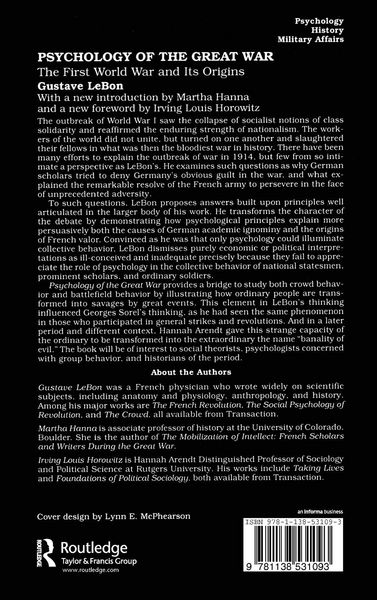
Psychology of the Great War The First World War and Its Origins

233,99 €

inkl. gesetzl. MwSt., Versandkostenfrei


Beschreibung

Produktdetails

Einband

Gebundene Ausgabe

Erscheinungsdatum

28.06.2018

Herausgeber

Gustav Le Bon

Verlag

Taylor and Francis

Seitenzahl

516

Maße (L/B/H)

23,5/15,7/3,2 cm

Gewicht

453 g

Sprache

Englisch

ISBN

978-1-138-53109-3

Beschreibung

Produktdetails

Einband

Gebundene Ausgabe

Erscheinungsdatum

28.06.2018

Herausgeber

Gustav Le Bon

Verlag

Taylor and Francis

Seitenzahl

516

Maße (L/B/H)

23,5/15,7/3,2 cm

Gewicht

453 g

Sprache

Englisch

ISBN

978-1-138-53109-3

Herstelleradresse

Libri GmbH
Europaallee 1
36244 Bad Hersfeld
DE

Email: gpsr@libri.de

Noch keine Bewertungen vorhanden

Verfassen Sie die erste Bewertung zu diesem Artikel

Helfen Sie anderen Kundinnen und Kunden durch Ihre Meinung.

Kundinnen und Kunden meinen

Bewertungen (0)

Die Leseprobe wird geladen.
  • Produktbild: Psychology of the Great War
  • Produktbild: Psychology of the Great War
  • I: Psychological Principles Necessary for The Interpretation of The Present Work; Introduction: Psychological Study of The War; I: The Affective, Collective, and Mystic Forces, and The Part They Play in The Life of Nations; II: The Variations of Personality; II: Germany’s Evolution in Modern Times; I: The Rise and Development of German Power; II: The State According to The Conceptions of The German Philosophers. Their Interpretation of History; III: The Economic Evolution of Germany; IV: The Modern German Mentality; III: The Remote Causes of The War; I: The Economic and Political Causes of The War; II: Race-Hatreds; III: Germany’s Aggressive Attitude—The Idea of Revanche; IV: The Part Played by Mystic Influences in The Genesis of The War. The Hegemony Ideal; IV: The Immediate Causes of The War; I: The Austrian Ultimatum and The Week of Diplomatic Conversations; II: England’s Original Antipathy to The War; III: Development of Feeling in England; IV: The Respective Parts Played by Germany, Austria, Russia, and France While The Diplomatic Conversations Were Proceeding; V: Influence of Popular Feeling Upon The Genesis of The War; VI: Part Played by The Wills of The Three Emperors; VII: Conclusion. Who Wanted The War?; VIII: Opinions Expressed in Germany and Various Other Countries as to The Causes of The War; V: Psychological Forces Involved in Battles; I: Changes in Methods of Warfare; II: Feelings Aroused by The War. Emergence of New Personalities; III: Military Courage: Its Genesis and Its Forms; IV: Consequences Due to Lack of Foresight and To Psychological Errors in The Genesis of Armed Encounters; V: Strategical Errors Resulting from Psychological Errors; VI: Psychological Elements in German Methods of Warfare; I: The Psychological Bases of The German Methods of Warfare; II: Application of The Principles Laid Down by The German General Staff. Incendiarism, Slaughter, and Pillage; III: Effects of German Methods of Warfare Upon Neutral Feeling; VII: Unknown Quantities in Warfare; I: Immediate Consequences of Modern Wars; II: Dubiousness in Accounts of Battles; III: Hypotheses Concerning The Battle of The Marne; IV: Peace Problems; Conclusion