Produktbild: A Field on Fire

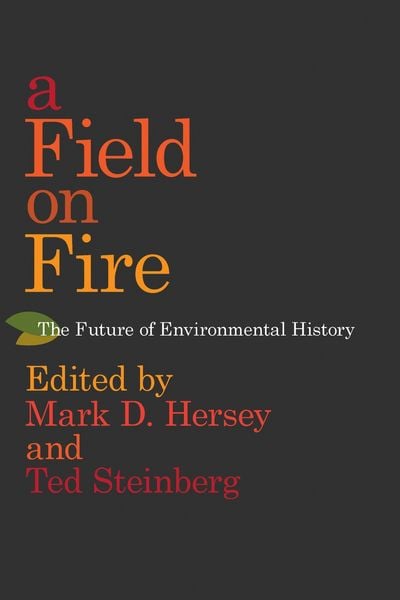
A Field on Fire The Future of Environmental History

57,99 €

inkl. gesetzl. MwSt., Versandkostenfrei


Beschreibung

Produktdetails

Einband

Gebundene Ausgabe

Erscheinungsdatum

29.01.2019

Herausgeber

Mark D. Hersey + weitere

Verlag

University of Alabama Press

Seitenzahl

328

Maße (L/B/H)

23,1/15,5/3,3 cm

Gewicht

658 g

Sprache

Englisch

ISBN

978-0-8173-2001-0

Beschreibung

Portrait

Mark D. Hersey is associate professor of history at Mississippi State University where he directs the Center for the History of Agriculture, Science, and the Environment of the South. He is author of My Work Is That of Conservation: An Environmental Biography of George Washington Carver.
 
Ted Steinberg is Adeline Barry Davee Distinguished Professor of History and professor of law at Case Western Reserve University. He is the author of Gotham Unbound: The Ecological History of Greater New York; American Green: The Obsessive Quest for a Perfect Lawn; Down to Earth: Nature’s Role in American History; Acts of God: The Unnatural History of Natural Disaster in America; and Nature Incorporated; Industrialization and the Waters of New England.

Produktdetails

Einband

Gebundene Ausgabe

Erscheinungsdatum

29.01.2019

Herausgeber

Verlag

University of Alabama Press

Seitenzahl

328

Maße (L/B/H)

23,1/15,5/3,3 cm

Gewicht

658 g

Sprache

Englisch

ISBN

978-0-8173-2001-0

Herstelleradresse

Libri GmbH
Europaallee 1
36244 Bad Hersfeld
DE

Email: gpsr@libri.de

Noch keine Bewertungen vorhanden

Verfassen Sie die erste Bewertung zu diesem Artikel

Helfen Sie anderen Kundinnen und Kunden durch Ihre Meinung.

Kundinnen und Kunden meinen

Bewertungen (0)

  • Produktbild: A Field on Fire
    • List of Illustrations
    • Introduction: A Good Set of Walking Shoes by Mark D. Hersey
    • Part I. Facing Limits
    • Chapter 1. Subversive Subjects: Donald Worster and the Radical Origins of Environmental History by Ted Steinberg
    • Chapter 2. Can Capitalism Ever Be Green? by Adam Rome
    • Chapter 3. Seeing Like a God: Environmentalism in the Anthropocene by Frank Zelko
    • Chapter 4. The Locked Door: Thomas Midgley Jr., Chlorofluorocarbons, and the Unintended Consequences of Technology by Kevin C. Armitage
    • Chapter 5. Malibu, California: Edenic Illusions and Natural Disasters by Christof Mauch
    • Chapter 6. Energizing Environmental History by Brian C. Black
    • Part II. World without Borders
    • Chapter 7. The Force of Fiber: Reconnecting the Philippines with Latin America and the American West via Transnational Environmental History by Sterling Evans
    • Chapter 8. Hunting and Wilderness in the Creation of National Identities by Mikko Saikku
    • Chapter 9. Why We Need Comparative History: The Case of China and the United States by Shen Hou
    • Chapter 10. The World in a Tin Can: Migrants in Environmental History by Marco Armiero
    • Chapter 11. Down in the Sky: The Promise of Aerial Environmental History by Robert Wellman Campbell
    • Chapter 12. Rivers of Dust: An Environmental Historian Appraises the American Legal System by Karl Boyd Brooks
    • Part III. Doing Environmental History
    • Chapter 13. Whole Earth without Borders: Earth Photographs, Space Data, and the Importance of Visual Culture within Environmental History by Neil M. Maher
    • Chapter 14. Beyond Stories: Geospatial Influences on the Practice of Environmental History by Sara M. Gregg
    • Chapter 15. Low-Hanging Fruit: Science and Environmental History by Edmund Russell
    • Chapter 16. The Watershed of War: Environmental History and the “Big Civil War” by Brian Allen Drake
    • Chapter 17. War from the Ground Up: Integrating Military and Environmental Histories by Lisa M. Brady
    • Afterword: The Distinctiveness of Environmental History by Daniel T. Rodgers
    • Bibliography
    • About the Contributors
    • Index