• Produktbild: Towards a Convergence Between Science and Environmental Education
  • Produktbild: Towards a Convergence Between Science and Environmental Education

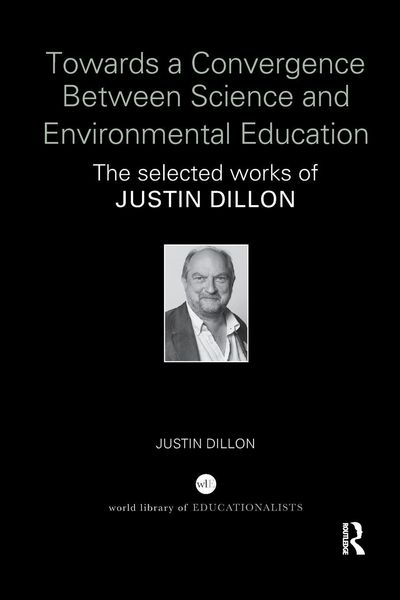
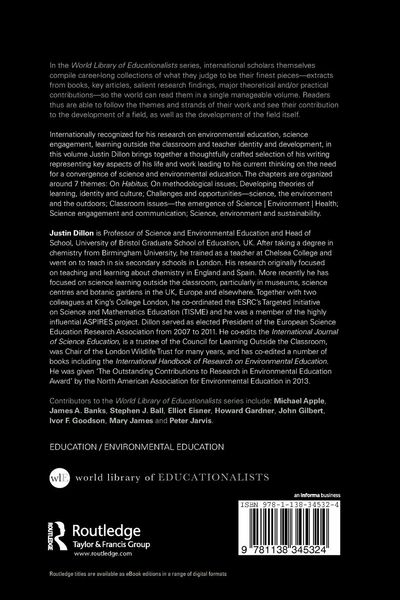
Towards a Convergence Between Science and Environmental Education The selected works of Justin Dillon

75,99 €

inkl. gesetzl. MwSt., Versandkostenfrei


Beschreibung

Produktdetails

Einband

Taschenbuch

Erscheinungsdatum

15.04.2019

Verlag

Taylor and Francis

Seitenzahl

380

Maße (L/B/H)

22,9/15,2/2 cm

Gewicht

476 g

Sprache

Englisch

ISBN

978-1-138-34532-4

Beschreibung

Produktdetails

Einband

Taschenbuch

Erscheinungsdatum

15.04.2019

Verlag

Taylor and Francis

Seitenzahl

380

Maße (L/B/H)

22,9/15,2/2 cm

Gewicht

476 g

Sprache

Englisch

ISBN

978-1-138-34532-4

Herstelleradresse

Libri GmbH
Europaallee 1
36244 Bad Hersfeld
DE

Email: gpsr@libri.de

Noch keine Bewertungen vorhanden

Verfassen Sie die erste Bewertung zu diesem Artikel

Helfen Sie anderen Kundinnen und Kunden durch Ihre Meinung.

Kundinnen und Kunden meinen

Bewertungen (0)

Weitere Artikel finden Sie in

Die Leseprobe wird geladen.
  • Produktbild: Towards a Convergence Between Science and Environmental Education
  • Produktbild: Towards a Convergence Between Science and Environmental Education
  • Contents

    Preface

    Introduction

    Section 1: On Habitus

    1. Dillon, J. (2007). An organic intellectual? On science, education, and the environment. In, K. Tobin and W.-M. Roth (eds), The Culture of Science Education. Its History in Person. Rotterdam: Sense Publishers, pp. 311–322.
    2. Dillon, J. (2002). Managing teacher development: the changing role of the Head of Department in England. In, P. Fraser-Abder (ed.), Professional Development in Science Teacher Education: Local Insights with Lessons for the Global Community, Taylor and Francis, pp. 172–186.
    3. Meyers, R.B., Brody, M., Dillon, J., Hart, P., Krasny, M., Monroe, M., Russell, C., & Wals, A. (2007). Towards creating an inclusive community of researchers: the first three years of the North American Association for Environmental Education research symposium. Environmental Education Research, 13(5), 639–661.
    4. Clark, C., Brody, M., Dillon, J., Hart, P., & Heimlich, J. (2007). The messy process of research: dilemmas, process, and critique. Canadian Journal of Environmental Education, 12, 110–126.
    5. Bevan, B., & Dillon, J. (2010). Broadening views of learning: developing educators for the 21st Century through an international research partnership at the Exploratorium and King’s College London. The New Educator, 6, 167–180.
    6. Section 2: On methodological issues

    7. Dillon, J. and Wals, A. (2006). On the dangers of blurring methods, methodologies and ideologies in environmental education research. Environmental Education Research, 12(3/4), 549–558.
    8. Dillon, J., & Reid, A. (2004). Issues in case study methodology in investigating environmental and sustainability issues in higher education: towards a problem-based approach? Environmental Education Research, 10(1), 23–37.
    9. Section 3: Developing theories of learning, identity and culture

    10. Dillon, J., Kelsey, E., & Duque-Aristizábal, A. M. (1999). Identity and culture: theorising emergent environmentalism. Environmental Education Research, 5(4), 395–405.
    11. Dillon, J., & Teamey, K. (2002). Reconceptualising environmental education – taking account of reality. Canadian Journal of Science, Mathematics and Technology Education, 2(4), 467–483.
    12. Dillon, J. (2003). On learners and learning in environmental education: Missing theories, Ignored communities. Environmental Education Research, 9(2), 215–226.
    13. Section 4: Challenges and opportunities - science, the environment and the outdoors

    14. Dillon, J., Rickinson, M., Teamey, K., Morris, M., Choi, M. Y., Sanders, D., & Benefield, P. (2006). The value of outdoor learning: evidence from research in the UK and elsewhere. School Science Review, 87(320), 107–111.
    15. Dillon, J., Rickinson, M., Sanders, D., & Teamey, K. (2005). On food, farming and land management - towards a research agenda to reconnect urban and rural lives. International Journal of Science Education. 27(11), 1359–1374.
    16. Dillon, J. and Reid, A. (2007). Science, the environment and citizenship: teaching values at Minstead Study Centre. In, D. Corrigan, J. Dillon, & R. Gunstone (eds), The Re-emergence of Values in the Science Curriculum. Rotterdam: Sense Publishers, pp. 77–88.
    17. Dillon, J. (2013). Barriers and benefits to learning in natural environments: towards a reconceptualisation of the possibilities for change. COSMOS 8(2), 1–14.
    18. Section 5: Classroom issues - the emergence of Science|Environment|Health

    19. Dillon, J., & Gill, P. (2001). Risk, environment and health: aspects of policy and practice. School Science Review, 83(303), 65–73.
    20. Dillon, J. (2009). Approaching ‘soft disasters’ in the classroom: teaching about controversial issues in science, technology, society, and environment education. In, A. Jones, & M. de Vries (eds), International Handbook of Research and Development in Technology Education. Rotterdam: Sense, pp. 297–306.
    21. Dillon, J. (2009). On scientific literacy and curriculum reform. International Journal of Environmental and Science Education, 4(3), 201–213.
    22. Dillon, J. (2012). Science, environment and health education: towards a reconceptualisation of their mutual interdependences. In, A. Zeyer, & R. Kyburz-Graber (eds), Science|Environment|Health - towards a renewed pedagogy for science education. Dordrecht: Springer, pp. 87-101.
    23. Section 6: Science engagement and communication

    24. Dillon, J. (2011). Science communication – a UK perspective. International Journal of Science Education, Part B: Communication and Public Engagement, 1(10), 5–8.
    25. Kelsey, E. and Dillon, J. (2010). "If the public knew better, they would act better": Challenging the myth of the ignorant public. In, R. Stevenson, & J. Dillon (eds), Engaging Environmental Education: Learning, Culture and Agency. Rotterdam: Sense, pp. 99–110.
    26. Dillon, J., & Hobson, M. (2012). Communicating global climate change: issues and dilemmas. In, J. Gilbert, B. Lewenstein, & S. Stocklmayer (eds), Communication for Engagement in Science and Technology. New York: Routledge, pp. 215–228.
    27. Section 7: Science, Environment and sustainability

      The final section sets out my position on the relationship between science, the environment and sustainability. #22 is a critique of simplistic thinking about the relationship between science and environmental education. #23 is a critique of education for sustainable development. #24 lays out my current thinking on the need for a convergence of science and environmental education.

    28. Dillon, J. (2005). ‘Silent Spring’: Science, the environment and society. School Science Review, 86(316), 113–118.
    29. Dillon, J., & Huang, J. (2010). Education for sustainable development: Opportunity or threat? School Science Review, 92(338), 39–44.
    30. Wals, A.E.J, Brody, M., Dillon, J, & Stevenson, R.B. (2014). Convergence between science and environmental education. Science, 344, 583-4.

    Final thoughts