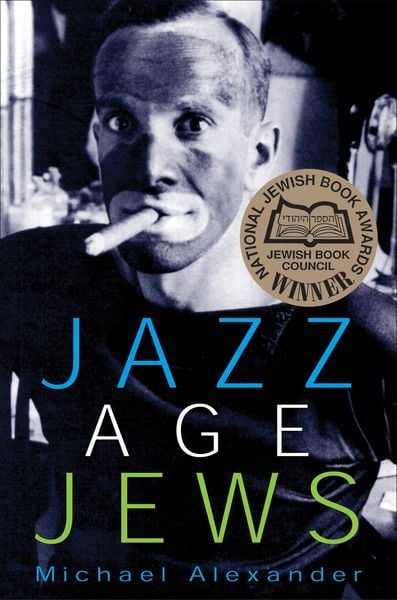
Jazz Age Jews
-
- Taschenbuch
- eBook ausgewählt
-
Form:Einzelkauf Download
-
Sprache:Englisch
53,90 €
inkl. gesetzl. MwSt.Beschreibung
Produktdetails
Format
Kopierschutz
Nein
Family Sharing
Nein
Text-to-Speech
Nein
Erscheinungsdatum
05.06.2018
Verlag
United Methodist Publishing HouseSeitenzahl
264 (Printausgabe)
Dateigröße
2352 KB
Sprache
Englisch
EAN
9780691187471
By the 1920s, Jews were--by all economic, political, and cultural measures of the day--making it in America. But as these children of immigrants took their places in American society, many deliberately identified with groups that remained excluded. Despite their success, Jews embraced resistance more than acculturation, preferring marginal status to assimilation.
The stories of Al Jolson, Felix Frankfurter, and Arnold Rothstein are told together to explore this paradox in the psychology of American Jewry. All three Jews were born in the 1880s, grew up around American Jewish ghettos, married gentile women, entered the middle class, and rose to national fame. All three also became heroes to the American Jewish community for their association with events that galvanized the country and defined the Jazz Age. Rothstein allegedly fixed the 1919 World Series--an accusation this book disputes. Frankfurter defended the Italian anarchists Sacco and Vanzetti. Jolson brought jazz music to Hollywood for the first talking film, The Jazz Singer, and regularly impersonated African Americans in blackface. Each of these men represented a version of the American outsider, and American Jews celebrated them for it.
Michael Alexander's gracefully written account profoundly complicates the history of immigrants in America. It challenges charges that anti-Semitism exclusively or even mostly explains Jews' feelings of marginality, while it calls for a general rethinking of positions that have assumed an immigrant quest for inclusion into the white American mainstream. Rather, Alexander argues that Jewish outsider status stemmed from the group identity Jews brought with them to this country in the form of the theology of exile. Jazz Age Jews shows that most Jews felt culturally obliged to mark themselves as different--and believed that doing so made them both better Jews and better Americans.
Noch keine Bewertungen vorhanden
Verfassen Sie die erste Bewertung zu diesem Artikel
Helfen Sie anderen Kundinnen und Kunden durch Ihre Meinung.
Kurze Frage zu unserer Seite
Vielen Dank für Ihr Feedback
Wir nutzen Ihr Feedback, um unsere Produktseiten zu verbessern. Bitte haben Sie Verständnis, dass wir Ihnen keine Rückmeldung geben können. Falls Sie Kontakt mit uns aufnehmen möchten, können Sie sich aber gerne an unseren Kund*innenservice wenden.
zum Kundenservice